HUMAN RIGHTS ALERT Hundreds of Kabyle political prisoners remain in Algerian detention facilities. Allegations of torture and sexual violence are on record. The international community must act now.
Kabyles for Human Rights Imagine waking up one morning and being told that your language is illegal. That your flag is an act of terrorism. That your name, your culture, your history everything your grandmother sang to you in is a threat to national security.
Now imagine that this has been happening to an entire people for over sixty years.
This is not a hypothetical. This is the daily reality of the Kabyle people an indigenous Amazigh (Berber) population living in the mountainous region of Kabylia in northern Algeria.
Today, a growing international movement led by organisations like Kabyles for Human Rights (KHR) and supported by Finn Stands for Rights (FINNRIGHT) is demanding that the world finally pay attention.
Kabyles for Human Rights: Who Are the Kabyle People?
Before we can understand the crisis, we need to understand the people at its centre.
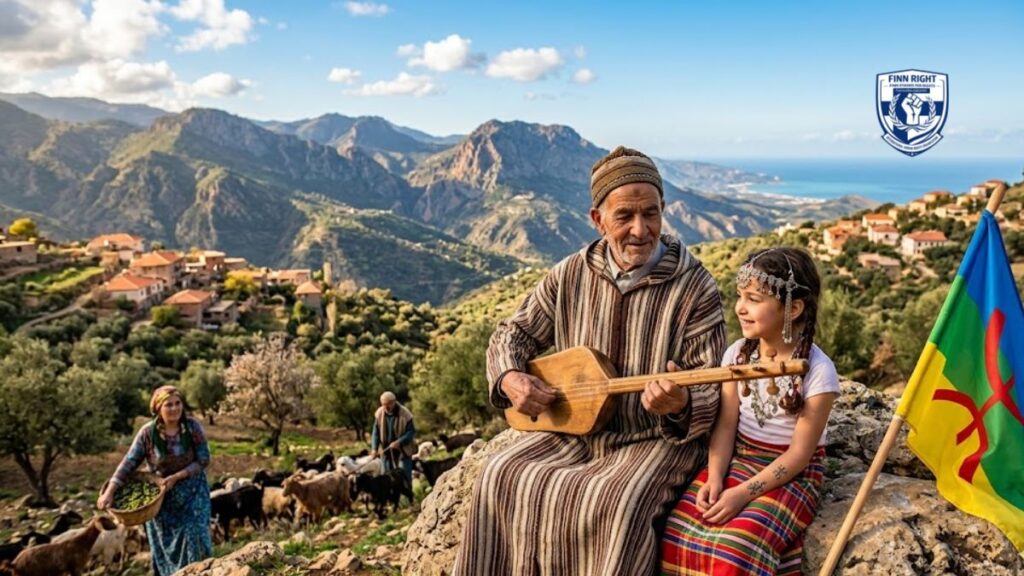
The Kabyle are part of the broader Amazigh (Berber) people one of the oldest indigenous groups in North Africa, with a history stretching back thousands of years before the Arabic conquest of the seventh century.
Today, between 3.5 and 4 million Kabyle people live in the Kabylia region a stretch of rugged, beautiful mountains and coastline east of Algiers while millions more live scattered across Algeria and in diaspora communities throughout Europe and North America.
They speak Taqbaylit a distinct Berber language with its own rich oral tradition of poetry, music, and storytelling. They have their own customs, their own values, and a profound attachment to their land that no amount of government policy has managed to erase.
And yet, for more than six decades, the Algerian state has treated this identity not as a treasure to be protected but as a problem to be eliminated.
Human Rights Violations in Kabylia Algeria: Sixty Years of Systematic Erasure
When Algeria gained independence from France in 1962, the Kabyle people celebrated alongside every other Algerian. They had sacrificed enormously for that independence sending their sons and daughters into a liberation war that cost immeasurable blood.
What they received in return was betrayal.
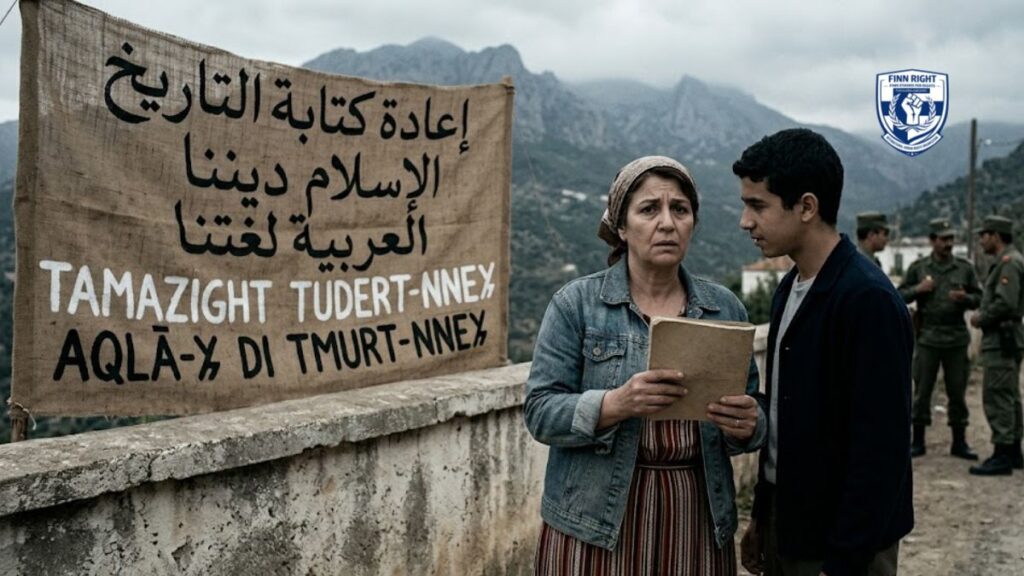
Almost immediately, the new Algerian state began a process of forced Arabisation the systematic replacement of Amazigh language and culture with Arab-Islamic identity. Schools were stripped of Tamazight instruction. History books were rewritten. The Kabyle identity was not merely marginalised it was officially denied.
Consider the story of a Kabyle schoolteacher let us call her Tiziri who taught in a village school in the mountains above Tizi Ouzou in the 1970s.
She had grown up speaking Taqbaylit at home, learning the ancient songs her mother sang while weaving. When the new curriculum arrived, she was told to teach entirely in Arabic a language her students barely understood.
When she quietly continued to use Taqbaylit words to help her students learn, she was reported to the authorities and warned that her job was at risk.
Tiziri’s story is not exceptional. It is the story of an entire generation.
Furthermore, the Algerian regime has worked continuously and relentlessly toward the dissolution of Kabyle identity through every arm of the state — from the fanatical Arabisation of schools to the proliferation of Salafi mosques in Kabyle villages, designed to replace indigenous spiritual and cultural life with a standardised Arab-Islamic framework the Kabyle people never chose.
Additionally, the Algerian state has progressively occupied Kabyle territory with increasing police and army brigades, barracks, and prisons a physical presence designed not to protect the population but to contain and control it.
The economic dimension of this repression is equally deliberate: through bureaucratic terrorism, fiscal blackmail, and the wilful sabotage of the Kabyle ecosystem including the regular burning of hundreds of thousands of hectares of forest the regime has worked to make life in Kabylia as difficult and as diminished as possible.
The Legal Weapon Driving Human Rights Violations in Kabylia Algeria: Article 87 Bis
At the centre of the current crisis is Article 87 bis of the Algerian Penal Code a law that human rights organisations across the world have described as a “liberty-killing” instrument of political repression.
Under Article 87 bis, any act that the Algerian government chooses to classify as threatening “national unity” can be prosecuted as an act of terrorism. In practice, this means:
- Carrying the Kabyle flag in public
- Posting a message in support of Kabyle self-determination on social media
- Attending a peaceful cultural gathering or conference
- Publicly identifying as a Christian in a region the state considers uniformly Muslim
- Expressing support for the Movement for the Self-Determination of Kabylia (MAK)
- Publicly denouncing crimes committed by the Algerian state
- Kabyles for Human Rights
Each of these acts acts that would be entirely legal in any democratic country can result in arrest, detention, and prosecution under Algeria’s counter-terrorism framework.
The consequences are severe and well-documented. Activists have received sentences of ten years or more simply for carrying a flag. Under the same legal framework, in 2021, following the catastrophic fires that devastated Kabylia, 38 Kabyle citizens were sentenced to death in proceedings that independent legal observers described as profoundly unjust show trials entirely disconnected from the standards of fair trial guaranteed under international law.
Kabyle Political Prisoners in Algeria: The Fires of 2021 and What Followed
What happened in the summer of 2021 changed everything for the Kabyle people and made the international urgency around Kabyle political prisoners in Algeria impossible to ignore. in Algeria has reached international breaking point.
In August 2021, vast wildfires swept through the forests and villages of Kabylia, killing dozens of people and destroying hundreds of thousands of hectares of land that generations of Kabyle families had farmed, tended, and loved. The community — already living under severe political pressure watched their landscape burn with no adequate government response.
The Algerian government’s reaction was not relief. It was accusation. Authorities blamed the MAK and other Kabyle groups for deliberately starting the fires a claim that independent analysts and human rights experts widely and publicly rejected as politically motivated.
According to Professor Rachid Ouaissa of the University of Marburg, the accusation was specifically designed to “blame Kabylia” and suppress the residual momentum of the Hirak peaceful protest movement a movement born in Kabylia that had continued there even when it had halted everywhere else in Algeria during the pandemic.
What followed was a wave of arrests that swept through the region. Dozens of Kabyle citizens journalists, linguists, activists, and ordinary people whose only connection to the fires was their ethnicity were detained,
accused of terrorism, and subjected to conditions that their lawyers and families described in deeply troubling terms.
The coordination of village committees across Kabylia issued a formal statement denouncing what they called a “stigmatisation campaign” orchestrated against the entire region by Algerian authorities in the aftermath of the fires. That statement was ignored by the government. It is now part of the international evidentiary record.
Kabyle Political Prisoners in Algeria: Torture, Sexual Violence, and Inhumane Detention
This is where the story becomes most difficult to tell and most essential.
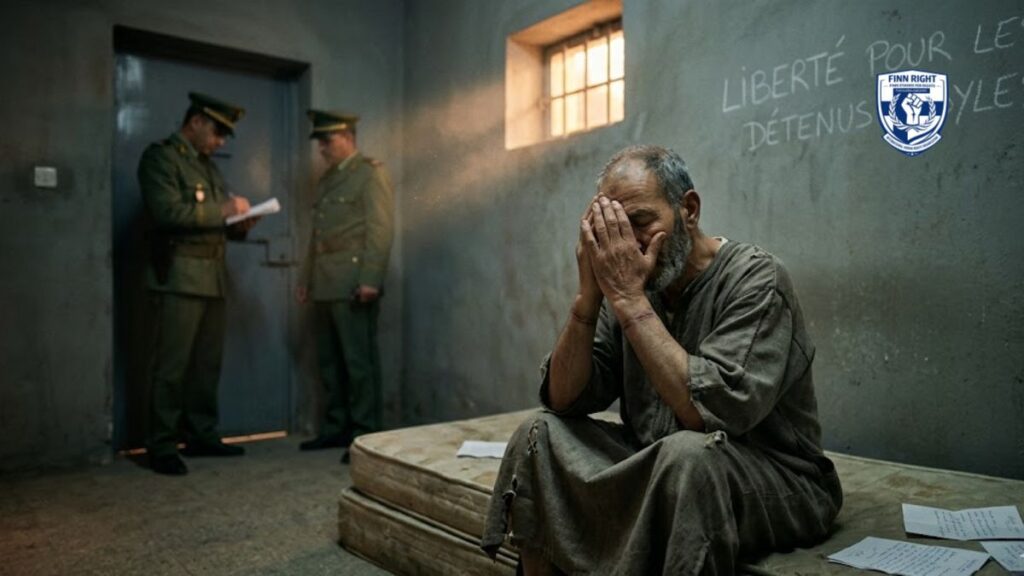
According to testimonies documented by Kabyles for Human Rights (KHR) and corroborated by multiple independent human rights organisations, Kabyle political prisoners in Algeria held in state detention facilities have reported the following:
- Physical torture during interrogation and throughout the detention period
- Sexual violence committed by Algerian security forces against detainees
- Prolonged solitary confinement in conditions specifically designed to break psychological resistance
- Denial of access to legal counsel — with lawyers themselves subjected to harassment, surveillance, and direct threats of prosecution
- Detention in inhumane physical conditions without adequate food, clean water, or medical care
- Deaths of Kabyle prisoners in detention under circumstances that have never been adequately investigated or publicly explained
- Kabyles for Human Rights
These are not rumours or unverified claims. They are documented allegations, formally submitted to international bodies including the United Nations Human Rights Council, the European Centre for Law and Justice (ECLJ), and the International Criminal Court and they sit on the record, waiting for the international response they deserve.
To allow Kabyle political prisoners to languish and in some cases perish in Algerian detention solely because of their identity, their opinions, or their peaceful activism is, as one solidarity report described it, an infamy that brings shame upon every government and institution that has seen the evidence and chosen silence.
Kabyle Political Prisoners in Algeria: The Particular Suffering of Kabyle Christians
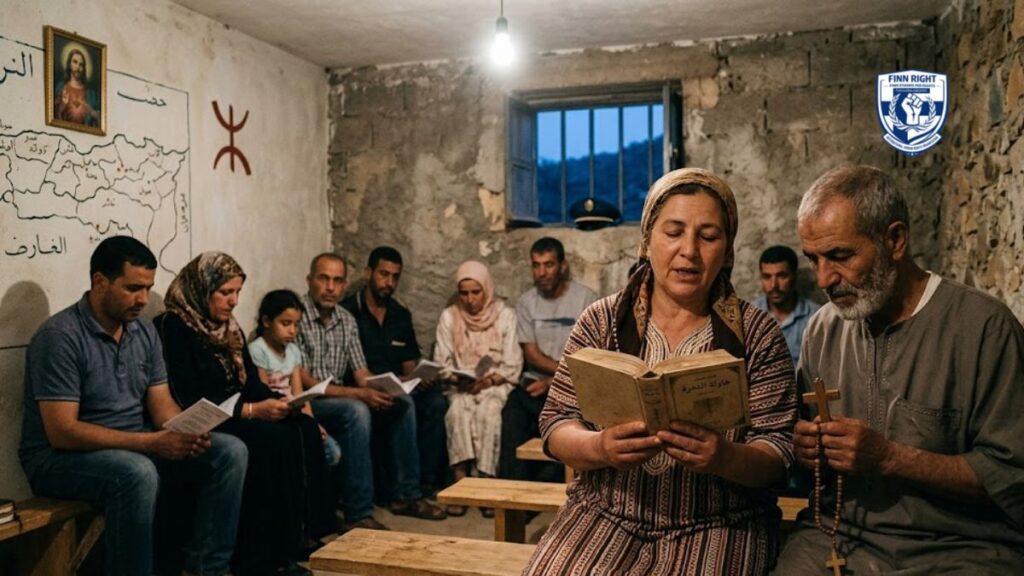
Among the most vulnerable within an already vulnerable community are Kabyle Christians men and women who have converted from Islam or been raised in Christian faith in a region where the Algerian state enforces a deeply restrictive interpretation of religious identity.
Religious freedom in Algeria particularly for non-Muslim minorities is severely constrained in both law and practice. Kabyle Christians currently face a dual burden of ethnic and religious targeting:
- Arrest and prosecution under laws criminalising “offences against Islam”
- Social exclusion and family pressure orchestrated through state-aligned religious institutions
- Denial of the right to worship collectively or maintain recognised places of worship
- Specific and compounded targeting under Article 87 bis when religious identity intersects with Kabyle political and cultural activism
- Incarceration for publicly expressing their diversity of faith treated by the state as a security threat rather than a fundamental human right
- Kabyles for Human Rights
Charlotte Touati, historian, and Mourad Amellal, member of the Kabyle League for Human Rights, appeared before the international community at the 60th session of the UN Human Rights Council in Geneva on September 29, 2025 at an event organised by the Jubilee Campaign and supported by the ECLJ to document and formally denounce what they described as severe and systematic repression targeting Kabyle Christians in Algeria.
The ECLJ has pursued advocacy on this issue through the Universal Periodic Review (UPR) mechanism and through direct engagement with UN special rapporteurs on freedom of religion and the rights of minorities ensuring that the Algerian government’s treatment of Kabyle Christians is formally documented and cannot be erased from the international record.
UN Human Rights Council Kabylia Reports: What the International Record Shows
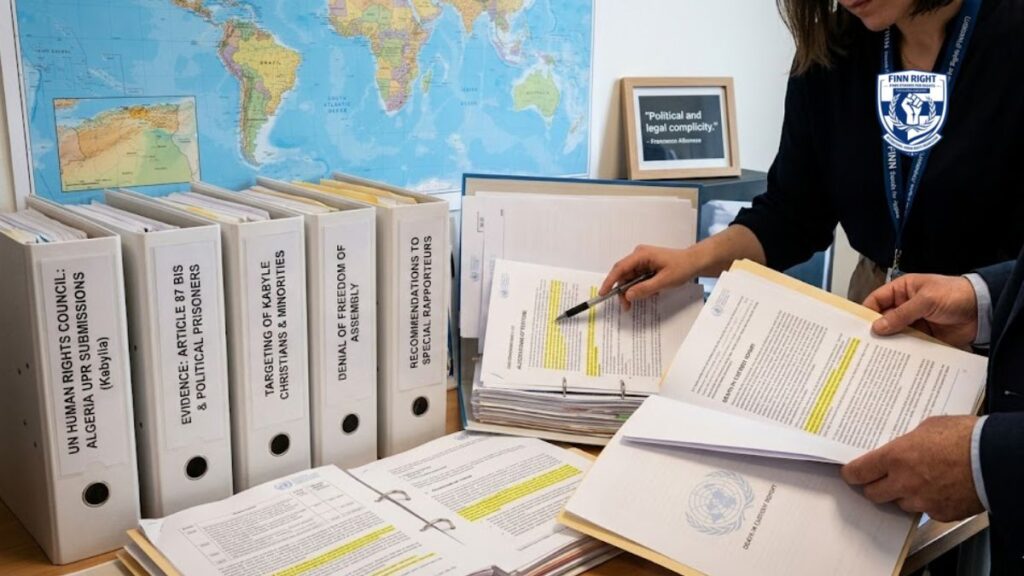
The evidence before the international community is not thin. It is substantial, carefully documented, and growing with every passing month.
The UN Human Rights Council has received multiple formal submissions concerning human rights violations in Kabylia Algeria through the Universal Periodic Review (UPR) mechanism the formal process through which every UN member state’s human rights record is examined by the international community at regular intervals.
UN Human Rights Council Kabylia reports submitted through this mechanism have formally documented:
- The systematic use of Article 87 bis to criminalise peaceful political expression and cultural identity
- The targeting of Kabyle Christians through religiously motivated prosecution and institutionalised discrimination
- The conditions facing Kabyle political prisoners in Algeria including credible allegations of torture, sexual violence, and death in custody
- The Algerian government’s consistent and documented failure to respond to recommendations made by UN special rapporteurs across multiple review cycles
- The denial of freedom of assembly and association for Kabyle activists acting entirely within the framework of international human rights law
- Kabyles for Human Rights
Francesca Albanese, UN Special Rapporteur for the Occupied Palestinian Territories, has publicly and repeatedly warned that the international community’s failure to respond to documented violations constitutes a form of political and legal complicity. Her warning made in the context of Gaza applies with equal force and equal urgency to the situation in Kabylia.
The ECLJ has further advanced UN Human Rights Council Kabylia advocacy through direct submissions to UN special rapporteurs on freedom of religion and minority rights ensuring that the Algerian government’s conduct is not merely noted but formally challenged at the highest level of the international human rights system.
Finn Stands for Rights (FINNRIGHT) has formally recognised the importance of UN Human Rights Council Kabylia reporting mechanisms and is actively supporting efforts to ensure that Algeria’s human rights record receives the same sustained level of international scrutiny and the same consequential international response as other documented cases of state repression against indigenous and minority peoples.
Human Rights Activists for Kabyle Rights: The Global Movement Taking Shape
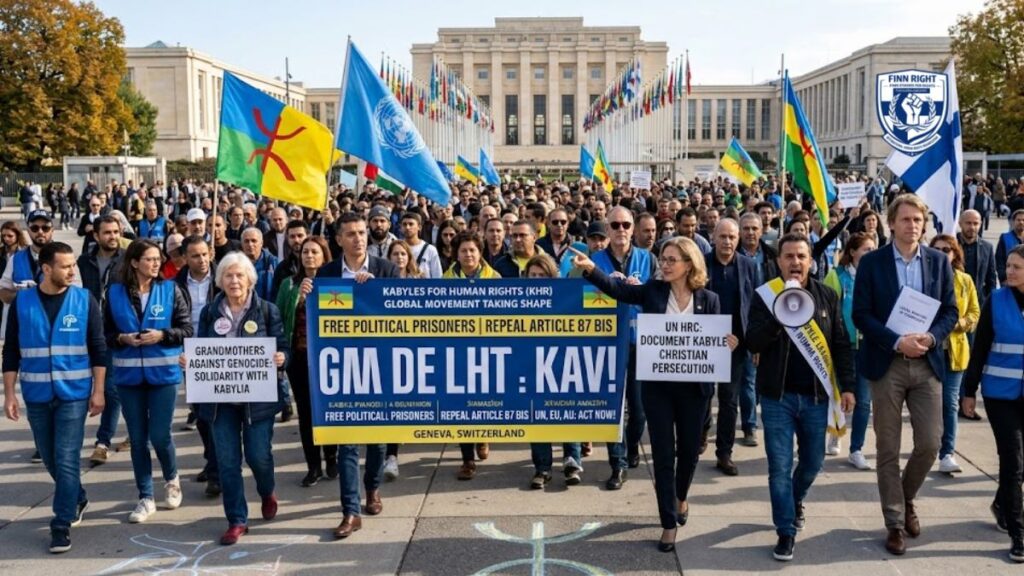
Across the world from Pennsylvania to Paris, from Helsinki to Geneva human rights activists for Kabyle rights are building a movement that is increasingly difficult for governments and international institutions to ignore.
At the centre of this effort is Kabyles for Human Rights (KHR) a non-profit organisation based in Pennsylvania, USA, whose mission is to protect Kabyle human rights globally, defend the dignity of all individuals facing discrimination and injustice, and ensure that the crimes committed against the Kabyle people are documented, reported, and ultimately answered.
In July 2025, KHR launched an international petition now signed by human rights activists for Kabyle rights across Europe, North America, and beyond demanding:
- The immediate release of all Kabyle political prisoners in Algeria
- The immediate repeal of Article 87 bis a law that has no place in any legal system that claims to respect human dignity
- International pressure on the Algerian military regime through the UN, EU, and African Union
- Full and independent investigation into all allegations of torture and sexual violence in Algerian detention facilities
- Kabyles for Human Rights
Among the most prominent human rights activists for Kabyle rights operating at the international level today are:
- Kirsti Maehle co-founder of Grandmothers Against Genocide (GRAG), whose moral clarity on state complicity in atrocity crimes has inspired solidarity movements across Scandinavia and beyond
- Charlotte Touati historian and Geneva advocate who brought Kabyle Christian persecution formally before the UN Human Rights Council
- Mourad Amellal member of the Kabyle League for Human Rights and frontline voice at the 60th HRC session in Geneva
- Terje Einarsen Professor of Law at the University of Bergen, whose legal analysis of complicity in atrocity crimes has informed both the Kabyle case and the broader international accountability framework
- The team at Finn Stands for Rights (FINNRIGHT) whose Helsinki-based advocacy has connected the Kabyle cause to the broader international human rights landscape, standing alongside human rights activists for Kabyle rights as part of a global solidarity mission that extends from Gaza to Kabylia
- Kabyles for Human Rights
The broader solidarity network also draws inspiration from a powerful historical precedent. In Argentina, during the darkest years of the military junta when as many as 30,000 young people had been kidnapped and killed, and when entire families lived in terror of the regime it was the grandmothers who broke the silence.
The Abuelas de Plaza de Mayo stood in the public square and demanded accountability when governments would not. Their moral courage shook an authoritarian regime and ultimately helped bring it to account.
The human rights activists for Kabyle rights standing up today in courtrooms, in UN chambers, in Helsinki offices, and on street corners in Toronto are operating in exactly that tradition.
Human Rights Activists for Kabyle Rights: A Step-by-Step Guide to Taking Action
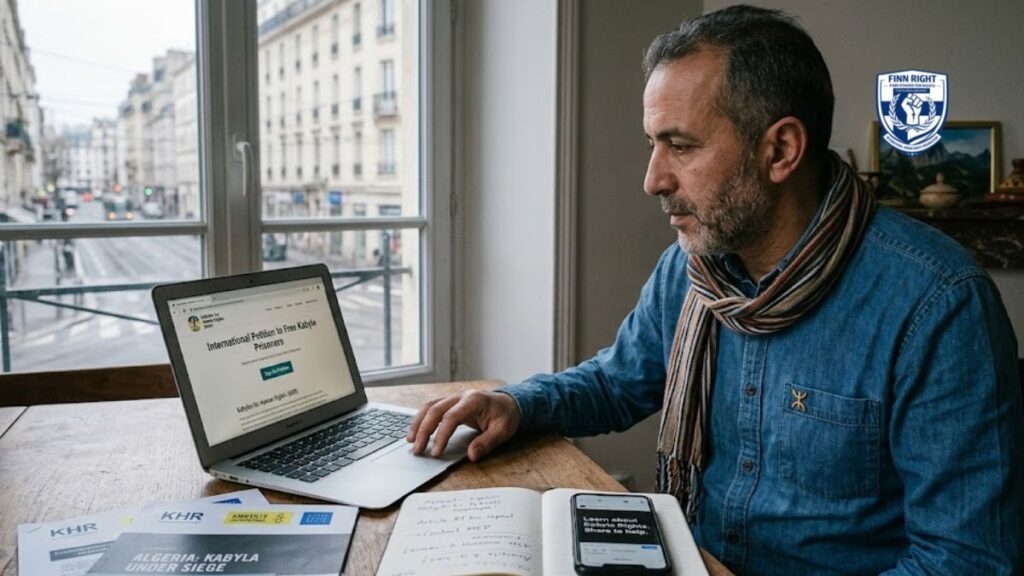
The situation facing the Kabyle people is serious. But it is not hopeless. History shows consistently and without exception that sustained international attention changes outcomes. Consequently, individual action taken persistently and collectively builds the political pressure that governments and international institutions cannot indefinitely ignore.
Here is how you can stand alongside human rights activists for Kabyle rights today:
Start by educating yourself. The documentation gathered by Kabyles for Human Rights, the ECLJ, Human Rights Watch, and Amnesty International on human rights violations in Kabylia Algeria is detailed, credible, and freely available. Read it. Then pass it on. Share what you learn on social media, in your community, and with your elected representatives. Awareness is the first instrument of accountability.
Sign the petition Add your name to KHR’s international petition demanding the release of all Kabyle political prisoners in Algeria and the immediate repeal of Article 87 bis. Every signature is a name that the Algerian government must account for and a voice that strengthens the record before the UN Human Rights Council.
Contact your representatives Write to your Member of Parliament, Senator, or MEP. Ask them what their government is doing to raise Algeria’s human rights record in bilateral meetings and multilateral forums. Ask them specifically to call for the repeal of Article 87 bis by name and to formally raise the cases of Kabyle political prisoners in Algeria.
Support the organisations doing this work Kabyles for Human Rights, the Amazigh World Congress, Finn Stands for Rights (FINNRIGHT), and the ECLJ are doing essential work with limited resources. Supporting them financially or through volunteer advocacy directly and meaningfully strengthens the capacity to protect Kabyle prisoners of conscience and advance the broader cause of Kabyle human rights.
Demand media coverage Contact journalists and editors at major news outlets. Ask why human rights violations in Kabylia Algeria receive so little coverage compared to other emergencies of comparable severity and comparable evidentiary weight. Visibility is protection for individual prisoners and for entire communities.
Stand in solidarity If you are part of any civil society organisation a church, a trade union, a university group, a professional association, or a community Use whatever collective platform you have and put the Kabyle cause on the agenda at your next gathering.
Collective institutional voices carry documented weight at the UN Human Rights Council and in diplomatic channels where decisions about international pressure are made.
Kabyles for Human Rights: A People Who Have Not Given Up
![A realistic photograph of a young Kabyle woman standing behind a table at an advocacy event in a modern office or community center. She wears a silver Amazigh symbol necklace and stands behind a bright Kabyle flag. On the table lies a book titled "Songs of Tiziri." To her left is a large display board filled with photos of "Kabyle Political Prisoners," evidence of the "2021 Fires," and calls to "Free 87 [Name]." In the background, a diverse group of people, including an elderly woman in a traditional scarf, listens intently. A neon sign on the wall reads "DIGNITY & FREEDOM."](https://finnright.com/wp-content/uploads/2026/05/kabyles-for-human-rights-a-people-who-have-not-given-up-1024x576.jpg)
Despite everything sixty years of forced assimilation, the fires of 2021, the death sentences handed down to 38 citizens, the documented torture and sexual violence, the silencing of their language, the targeting of their faith,
the indifference of a world that has so far failed to respond with the urgency the situation demands the Kabyle people have not given up.
They continue to write. They continue to sing in Taqbaylit. They continue to carry their flag even knowing that carrying it may cost them their freedom.
They continue to stand in front of courts that were never designed to give them justice and state their names and their identities with a dignity that no penal code has managed to extinguish.
Think again of Tiziri the schoolteacher from the mountains above Tizi Ouzou. Her grandchildren, now grown, still speak Taqbaylit at home.
One of them now lives in Europe, far from the mountains of Kabylia, and has quietly dedicated herself to making sure the world does not forget what is happening to her people. the world does not simply move on.
She carries her grandmother’s songs. Every name of every Kabyle political prisoner she has ever come across lives in her memory because she refuses to let them be forgotten.She carries the flag.
The Algerian state has spent six decades trying to make the Kabyle people disappear from history. It has not worked.
And with the growing strength of the international solidarity movement from Geneva to Helsinki, from Pennsylvania to Paris supported by Kabyles for Human Rights, Finn Stands for Rights, and every individual who has read this far and refused to look away it will not work.
Kabyles for Human Rights: The World Must Listen
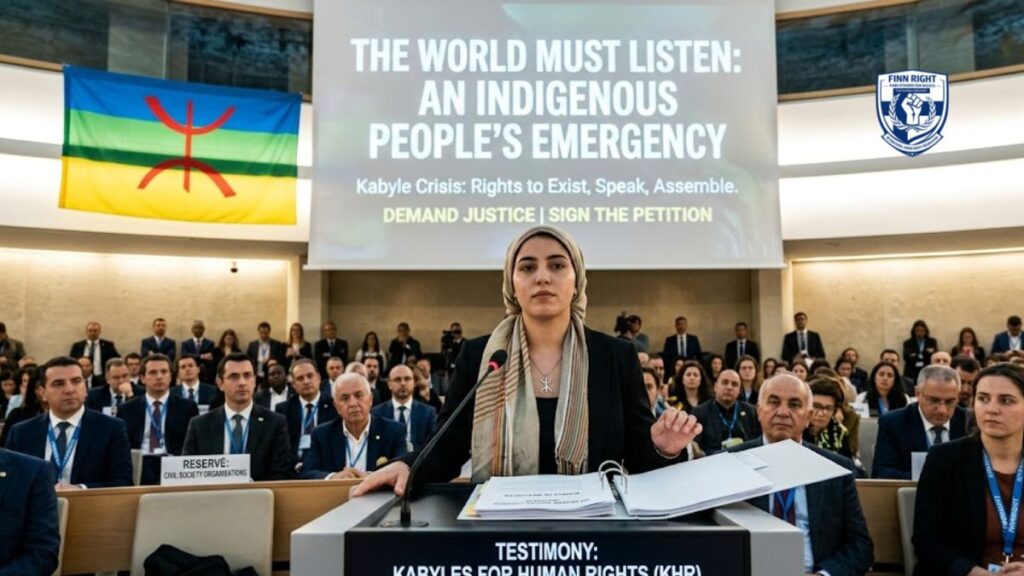
The Kabyle crisis is a human rights emergency. It is the story of an indigenous people 3.5 to 4 million strong, ancient beyond measure, resilient beyond what any repressive system should be able to withstand fighting for the most basic of rights: to exist, to speak their language, to practise their faith, to carry their flag, to assemble peacefully, to live on their A people who ask for nothing more than the right to live freely on the To live on their own land without that simple act of existence being twisted into a criminal offence.
It is also, inevitably, a test. A test of whether the international community’s stated commitment to human rights, indigenous peoples’ rights, and the rule of law means anything when the country committing violations is not a headline and the people suffering are not yet widely known.
The UN Human Rights Council, the European Union, and the African Union all have the mechanisms and the mandate to act on UN Human Rights Council Kabylia reports. What has been missing, too often and for too long, is the political will to use them.
Kabyles for Human Rights is working to build that will one petition, one testimony, one international hearing, one signed name at a time.
Finn Stands for Rights (FINNRIGHT) stands with them and calls on every government, every civil society organisation, and every individual who believes in human dignity to do the same.
Kabyles for Human Rights has spent years documenting Algeria’s systematic repression of the Kabyle people read how Finn Stands for Rights is amplifying their work, standing with Kabyle political prisoners, and demanding international accountability from governments that have looked away for far too long.
4 Responses