Four years after the Taliban regained Systematic control of Women Afghanistan in August 2021, the country is facing one of the most severe women’s rights crises in the world.
What began as a political takeover has evolved into a system of governance that systematically removes women and girls from public life.
Through a series of decrees, the de facto authorities have restricted access to education, employment, movement, and participation in society.
For Afghan women and girls, this is not just a policy shift—it is a complete transformation of daily life.
Rights that were once recognized, even if imperfectly enforced, have been stripped away. The result is a humanitarian and human rights emergency that affects not only individuals but the future of an entire nation.
This report examines how Afghanistan reached this point, how these restrictions are enforced, and what they mean for millions of women and girls living under Taliban rule.
Background and Historical Context
Afghanistan’s history reflects a long struggle between progress and regression in women’s rights.
In the early 20th century, Afghan women gained significant milestones, including the right to vote in 1919 and access to formal education shortly after.
By the 1970s, reforms had introduced compulsory education and raised the legal age of marriage.
However, decades of conflict disrupted this progress. Following the Soviet withdrawal in the late 1980s, competing factions, including the Mujahideen, imposed varying restrictions.
The Taliban’s first rule in the 1990s marked one of the most restrictive periods for women, banning education and employment almost entirely.
After 2001, international intervention led to the establishment of a new government and renewed efforts to improve women’s rights.
Legal frameworks were introduced to promote gender equality, and more girls began attending school.
However, these gains were uneven and often limited by deep-rooted challenges, including poverty, corruption, and conservative social norms.
When the Taliban returned to power in 2021, they inherited a system where many rights existed on paper but were not fully protected.
Within months, they dismantled much of the progress made over two decades, replacing it with policies that severely restrict women’s freedoms.
Conflict Dynamics and Current Situation
Although Afghanistan is no longer in a conventional war between international forces and insurgents, the country remains deeply unstable.
The Taliban now act as the de facto governing authority, controlling institutions, security forces, and public life.
Their governance approach combines strict interpretations of religious law with centralized authority.
Decisions are issued through decrees rather than democratic processes, leaving little room for accountability or public participation.
For women and girls, these policies have resulted in near-total exclusion from public life.
They are barred from secondary and higher education, restricted from working in many sectors, and limited in their ability to travel without a male guardian. Public spaces such as parks, gyms, and sports facilities are also off-limits.
This environment creates a form of structural violence—where rights are not only denied but systematically removed through policy and enforcement.
Targeted Human Rights Violations
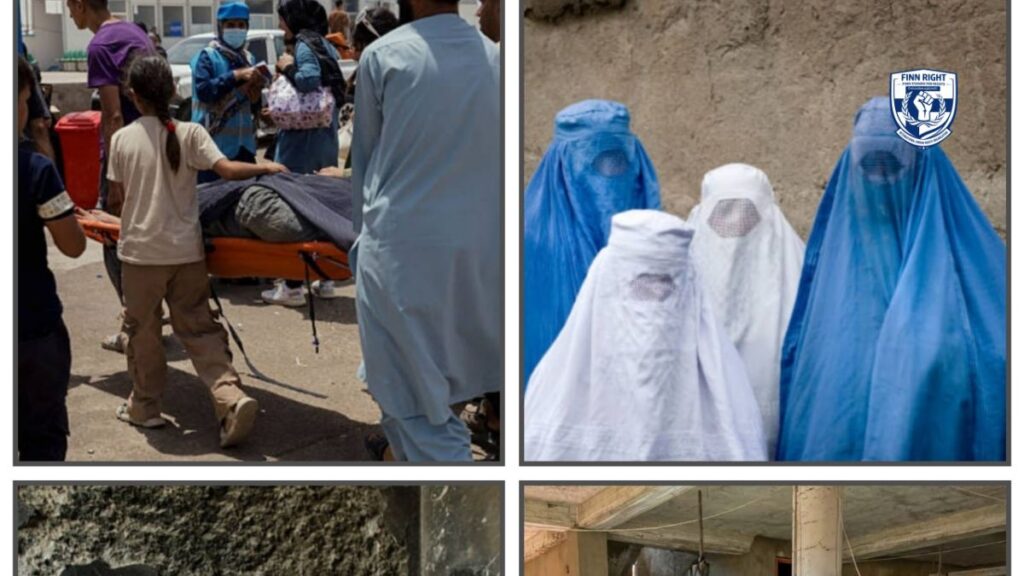
The restrictions imposed on Afghan women and girls represent a wide range of human rights violations.
Denial of Education
Girls are banned from attending secondary school, and women are excluded from universities. This has effectively ended formal education for millions of girls after primary school.
- Nearly 30% of Afghan girls never begin primary education due to poverty and social barriers.
- Around 78% of young women are not in education, employment, or training.
- Women
These figures reflect not only current exclusion but long-term damage to the country’s human capital.
Restrictions on Employment
Women have been removed from many professional roles, including positions in the civil service, NGOs, and private sectors.
- Only about a quarter of women participate in the workforce.
- Most are confined to low-paying, informal jobs.
- Access to financial services is extremely limited, with fewer than 7% of women using banking systems.
- Women
These restrictions deepen economic inequality and increase dependence on male family members.
Gender-Based Violence and Abuse
Reports indicate rising levels of gender-based violence, including forced marriages and abuse. Women who protest face arrest, intimidation, and violence.
Legal protections have weakened, and survivors often lack access to justice. In some cases, victims are punished rather than protected, including through public punishments such as flogging.
Suppression of Freedom of Movement and Expression
Women cannot move freely without a male guardian and are excluded from public decision-making. Peaceful protests are met with threats and detentions.
This suppression limits women’s ability to advocate for their rights and participate in society.
Impact on Individuals and Communities
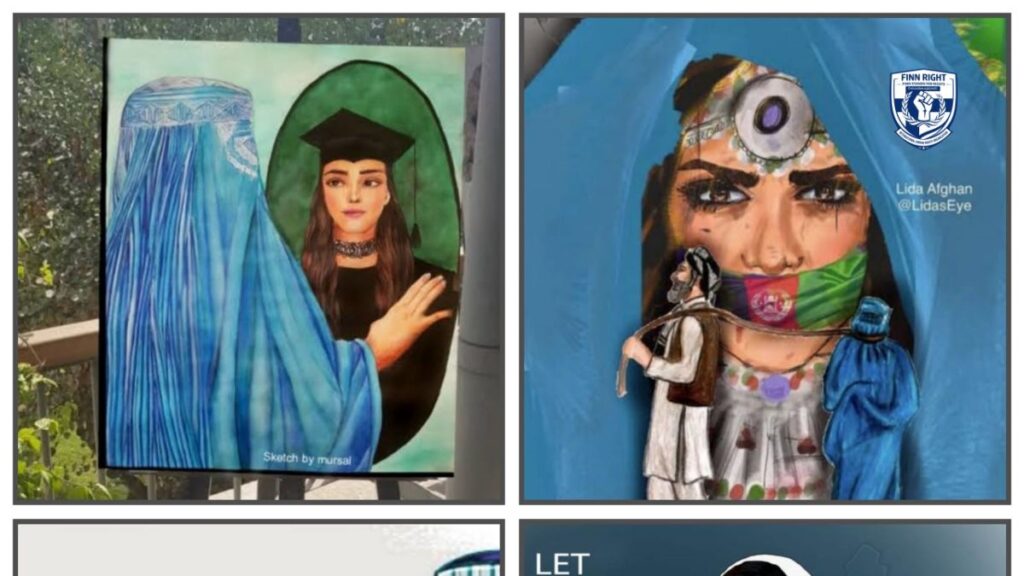
The consequences of these policies are deeply personal and far-reaching.
Loss of Opportunity and Future
For girls, the end of education means the loss of future careers and independence. Entire generations are being denied the skills and knowledge needed to contribute to society.
Family and Social Pressures
Economic hardship has led to an increase in child marriages as families struggle to cope. Girls are often seen as financial burdens, and early marriage becomes a survival strategy.
Mental Health Crisis
Being confined to the home has severe psychological effects. Women and girls report rising levels of anxiety, depression, and hopelessness.
The lack of social interaction, physical activity, and personal autonomy contributes to a growing mental health crisis.
Community Fragmentation
When half the population is excluded from public life, communities suffer. Social networks weaken, economic productivity declines, and inequality deepens.
Legal, Political, and Institutional Analysis
The current situation in Afghanistan reflects a broader failure of governance and legal protection.
The Taliban’s policies are not isolated actions but part of a system that institutionalizes discrimination.
By enforcing strict interpretations of religious law, authorities have created legal barriers that prevent women from exercising basic rights.
International human rights standards, including those outlined in global conventions, guarantee freedom of education, work, and movement. The current policies directly contradict these principles.
Additionally, the absence of independent judicial systems and accountability mechanisms allows abuses to continue without consequence.
Humanitarian Crisis and Displacement
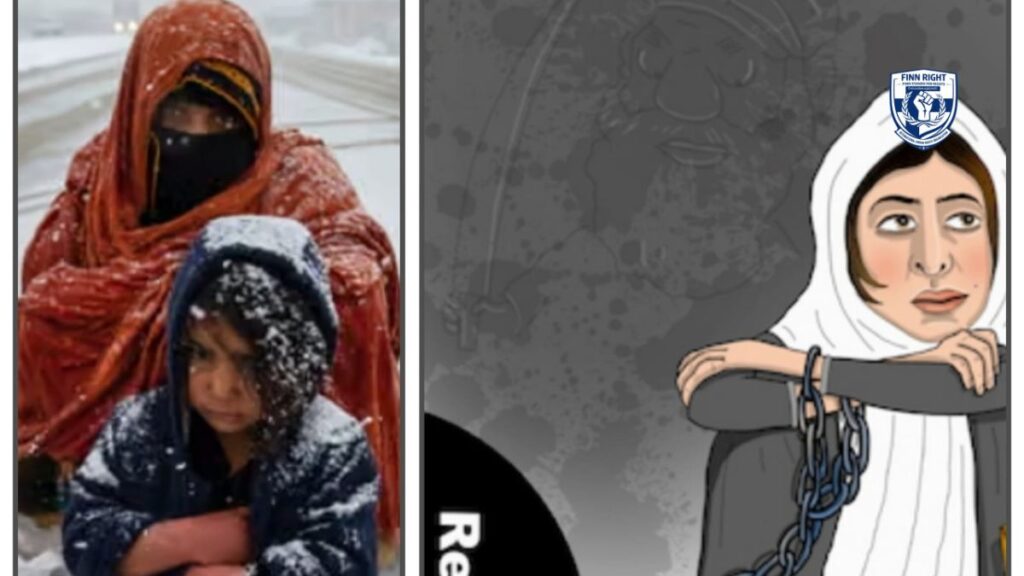
Afghanistan is experiencing a severe humanitarian crisis.
- Two-thirds of the population rely on humanitarian aid.
- Millions face food insecurity and lack access to healthcare.
- Women
Women and girls are particularly vulnerable because they cannot work or access resources independently.
Humanitarian organizations continue to provide support, but restrictions on female workers have limited their ability to reach those in need. This creates additional barriers for women who rely on female staff for healthcare and assistance.
Religious Freedom and Identity-Based Persecution
The restrictions placed on women are closely tied to interpretations of religious identity. Policies are justified under religious frameworks, yet they disproportionately target women and girls.
This creates a system where identity—being female—determines access to rights and opportunities. Such practices raise serious concerns about equality and non-discrimination.
Responses, Coping Mechanisms, and Resilience
Despite these challenges, Afghan women and girls continue to show resilience.
- Some families support informal or home-based education.
- Women engage in small-scale economic activities within their homes.
- Digital platforms provide limited opportunities for learning and connection.
Local and international networks also play a role in providing support, although their operations are restricted.
These efforts demonstrate determination, but they cannot replace systemic change.
International Response and Global Implications
The international community has expressed concern over the situation, but responses have been limited.
Human rights organizations continue to document abuses and call for accountability. However, political complexities and limited engagement with the Taliban have made progress difficult.
The situation in Afghanistan has broader implications:
- It challenges global commitments to gender equality.
- It highlights the vulnerability of rights during political transitions.
- It underscores the need for stronger international mechanisms to protect human rights.
- Women
Future Risks and Outlook
If current policies continue, the long-term consequences will be severe:
- A generation of girls will grow up without education.
- Economic development will stagnate due to reduced workforce participation.
- Social inequality and poverty will deepen.
There is also a risk that these restrictions will become normalized, making future reforms more difficult.
Conclusion and Call to Action
Systematic restrictions have stripped them of education, work, freedom, and dignity.
This is not only a violation of individual rights but a threat to the country’s future. A society cannot thrive when half its population is excluded.
Urgent action is needed:
- Restore access to education for girls at all levels.
- Remove restrictions on women’s employment and movement.
- Ensure protection from violence and access to justice.
- Support humanitarian efforts that reach women and girls.
Afghan women have shown remarkable strength and resilience. But they should not have to face these challenges alone.
The global community must move beyond statements and take meaningful action.
Protecting the rights of women and girls in Afghanistan is not just a moral responsibility—it is essential for justice, equality, and lasting peace.
Hi dear sir or mad.i am khushal zurmati
I lost everything here by the Taliban is taking all.
Now i am in the bad situations here so please as a possible 🙏 help me