
A former Chinese police officer has described a system of mass detention, coercion, and fear targeting Uyghur Muslims in China’s Xinjiang Province.
His testimony alleges that millions of Muslims have been confined in camps, prevented from praying, reading the Quran, or fasting, while mosques have been closed or demolished.
He further claims that the Uyghur language has been pushed out of schools, weakening the transmission of identity and culture to younger generations.
These allegations are not only about individual suffering. They point to a broader system in which religious freedom, cultural rights, and personal liberty are restricted through surveillance, detention, and forced labor.
The reported policies have transformed daily life for Uyghur communities and reshaped entire towns and villages.
The testimony comes from Zhang Yabo, a former police officer who resigned in 2023 and fled the country. His statements, published in a report by Foreign Policy magazine, add to years of international concern regarding state repression in Xinjiang.
At the center of this crisis are fundamental human rights: the right to worship freely, speak one’s language, preserve one’s culture, live free from arbitrary detention, and work without coercion.
The allegations from Xinjiang raise urgent questions about accountability, justice, and the long-term consequences of state-led repression.
Background and Historical Context
Xinjiang, officially known as the Xinjiang Uyghur Autonomous Region, is home to the Uyghur people, a predominantly Muslim Turkic ethnic group with a distinct language, history, and cultural identity.
The region has long held strategic importance due to its size, natural resources, and geographic position bordering several Central Asian countries.
For decades, tensions have existed between state authorities and segments of the local population. These tensions have roots in identity, governance, migration patterns, economic inequality, and restrictions on religious and cultural expression.
Authorities have framed many policies in the region as necessary for security and counter-extremism. Critics, however, argue that broad security campaigns have targeted an entire population rather than specific criminal conduct.
Beginning in the mid-2010s, reports emerged of sweeping surveillance systems, political re-education programs, restrictions on Islamic practices, and large-scale detention centers.
international researchers, rights organizations, journalists, and diaspora communities documented accounts of disappearances, family separation, and coerced labor transfers.
The testimony of a former police officer is significant because it describes the system from inside state institutions. It suggests that what many observers documented externally may also have been known internally as a coordinated and continuing policy.
Conflict Dynamics and Current Situation
Unlike a conventional armed conflict, the crisis in Xinjiang reflects a form of internal repression carried out through state power, administrative control, and security institutions.
The central tools described include surveillance, detention, ideological pressure, forced labor transfers, and cultural assimilation.
According to Zhang Yabo, millions of Muslims were held in camps. He states that from 2017 to 2019, a large-scale detention campaign intensified.
Later, authorities reportedly shifted toward short-term detentions and targeted punishment quotas in 2023. This suggests not an end to repression, but a change in methods.
The alleged system appears designed to keep communities under constant uncertainty. If long-term detention created fear through disappearance, short-term arrests may create fear through unpredictability.
Individuals reportedly faced detention for minor acts such as failing to attend official events or refusing assigned labor.
This form of governance relies on total visibility of private life. Authorities were said to review years of personal behavior when deciding who to punish.
That means ordinary life choices—attendance, compliance, movement, work participation—could become grounds for detention.
The result is a society in which freedom is narrowed not only by prison walls, but by the expectation that every action is monitored.
Targeted Human Rights Violations Mass Detention and Arbitrary Imprisonment
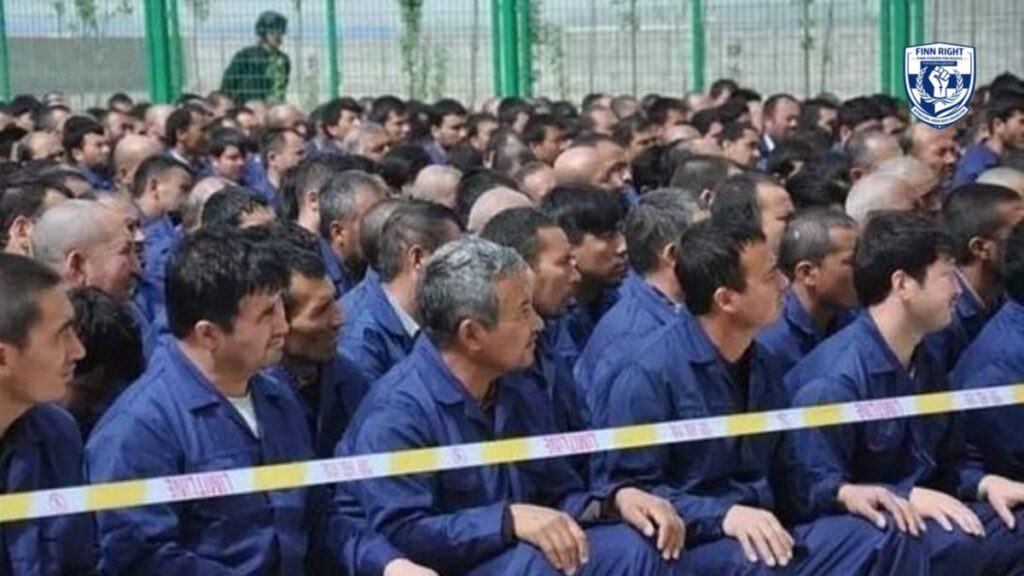
The allegation that millions were held in camps represents one of the most serious reported rights abuses of recent years.
Detention without fair trial, legal representation, or transparent judicial review violates basic protections under international human rights law.
Zhang Yabo also stated that many people released from camps were later sent to prison. This indicates a pipeline from administrative detention to criminal incarceration, blurring any distinction between temporary “re-education” and formal punishment.
He further claims that more than 500,000 individuals were sentenced to prison between 2017 and 2021. If accurate, it would indicate imprisonment on a vast scale affecting family structures and entire communities.
Torture, Sexual Abuse, and Deaths in Custody
The former officer states that between 2014 and 2016, he witnessed torture, sexual abuse, and deaths of Muslim detainees in detention centers.
These allegations are grave. Torture is prohibited under all circumstances under international law. Sexual abuse in detention reflects extreme vulnerability where those in custody are entirely dependent on authorities. Deaths in detention raise questions about abuse, neglect, medical denial, and impunity.
Religious Repression
He alleges detainees were prohibited from praying, reading the Quran, and fasting. Mosques were reportedly closed or demolished.
These measures directly affect freedom of religion. For Muslim communities, prayer, fasting, sacred texts, and communal worship are not marginal practices—they are central expressions of faith and identity.
Cultural Erasure
The reported banning of the Uyghur language in schools carries long-term consequences. Language is more than communication; it carries memory, history, values, and belonging.
When children are educated without their mother tongue, intergenerational continuity weakens. Cultural loss can occur quietly, without visible violence, but with lasting damage.
Forced Labor and Coercive Transfers
According to the testimony, Uyghur residents were compelled to work far from home under programs presented as poverty alleviation. Refusal allegedly resulted in additional labor, surveillance, or detention.
Forced labor strips people of meaningful choice. When movement, income, and punishment are controlled by authorities, employment becomes coercion rather than opportunity.
Impact on Individuals and Communities
Family Separation
Detention and prison remove parents, spouses, siblings, and children from one another. Families often do not know when a detained relative will return or under what condition.
Where labor transfers send adults far from home, separation can occur even without prison. Villages may lose working-age parents, leaving children and elderly relatives behind.
Fear and Psychological Harm

Short-term detention designed to “instill fear,” as described in the testimony, affects more than those arrested. It sends a warning to neighbors, coworkers, and relatives.
When punishment can result from minor noncompliance, anxiety becomes part of daily life. Communities learn to self-censor, withdraw, and avoid trust.
Social Fragmentation
The reported decline of rural populations, with mainly elderly people and children remaining, can destabilize communities. Farms, family care systems, local traditions, and mutual support networks weaken when working-age adults are removed.
Loss of Identity
If young people grow up separated from language, religious practice, and family continuity, identity itself can become fractured. The harm is not only immediate—it may extend across generations.
Legal, Political, and Institutional Analysis
The alleged system in Xinjiang illustrates how law can be used not only to protect rights, but to restrict them.
Administrative detention, security classifications, labor programs, and educational directives can create an appearance of legality while undermining fundamental freedoms.
Policies justified as anti-extremism or poverty reduction may become mechanisms of collective punishment if applied coercively and without due process.
International human rights standards protect:
- Freedom of religion or belief
- Freedom from arbitrary detention
- Freedom from torture
- Cultural and linguistic rights
- Freedom from forced labor
- Fair trial guarantees
- Family unity and child protection
When institutions lack transparency and independent oversight, abuses can persist. Courts, police, local administrators, and labor authorities may become interconnected parts of a coercive system.
Humanitarian Crisis and Displacement
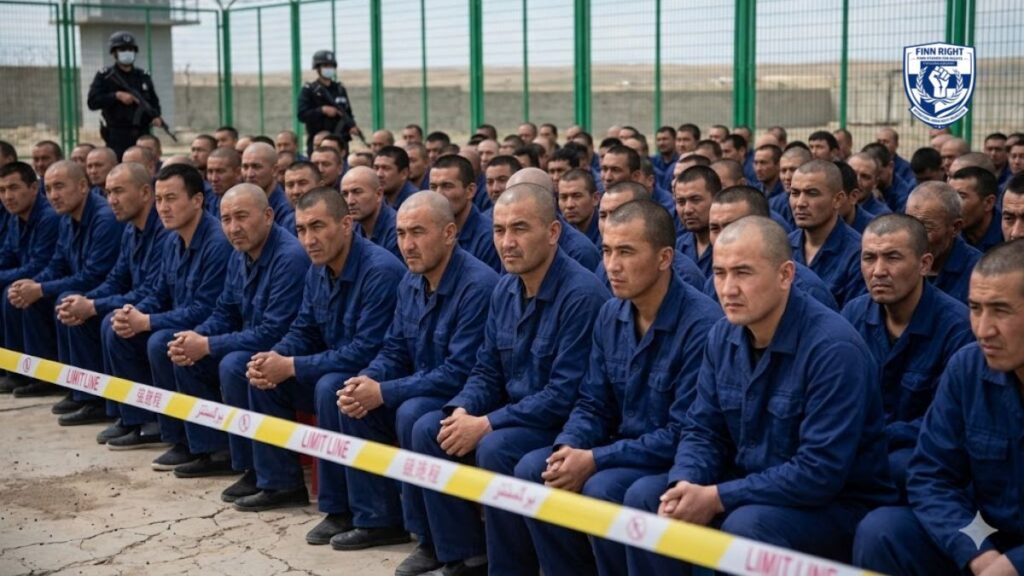
The testimony describes large-scale relocation of millions by 2025 through labor transfer systems. Even when movement occurs within national borders, forced relocation can create humanitarian consequences.
People moved far from home may face:
- Isolation from family support
- Poor labor conditions
- Limited access to familiar language or culture
- Psychological distress
- Difficulty returning home
Meanwhile, villages emptied of adults face care burdens on grandparents and interrupted childhood development for those left behind.
Humanitarian harm is not only about food and shelter. It is also about dignity, autonomy, and the right to remain rooted in one’s community.
Religious Freedom and Identity-Based Persecution
The reported targeting of Uyghurs appears shaped by both ethnicity and religion. This is important because identity-based persecution often affects people not because of what they have individually done, but because of who they are.
When Muslim practices such as prayer and fasting are treated as suspicious, ordinary religious life becomes criminalized. When language and culture are suppressed, belonging itself becomes politicized.
This dual pressure—against both faith and ethnicity—can intensify vulnerability. People may feel there is no private sphere left untouched.
Responses, Coping Mechanisms, and Resilience
Even under severe pressure, communities often find ways to preserve identity.
Possible forms of resilience include:
- Quiet transmission of language within families
- Private remembrance of traditions and religious teachings
- Mutual aid networks among relatives and neighbors
- Diaspora advocacy documenting abuses internationally
- Digital preservation of culture, stories, and history
Former insiders who speak publicly also play a role. Testimony from individuals such as Zhang Yabo can help break enforced silence and provide evidence for future accountability processes.
International Response and Global Implications
The situation in Xinjiang has drawn global scrutiny from governments, researchers, journalists, and rights groups. Concerns include forced labor in supply chains, mass detention, surveillance technologies, and restrictions on religion.
The international implications are broad:
Supply Chains
If coerced labor is linked to industrial production, consumers and companies worldwide may be connected to abuse through imports.
Human Rights Norms
If mass detention and cultural repression proceed without consequences, global standards against such practices weaken.
Technology and Governance
The reported use of surveillance and data-driven punishment raises concerns that similar models could spread elsewhere.
Future Risks and Outlook
If current patterns continue, several risks remain:
- Permanent damage to Uyghur language and cultural continuity
- Intergenerational trauma from detention and family separation
- Entrenchment of coercive labor systems
- Normalization of mass surveillance governance
- Difficulty achieving future reconciliation without truth and accountability
Even if some detention methods change, systems of control may persist in new forms.
Conclusion and Call to Action
The testimony of a former police officer describes a system in Xinjiang built on fear, control, and the suppression of identity.
Mass detention, torture allegations, forced labor, restrictions on worship, and the weakening of language and culture are not isolated concerns. Together, they suggest a coordinated assault on fundamental rights.
At stake are universal principles: the right to believe, speak, work freely, remain with family, and live without arbitrary punishment.
Urgent steps are needed:
- Independent international scrutiny and access to the region
- Transparent investigation of detention, torture, and labor allegations
- Protection of religious and cultural freedoms
- Safeguards against forced labor in global supply chains
- Support for affected families and diaspora communities
- Long-term accountability mechanisms grounded in evidence and law
The Uyghur crisis is not only a regional issue. It is a global test of whether human dignity can be defended when repression is carried out at scale and in silence.
Read more about Uyghur rights, Xinjiang repression, and global human rights updates on our site.