Across Europe, public debate is intensifying over the continent’s political and economic relationships with Israel amid the ongoing war in Gaza and wider regional escalation involving Lebanon.
Human rights advocates, civil society groups, and protest movements are calling on Europe governments to reassess trade and arms agreements, arguing that continued cooperation risks complicity in serious violations of international humanitarian law.
The central demand, highlighted by campaigners including “Finn Stands For Rights,” is for the Europe Union to consider suspending its trade agreement with Israel and halting the supply of weapons and military-related equipment.
These appeals are directed particularly at influential Europe member states such as Germany and Italy, which play key roles in shaping European foreign policy.
At the heart of this debate lies a deeply contested and emotionally charged question: how should democratic states respond when their economic and military partnerships intersect with allegations of mass civilian casualties in active conflict zones?
Tausta ja historiallinen konteksti
The Israel–Palestine conflict is one of the longest-running and most complex geopolitical crises in modern history.
Rooted in competing national movements, territorial disputes, and repeated cycles of war, displacement, and failed peace processes, the conflict has shaped regional politics for decades.
The Gaza Europe Strip, in particular, has experienced repeated military escalations involving Israel and Palestinian armed groups.
These confrontations have often resulted in significant civilian casualties and widespread destruction of infrastructure. Lebanon has also periodically been drawn into regional spillover tensions involving armed groups and cross-border strikes.
European Union relations with Israel are governed by a long-standing Association Agreement, which includes trade cooperation, political dialogue, and scientific collaboration.
Critics argue that such agreements create a framework of normalisation that continues even during periods of intense military conflict. Supporters, however, maintain that engagement is essential for diplomacy and regional stability.
This tension between economic cooperation and human rights accountability has become increasingly central as the humanitarian toll of the current conflict has escalated.
Konfliktin kulku ja nykytilanne
The ongoing war in Gaza Europe has been marked by extensive military operations, aerial bombardments, and ground incursions, alongside continued rocket fire from armed groups.
The scale and intensity of the conflict have drawn widespread international concern, particularly regarding its impact on civilians.
Reports from humanitarian agencies and international observers have highlighted large-scale destruction of residential areas, hospitals, and essential infrastructure.
Civilian populations, including women and children, have been disproportionately affected by displacement, injury, and loss of life.
In Lebanon, cross-border tensions have also contributed to instability, with sporadic exchanges of fire and displacement in affected border regions.
Within this broader context, European governments face increasing pressure to reassess their political stance and economic ties.
Calls for sanctions or suspension of agreements are framed by activists as necessary measures to uphold international law and prevent further civilian harm.
Targeted Human Rights Concerns
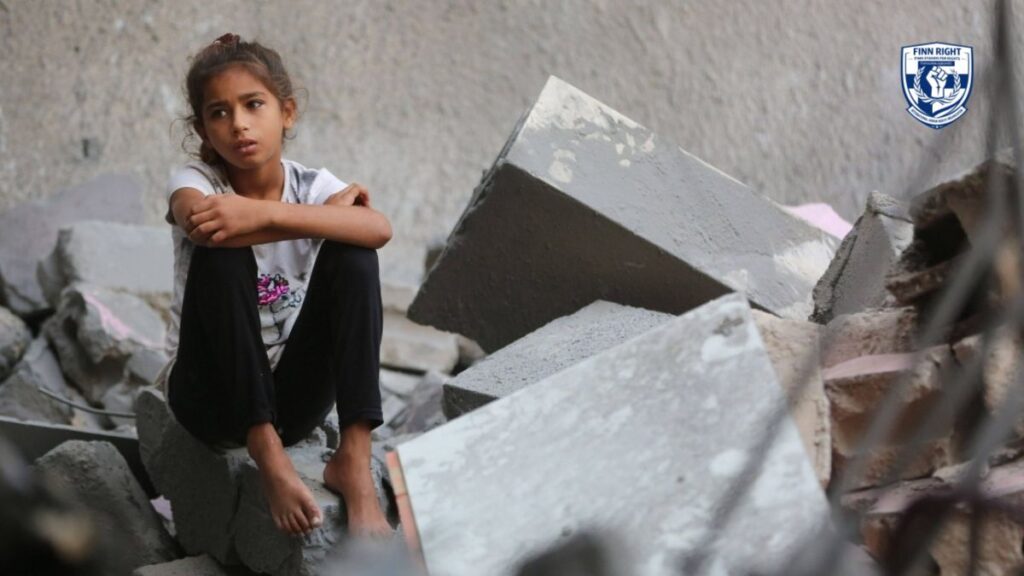
Human rights organizations have raised concerns about several categories of potential violations linked to the conflict:
Civilian Harm and Protection Failures
One of the most frequently cited issues is the high level of civilian casualties reported in densely populated areas.
Under international humanitarian law, all parties to a conflict are required to distinguish between military targets and civilians, and to avoid disproportionate use of force.
Destruction of Civil Infrastructure
Hospitals, schools, and residential buildings have reportedly been damaged or destroyed during military operations.
Such destruction raises concerns about compliance with international legal protections for civilian infrastructure.
Displacement and Humanitarian Access
Large-scale displacement has placed immense pressure on humanitarian systems, with many civilians lacking access to food, water, shelter, and medical care. Restrictions on aid delivery have further intensified humanitarian concerns.
Accountability and Legal Debate
International legal experts continue to debate whether certain actions in the conflict may constitute violations of international humanitarian law, including potential war crimes. However, formal legal determinations require independent investigation and judicial processes.
Vaikutukset yksilöihin ja yhteisöihin
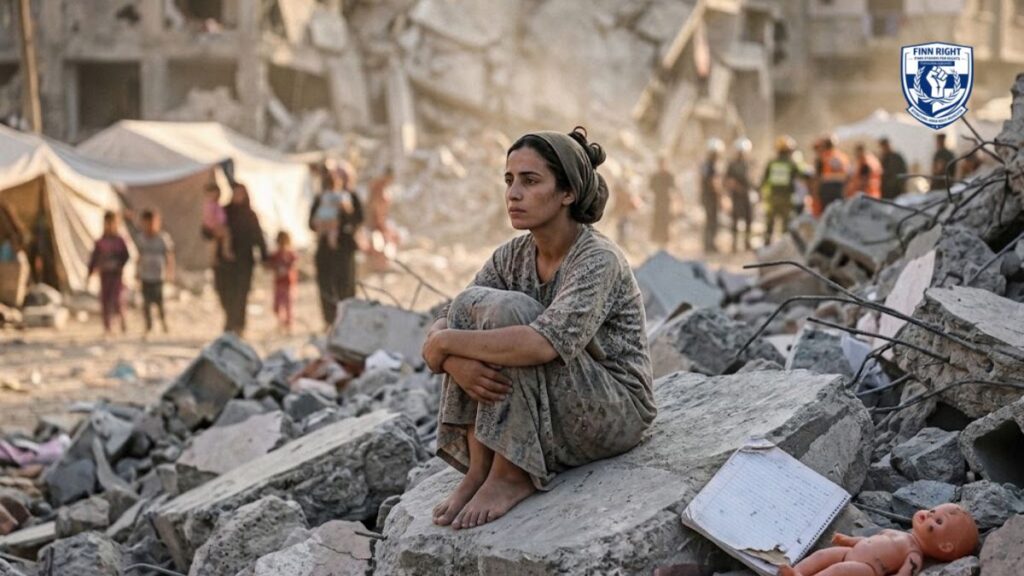
Beyond political debate, the human cost of the conflict is profound and ongoing. Families have been separated, homes destroyed, and entire communities displaced.
For civilians living in conflict zones, daily life is shaped by uncertainty and fear. Access to basic services such as healthcare, education, and clean water is severely disrupted.
Children are particularly vulnerable, both physically and psychologically, due to exposure to violence and instability.
In many cases, displacement has forced families to seek shelter in overcrowded conditions with limited resources.
The long-term social consequences include trauma, economic instability, and the breakdown of community networks.
Civil society voices across Europe argue that these human experiences must remain central in policy discussions, rather than being overshadowed by geopolitical considerations.
Oikeudellinen, poliittinen ja institutionaalinen analyysi
The European Union’s legal framework includes commitments to human rights, international humanitarian law, and ethical foreign policy standards. Under these principles, EU trade and cooperation agreements often contain clauses related to respect for human rights.
Critics argue that enforcement mechanisms are weak and inconsistently applied. This has led to accusations that economic and strategic interests sometimes outweigh human rights considerations in foreign policy decisions.
Germany and Italy, as influential EU member states, play significant roles in shaping collective European responses. Their positions often reflect a balance between historical diplomatic ties, security considerations, and domestic political pressures.
The current debate reflects a broader question within international relations: whether economic partnerships should be conditional on human rights compliance, and how such conditions should be enforced in practice.
Humanitaarinen kriisi ja pakkomuutto
The humanitarian situation in Gaza is widely described by international organizations as severe. Large populations have been displaced multiple times, and essential infrastructure has been significantly damaged.
Humanitarian agencies face ongoing challenges in delivering aid due to security risks, access restrictions, and logistical barriers. Healthcare systems are under extreme pressure, with shortages of medical supplies and personnel.
In conflict-affected areas, food insecurity has become a growing concern, with many families reliant on emergency assistance for survival. International aid organizations continue to call for sustained humanitarian access and protection of civilians.
Civilian Protection and International Law
International humanitarian law, including the Geneva Conventions, establishes clear rules for the conduct of armed conflict.
These include the protection of civilians, the prohibition of indiscriminate attacks, and obligations to ensure humanitarian access.
Human rights advocates argue that any assessment of the conflict must be grounded in these legal frameworks.
At the same time, they emphasize that accountability mechanisms must be independent and evidence-based.
The debate over potential sanctions or suspension of agreements reflects a broader legal and ethical discussion about how states should respond when serious allegations of violations arise.
Responses, Civil Society, and Political Pressure
Across Europe, civil society movements have played a significant role in shaping public debate. Protests, advocacy campaigns, and public statements have called for stronger political action, including trade restrictions and arms embargoes.
The appeal from groups such as “Finn Stands For Rights” reflects a growing demand for policy alignment with human rights principles.
These movements argue that economic and military cooperation should not continue unchanged in the face of alleged large-scale civilian harm.
At the same time, governments face competing pressures from diplomatic relationships, security alliances, and domestic political divisions.
International Response and Geopolitical Implications
The international response to the conflict has been divided. While some countries advocate for stronger measures, others emphasize diplomatic engagement and security cooperation.
Within the European Union, discussions over trade agreements and arms exports highlight internal disagreements about the most effective path forward. These debates are likely to shape EU foreign policy in the coming months.
Globally, the situation also affects broader geopolitical dynamics, including relations between Western states, Middle Eastern actors, and international institutions.
Tulevaisuuden riskit ja näkymät
The trajectory of the conflict remains uncertain. Without a sustained political solution, there is a risk of continued escalation, further civilian casualties, and deeper regional instability.
From a policy perspective, the key question facing European governments is whether continued engagement through trade and cooperation can coexist with growing human rights concerns, or whether a shift toward conditionality and sanctions will emerge.
The outcome will likely depend on political developments, diplomatic negotiations, and continued pressure from civil society actors.
Johtopäätös ja kehotus toimia
The ongoing conflict in Gaza and its regional implications have placed Europe at the center of a difficult ethical and political debate.
Calls to suspend trade agreements and halt arms transfers reflect deep concern over civilian suffering and the need for accountability under international law.
While governments must balance diplomacy, security, and economic interests, human rights organizations and civil society groups insist that the protection of civilians must remain the highest priority.
As the international Europe community continues to debate its response, the voices of affected civilians and advocacy groups underscore a central demand: accountability, protection of human life, and adherence to international humanitarian standards must guide all political decisions.
Read more on European human rights positions, global conflict updates, and international policy decisions on our site.
Yksi vastaus