
In times of war, certain rules are meant to remain absolute. Among them is the protection of children and Minab schools—spaces that symbolize safety, learning, and hope.
Yet in Minab, Iran, those protections appear to have failed catastrophically. A school became a site of destruction, and classrooms turned into graves, leaving families shattered and a community in mourning.
The bombing of a school in Minab, which reportedly killed at least 160 children and teachers, raises urgent and troubling human rights concerns.
Parents arrived to collect their children only to find rubble, silence, and unimaginable loss. The incident reflects not only the brutality of modern warfare but also the erosion of accountability and the weakening of international norms designed to protect civilians.
This report examines the human cost of the attack, the structural failures that allowed it to occur, and the broader implications for international law and the protection of children in conflict zones.
Background and Historical Context
Iran has long been situated within a complex geopolitical environment marked by tensions with global powers, particularly the United States and its allies.
Over the years, these tensions have taken many forms, including economic sanctions, political isolation, and periodic military escalations.
The reported transition into a state of war intensified these dynamics, creating an atmosphere of fear and uncertainty across civilian life.
In such contexts, civilians—especially children—often become the most vulnerable. Schools, which should serve as neutral and protected spaces, are sometimes caught in the crossfire or, more alarmingly, directly targeted.
International humanitarian law, particularly the Geneva Conventions, explicitly prohibits attacks on civilian infrastructure, including schools.
Despite these legal protections, enforcement remains inconsistent, especially in conflicts involving powerful states or complex alliances.
The events in Minab must therefore be understood not only as a single tragedy but as part of a broader pattern of civilian vulnerability in modern warfare.
Conflict Dynamics and Current Situation
The escalation of hostilities involving Iran has created a volatile and unpredictable security environment.
Reports indicate that the school in Minab was struck during a sudden military action, catching civilians completely off guard.
On the morning of the attack, school administrators began calling parents, urging them to pick up their children early.
The calls were urgent but lacked explanation. Parents, many at work or engaged in daily routines, were left confused and alarmed. Within minutes, the situation escalated into chaos.
When the strike occurred, teachers attempted to move children from one part of the school to another, hoping to protect them from danger.
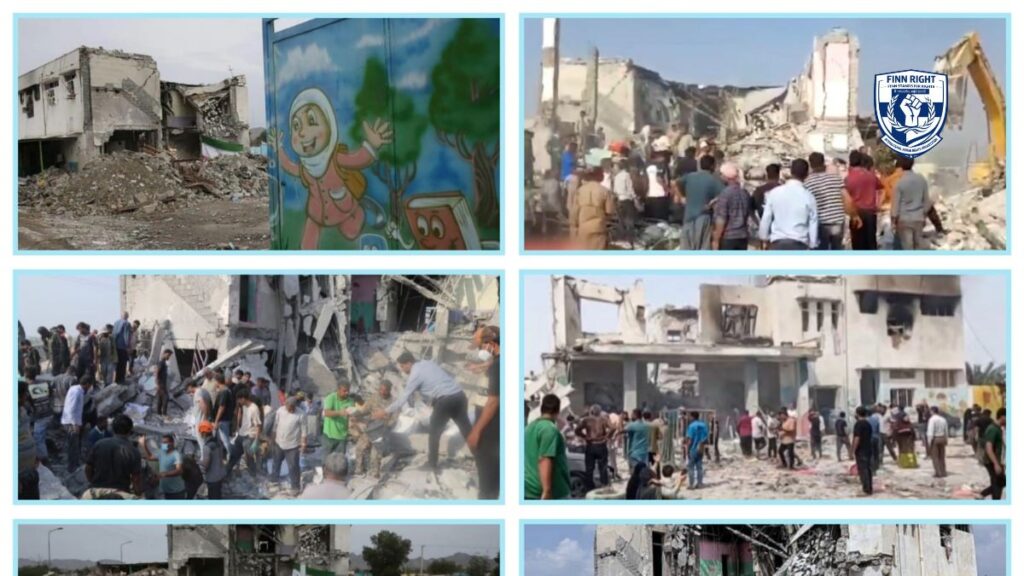
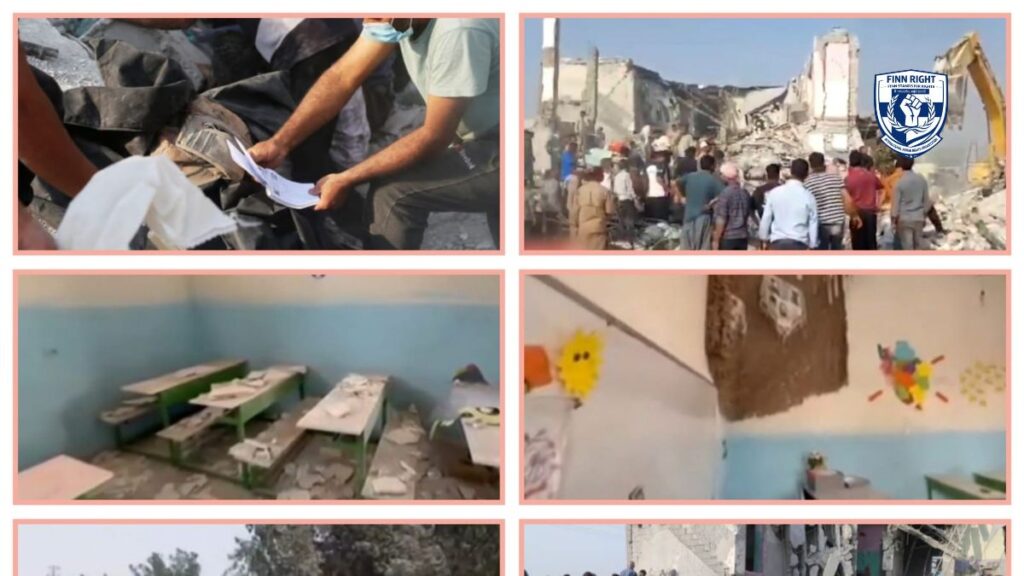
However, the scale and suddenness of the attack left little room for effective response. The section of the school where young girls were studying collapsed entirely, burying students and staff beneath the rubble.
The aftermath revealed a scene of devastation. Parents arriving at the school encountered crowds, damaged buildings, and emergency responders struggling to manage the situation.
The lack of immediate information and coordination intensified the trauma, as families searched desperately for their children.
Targeted Human Rights Violations
The Minab school bombing raises serious concerns about multiple human rights violations:
Attacks on Civilian Infrastructure
Schools are protected under international law as civilian objects. The destruction of a functioning educational institution indicates a failure to uphold these protections.
The fact that the site was reportedly not a military target further deepens concerns about the legality of the strike.
Civilian Casualties
The high number of reported deaths, including children and teachers, underscores the disproportionate impact of the attack.
Indiscriminate or disproportionate use of force in populated areas violates fundamental principles of international humanitarian law.
Lack of Accountability
One month after the incident, no party has been held accountable. While investigations have been mentioned, the absence of clear findings or responsibility raises questions about transparency and justice.
Psychological and Social Harm
Beyond physical destruction, the attack has inflicted deep psychological trauma on survivors, families, and the broader community. The loss of children in such a violent manner leaves long-lasting emotional scars.
Impact on Individuals and Communities
The human stories emerging from Minab reveal the full extent of the tragedy.
Parents recall receiving urgent phone calls from teachers, asking them to collect their children without explanation. As they rushed to the school, many were unaware that disaster had already struck.
One mother, Mozhgan, tried repeatedly to contact her daughter’s teacher, the school principal, and others connected to the school.
Each call went unanswered. When she finally arrived, she saw only rubble where the classrooms once stood.
Her husband, who reached the site earlier, described a scene of complete destruction. The boys’ section of the school was partially standing, but the girls’ section had collapsed entirely.
Rescue efforts were chaotic, with parents and volunteers digging through debris with their bare hands.
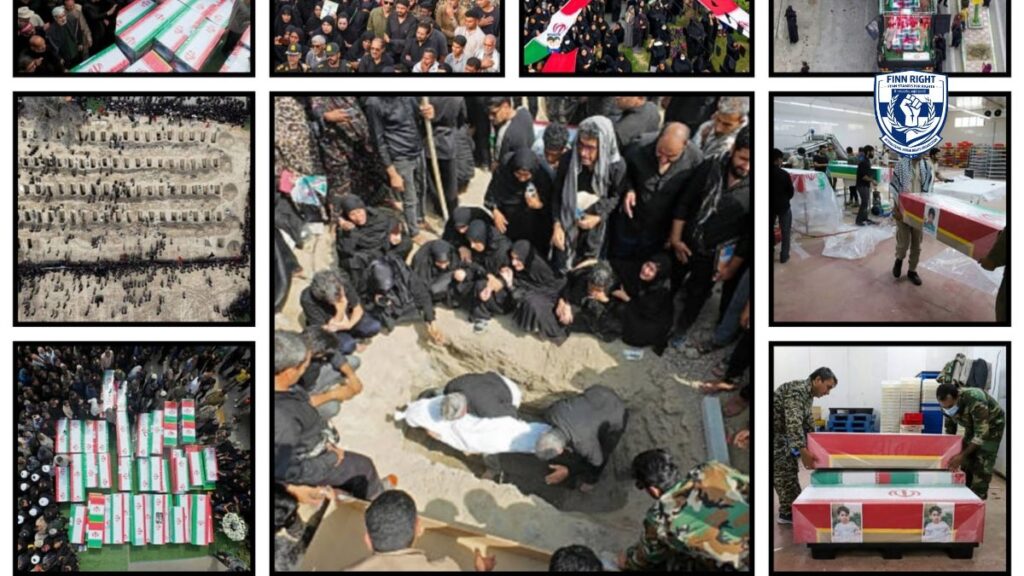
The search for survivors quickly turned into the recovery of bodies. Parents identified their children not in classrooms, but in morgues.
Some described injuries that reflected the violence of the blast—fractured skulls, broken bodies, and faces covered in dust.
Despite their grief, many parents continued to help rescue other children, driven by a shared sense of loss and humanity.
As one father described, it did not matter whose child he was saving; every child under the rubble felt like his own.
Legal, Political, and Institutional Analysis
The Minab bombing highlights critical failures in both national and international systems of accountability.
Attacks that fail to make this distinction—or that cause excessive civilian harm—may constitute war crimes.
The lack of immediate accountability raises concerns about the effectiveness of existing mechanisms for investigating and prosecuting such violations.
While statements about investigations have been made, the absence of concrete outcomes undermines trust in these processes.
Politically, the incident reflects broader tensions and the risks of escalation. In highly polarized conflicts, narratives often overshadow accountability, making it difficult to establish facts and assign responsibility.
Institutionally, there appears to be a gap between legal frameworks and enforcement. Without strong, independent investigative bodies and international cooperation, violations may go unpunished.
Humanitarian Crisis and Displacement
The attack has compounded an already fragile humanitarian situation. Families who lost children are now grappling with grief while also facing economic and social challenges.
Medical facilities struggled to handle the number of casualties. Reports indicate that morgues exceeded capacity, with additional measures required to manage the deceased. This reflects the scale of the tragedy and the strain on local infrastructure.
Survivors may require long-term medical and psychological support. However, access to such services is often limited in conflict settings, leaving many without adequate care.
Humanitarian organizations play a critical role in providing assistance, but their efforts are often constrained by security risks and limited resources.
Protection of Children and Identity-Based Vulnerability
Children are among the most vulnerable groups in any conflict. Their dependence on adults, limited mobility, and presence in fixed locations such as schools make them particularly at risk.
The Minab incident highlights how quickly these vulnerabilities can be exploited or exposed. A place designed for learning became a site of death, demonstrating the failure to uphold even the most basic protections.
The targeting—or endangerment—of children in conflict not only violates legal norms but also undermines the future of entire communities. The loss of young lives represents not just immediate tragedy, but long-term social and cultural damage.
Responses, Coping Mechanisms, and Resilience
In the face of overwhelming loss, the community of Minab has shown resilience. Parents, teachers, and volunteers worked together in rescue efforts, often risking their own safety.
Families have come together to support one another, sharing grief and providing emotional assistance. Community solidarity has become a crucial coping mechanism, helping individuals navigate their trauma.
At a broader level, human rights organizations have begun to raise awareness, calling for investigations and accountability. These efforts aim to ensure that the voices of affected families are heard beyond their immediate surroundings.
International Response and Global Implications
The Minab school bombing has significant implications for the international community. It raises urgent questions about the effectiveness of global systems designed to protect civilians and enforce accountability.
While some organizations have condemned the incident and called for investigations, broader international action remains limited. This gap highlights the challenges of addressing violations in politically sensitive conflicts.
The case also underscores the need for stronger mechanisms to protect children in war. Without consistent enforcement, existing laws risk becoming symbolic rather than practical safeguards.
Future Risks and Outlook
If such incidents go unpunished, they may contribute to a normalization of attacks on civilian infrastructure.
Future risks include:
- Continued targeting of civilian sites
- Increased fear and displacement among communities
- Erosion of trust in international legal systems
- Long-term psychological and social impacts on survivors
- Minab
Addressing these risks requires not only immediate investigation but also structural reforms to strengthen accountability mechanisms.
Conclusion and Call to Action
The tragedy in Minab is more than a single it is a reflection of systemic failures in protecting the most vulnerable during conflict. Children lost their lives in a place meant for learning, and families were left to search through rubble for answers and closure.
Justice must not remain an abstract concept. It requires concrete action:
- Independent and transparent investigations into the attack
- Accountability for those responsible
- Strengthened protections for schools and children in conflict zones
- Increased support for affected families and communities
- Minab
The international community must recognize that the protection of children is not optional—it is a fundamental obligation. Without decisive action, the voices of Minab’s children risk being buried not only under rubble, but under silence.
Read more about the Minab tragedy and global human rights violations on our site