When you envision Austria, your mind likely drifts to the alpine peaks, the classical resonance of Mozart, or the historic coffee houses of Vienna. However, beyond the Baroque facades lies a powerful, evolving narrative of resilience: the history and current state of women’s rights in Austria.
For those relocating to Austria or simply interested in how modern European societies function, understanding gender equality is essential. It is the invisible thread ensuring that every citizen—regardless of sex—feels safe, supported, and empowered.
Women’s Rights in Austria Facts: The Historical Turning Point
To truly grasp the progress made, we must look at the women’s rights in Austria facts that shaped the nation. Imagine a world where domestic life was considered “none of the government’s business.” For decades, issues like domestic violence were hidden behind closed doors.
Historically, human rights norms were designed only to protect citizens from state interference, often neglecting the private sphere where women spent most of their lives.
The real turning point began during the International Year of Women in 1975. This was the catalyst for the United Nations to scrutinize the lives of women globally. A major milestone for Austria was the adoption of the Convention on the Elimination of All Forms of Discrimination Against Women (CEDAW) in 1979.
This treaty acts as an international bill of rights for women, establishing a committee of experts to review how countries treat their female citizens.
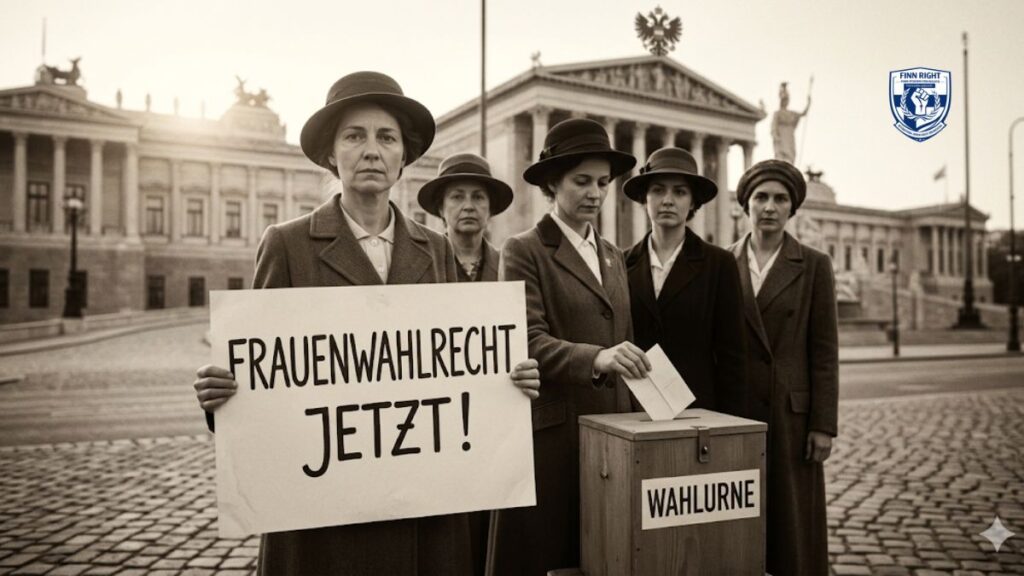
A Historical Anecdote: In the 1920s, while women in many nations were finally exercising their new voting rights, Vienna employed a curious method of tracking: different colored envelopes for women’s ballots.
Remarkably, this practice of monitoring voting rights for women through colored envelopes continued in some administrative forms until 1996! It serves as a reminder that institutional gender equality takes decades to fully mature.
Women’s Rights in Austria Wikipedia: The Legal Framework
While a search for women’s rights in Austria Wikipedia will provide a broad overview, the core of the matter is enshrined in the Constitution. In Austria, gender equality is a strict constitutional mandate.
Article 7 of the Federal Constitutional Act states that “all nationals are equal before the law” and excludes any privilege based on sex.
In 1998, Austria strengthened this by adding a specific responsibility for authorities at all levels—federal, state, and municipality—to implement measures that achieve the actual equality of women and men. This led to the revolutionary concept of gender budgeting.
What is Gender Budgeting?
It is a financial strategy where the government analyzes how public funds affect men and women differently. For example, when planning public infrastructure, authorities must ensure routes are safe and accessible for women traveling during late hours. This is economic empowerment integrated into the national ledger.
Women’s Rights in Austria 2022 and Beyond: Workplace Realities
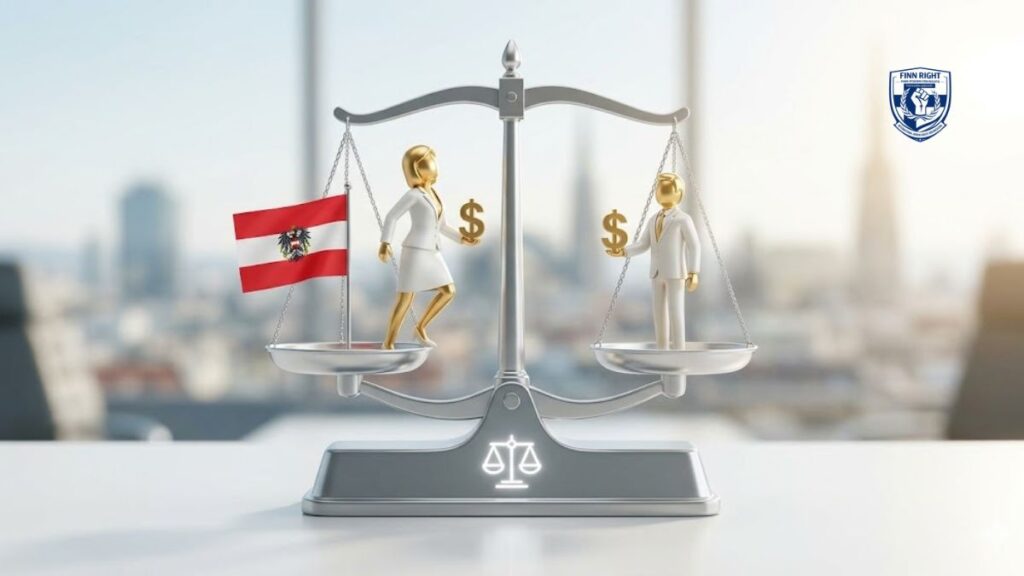
Reviewing the progress of women’s rights in Austria 2022, we see that Austria offers vast professional opportunities, yet it still battles a persistent Gender Pay Gap.
Currently, women earn approximately 19.9% less than men on average. However, the government and various women’s rights organizations in Austria are aggressively working to close this gap.
Key Workplace Protections:
- The Equal Treatment Act: This primary law prohibits gender-based discrimination at work. You cannot be denied a promotion or paid less simply based on your sex.
- The 30% Quota: Since the Supervisory Boards Act of 2017, large listed companies must ensure women constitute at least 30% of their supervisory boards. We are seeing more women in leadership positions than ever before.
- Maternity Protection: Austria provides a robust Wochengeld (maternity cash benefit). Women are prohibited from working 8 weeks before and 8 weeks after birth to protect their health.
- Women’s Rights in Austria
Women in Austria: Safety and The Istanbul Convention
The status of women in Austria is defined by a “zero tolerance” policy toward violence against women. The country was among the first to ratify the Istanbul Convention, the first legally binding instrument in Europe to create a comprehensive legal framework to prevent violence and protect victims.
Whether it is domestic violence, forced marriage, or human trafficking, the National Action Plan Against Human Trafficking ensures that victims have access to immediate consular protection and legal recourse.
How Safe is Austria in International Comparison?
When asking how safe is Austria in international comparison, the answer is highly encouraging. According to the Gender Equality Index, Austria consistently ranks among the top performers in the European Union.
In terms of security, justice, and inclusion, Austria often places within the top 10 globally. This safety is a result of both strict laws and a culture that values freedom from violence.
Austrian Woman Called: Terminology and Traits
An Austrian woman called locally is an “Österreicherin.” Beyond the name, Austrian woman traits are often characterized by a strong sense of independence, professional ambition, and a high value on education.
In modern Austria, women are increasingly breaking traditional stereotypes, leading in fields from mountain rescue to high-tech engineering.
Women’s Rights in Austria PDF: A Guide to Your Resources
If you are looking for a women’s rights in Austria PDF or a formal guide to exercise your rights, follow this step-by-step process:
- Consult the Ombudsperson: The Ombudsperson for Equal Treatment (Gleichbehandlungsanwaltschaft) provides free, confidential advice for victims of gender-based discrimination.
- Contact Division III: The Division for Women’s Affairs and Equality in the Federal Chancellery supports over 250 projects annually, including counseling centers and emergency shelters.
- Check Local “Länder” Resources: Each of the nine Austrian states (Länder) has its own regional structures for promoting women’s rights.
- Use Gender Statistics: Access data from Statistics Austria to understand your standing in the labor market and ensure you are receiving equal treatment.
- Women’s Rights in Austria
Why Stand with FinnRight?
The progress of women’s rights in Austria serves as a blueprint for our work at FinnRight. However, maintaining this progress requires constant monitoring of UN Resolution 1325 and local legislative shifts.
By supporting FinnRight, you empower us to:
- Advocate for Transparency: We push for further transparency in the Gender Pay Gap.
- Provide Education: We simplify complex legal frameworks into actionable information.
- Support Inclusion: We help ensure that women in power and women in business continue to grow in number.
[Support Our Mission — Donate to Finn Right Today] Join us with confidence. Your contribution helps us fight for freedom from violence and equal opportunity for all women across Europe.
The Future: Women in Power
In 2020, Austria achieved a historic milestone: a Cabinet with more women than men. This visibility of women in power is essential for inspiring the next generation.
From achieving voting rights in 1918 to the economic empowerment of 114,000 female entrepreneurs today, the trajectory is clear.
Austria remains a global leader in human rights, ensuring that every woman can lead with confidence and security.
Conclusion: Writing the Next Chapter Together
Austria has come a long way from the days of colored voting envelopes to seated women-majority cabinets. Today, women’s rights in Austria are not just a collection of laws in a PDF or a list of facts on Wikipedia; they are the lived reality of every Austrian woman…
[Join the Movement — Support Finn Right Now]
FAQ
Which country is no 1 in women’s safety? Denmark is currently ranked as the safest country for women globally due to its exceptionally high scores in inclusion, justice, and security.
Is LGBTQ allowed in Austria? Yes, LGBTQ+ individuals have full legal protection in Austria, including the right to same-sex marriage and protection against discrimination in all spheres of life.
Is Austria right or left wing? Austria operates as a multi-party parliamentary democracy, currently governed by a coalition that balances conservative (right) and green (left/progressive) policies.
What country has the strongest women’s rights? Norway consistently ranks at the top of the Global Gender Gap Index, offering the world’s most robust legal and social protections for women’s rights.
Which country is the most female friendly? Iceland is widely considered the most female-friendly country, having closed over 90% of its gender gap through progressive labor and equality laws.
2 Responses