
Syria has Justice entered a historic and deeply sensitive chapter. A Syrian court has opened its first hearing in the trial of ousted president Bashar al-Assad and senior officials linked to his former government.
For millions of Syrians who endured war, imprisonment, torture, displacement, and the loss of loved ones, the proceedings represent more than a courtroom event—they symbolize a long-delayed search for justice.
The trial comes after years in which victims and survivors often saw impunity prevail while suffering continued.
Bashar al-Assad and his brother Maher al-Assad, both reported to have fled Syria, are being tried in absentia.
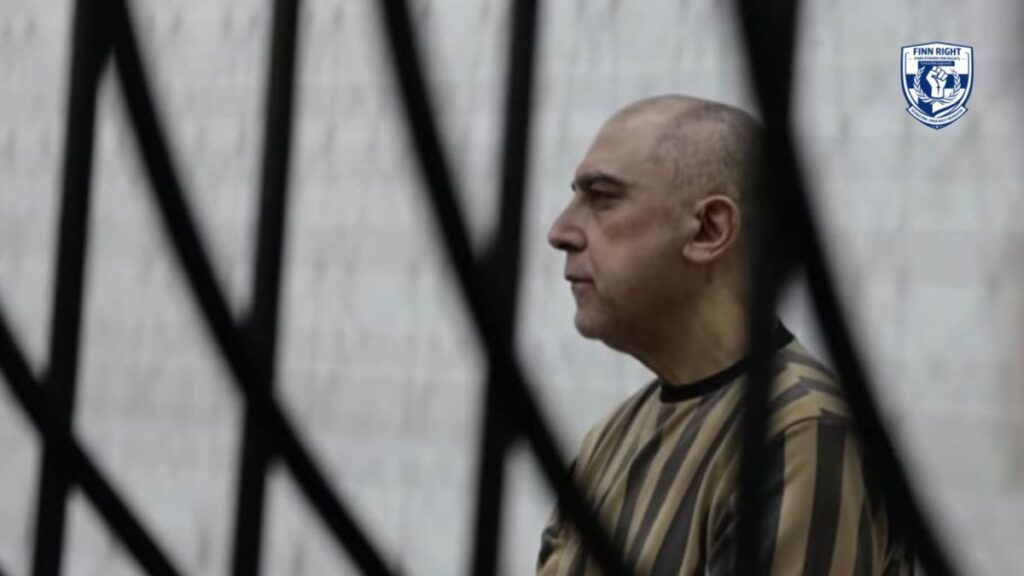
Former security official Atif Najib appeared in court in handcuffs, while other former officials may face in-person proceedings.
For human rights defenders, this moment raises two urgent questions. Can Syria finally begin to hold powerful perpetrators accountable?
And can justice be pursued fairly, transparently, and without becoming an instrument of revenge?
Organizations committed to human rights, including Finn Stands For Rights, have emphasized that even those accused of grave crimes must receive fair and open trials.
This principle is central to genuine justice: accountability must be lawful, transparent, and rooted in human dignity.
Tausta ja historiallinen konteksti
The Syrian conflict is one of the most devastating crises of the 21st century. What began as public protests calling for political reform evolved into a prolonged war marked by state repression, armed conflict, foreign intervention, and humanitarian collapse.
Over the years, millions were displaced inside and outside Syria, entire cities were damaged or destroyed, and generations grew up amid violence.
The former Syrian government under Bashar al-Assad was repeatedly accused by international monitors, survivors, and rights groups of widespread abuses.
These allegations included arbitrary detention, torture, enforced disappearances, attacks on civilian areas, denial of humanitarian aid, and collective punishment of communities perceived as disloyal.
State institutions that should have protected citizens often became instruments of fear. Security agencies operated with broad powers and limited accountability.
Families searching for detained relatives were frequently met with silence. In many cases, people disappeared into detention systems and were never seen again.
For years, many victims believed that justice was impossible. Political deadlock, ongoing war, and international divisions prevented meaningful accountability efforts.
The opening of domestic court proceedings therefore carries enormous symbolic and practical significance. It signals that even entrenched power structures can be challenged, though the road ahead remains uncertain.
Conflict Dynamics and the Current Political Moment
The fall or removal of long-standing authoritarian systems often creates a fragile transition period. Institutions are weakened, trust is low, and public anger is high. Syria now appears to be navigating such a moment.
Trials of former officials usually occur in environments shaped by competing pressures:
- Survivors demand truth and accountability.
- Political actors seek legitimacy.
- Security concerns remain active.
- Judicial systems may be damaged by years of conflict.
- Justice
The first hearing against Bashar al-Assad and former officials reflects these tensions. On one hand, proceedings may help establish the rule of law after years of impunity.
On the other, any perception of selective justice, rushed procedures, or political interference could undermine confidence.
The fact that Assad and Maher al-Assad are being tried in absentia presents another challenge. Trials without defendants present can still carry legal significance in some systems, but they often raise concerns about enforcement, representation rights, and public confidence in outcomes.
Meanwhile, the presence of former security official Atif Najib in court in handcuffs sends a powerful message: figures once associated with state authority may now face scrutiny under the law.
Targeted Human Rights Violations Under the Former System
The significance of these trials lies in the scale and seriousness of alleged abuses committed over many years.
Syria’s conflict was not only a battlefield struggle; it was also a human rights catastrophe affecting civilians on a massive scale.
Arbitrary Arrest and Detention
Countless Syrians were reportedly detained without due process. People were arrested at checkpoints, during raids, or after participating in protests. Many families received no information about where relatives were taken.
Torture and Ill-Treatment
Former detainees, investigators, and rights organizations documented allegations of torture in detention centers. Abuse was reportedly used to punish dissent, extract confessions, or instill fear.
Enforced Disappearances
One of the most painful features of the conflict has been the disappearance of thousands of people. Families continue searching for answers years later. The uncertainty itself becomes a form of ongoing suffering.
Attacks on Civilians and Civilian Infrastructure
Throughout the war, civilian neighborhoods, hospitals, schools, and markets were repeatedly affected by violence. Whether through direct attacks, siege tactics, or indiscriminate operations, ordinary people carried the burden.
Collective Punishment and Forced Displacement
Large populations were uprooted. Communities associated with opposition-held areas often faced severe pressure, including siege, bombardment, or forced flight.
Vaikutukset yksilöihin ja yhteisöihin
Behind every courtroom file is a human life altered by violence. Justice processes must recognize not only crimes in legal terms, but suffering in human terms.
Families Torn Apart
Many Syrians lost relatives to detention, conflict, or displacement. Some still do not know whether loved ones are alive. Parents aged while waiting for news. Children grew up without mothers or fathers.
Trauma and Fear
Years of surveillance, arrest risk, shelling, and insecurity left deep psychological scars. Even after violence subsides, trauma often remains embedded in daily life. Loud sounds, uniforms, or official buildings can trigger fear.
Yhteiskunnallinen pirstoutuminen
Conflict damaged trust within neighborhoods and institutions. Informants, militia networks, sectarian narratives, and political divisions fractured communities that once lived together. Rebuilding social cohesion may take decades.
Exile and Statelessness
Millions of Syrians became refugees or internally displaced persons. Many now live in uncertainty, with limited rights, unstable housing, and restricted access to education or employment.
For these communities, trials are not abstract legal exercises. They are connected to memory, dignity, and whether suffering is publicly acknowledged.
Oikeudellinen, poliittinen ja institutionaalinen analyysi
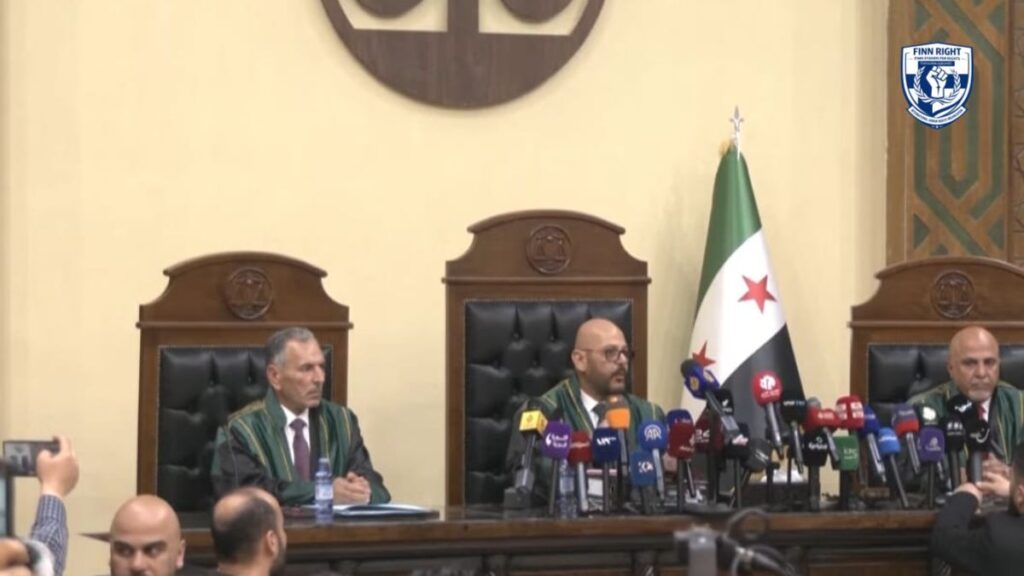
A credible justice process requires more than arrests or headlines. It requires functioning institutions guided by law. Syria’s challenge is immense because years of conflict likely weakened judicial independence and administrative capacity.
The Importance of Fair Trials
Human rights standards require that even those accused of grave crimes receive:
- Access to legal representation
- The right to respond to charges
- Public and transparent hearings where possible
- Independent judges
- Protection from torture or coercion
- Judgments based on evidence, not political pressure
- Justice
This is why organizations such as Finn Stands For Rights stress that Syrian authorities must use all lawful means while ensuring fair and open trials. Justice without fairness becomes vengeance; fairness without accountability becomes impunity.
Trials in Absentia
Proceeding against absent defendants may be legally permitted under some systems, but it should include safeguards, including representation rights and opportunities for retrial if defendants later appear.
Institutional Trust
For many Syrians, courts were historically associated with power rather than protection. Rebuilding trust means showing that the law now serves citizens rather than rulers.
Humanitaarinen kriisi ja pakkomuutto
The conflict’s humanitarian consequences remain vast. Even as court proceedings begin, millions of Syrians continue to struggle for survival.
Housing and Shelter
Many homes were destroyed or damaged. Displaced families remain in camps, unfinished buildings, or precarious rental arrangements.
Healthcare
War severely strained medical systems. Survivors of torture, injury, and trauma often lack sustained treatment.
Livelihoods
Economic collapse and displacement have left many families dependent on aid or unstable informal work.
Education
Children lost years of schooling due to conflict and displacement, creating long-term developmental harm.
Justice processes should not ignore these realities. Accountability and humanitarian recovery must move together.
Identity, Power, and Patterns of Persecution
The Syrian conflict was shaped by political repression, but identity also influenced vulnerability. Communities were sometimes targeted based on perceived loyalty, geography, sect, ethnicity, or political affiliation.
When states or armed actors frame groups as enemies, abuses become easier to justify. This is why protecting equal citizenship is essential in post-conflict recovery. No community should be punished collectively for politics, identity, or location.
Reaktiot, selviytymiskeinot ja resilienssi
Despite extraordinary suffering, Syrians have shown remarkable resilience.
Documentation and Memory
Families, activists, lawyers, and survivors preserved records, testimonies, names, and evidence. This work often occurred at great personal risk and now forms the backbone of accountability efforts.
Community Support Networks
Displaced communities built informal systems for food sharing, childcare, education, and emotional support.
Diaspora Advocacy
Syrians abroad played a major role in keeping global attention on disappearances, detainees, and war crimes.
Survivor Courage
Appearing in court, giving testimony, or publicly naming abuse requires immense bravery. Many survivors continue despite trauma.
Kansainvälinen reaktio ja maailmanlaajuiset vaikutukset
The world’s response to Syria was often fragmented and inconsistent. While humanitarian aid flowed and some sanctions were imposed, geopolitical divisions limited unified accountability mechanisms.
The current trial has broader implications:
- It may encourage other domestic accountability efforts.
- It can help deter future abuses by signaling that impunity is not permanent.
- It tests whether post-conflict societies can pursue justice while respecting due process.
If successful and credible, the process could become a model for balancing accountability with legal fairness. If mishandled, it may deepen cynicism and division.
Tulevaisuuden riskit ja näkymät
The trial alone cannot heal Syria. Serious risks remain:
Politicized Justice
If prosecutions target only some actors while ignoring others, confidence will erode.
Weak Institutions
Courts need resources, training, archives, witness protection, and independence.
Security Instability
Unresolved armed tensions can threaten judges, witnesses, and victims.
Public Expectations
Survivors may expect rapid transformation. In reality, justice is slow and often painful. Managing expectations honestly is essential.
Still, this moment offers opportunity. Transparent proceedings, truth-telling, reparations, and institutional reform could begin rebuilding a society damaged by fear.
Johtopäätös ja kehotus toimia
The first Syrian court hearing against Bashar al-Assad and former officials is more than a legal milestone—it is a moral test.
Can a society scarred by war confront its past through law rather than revenge? Can survivors finally see institutions acknowledge their pain?
Millions suffered during Syria’s long conflict. Many lost relatives, homes, freedom, or futures. They deserve more than symbolic gestures. They deserve truth, accountability, and guarantees that such abuses will not be repeated.
Syrian authorities must ensure these trials are fair, open, and evidence-based. Defendants’ rights must be protected, not because they are powerful, but because justice must be principled.
Victims must be heard, witnesses safeguarded, and records preserved.
The international community should support independent monitoring, technical judicial assistance, humanitarian recovery, and survivor-centered accountability.
Justice delayed has already cost Syria dearly. Justice denied would cost even more.
Read more about justice in Syria, war crimes trials, and global human rights updates on our site.