
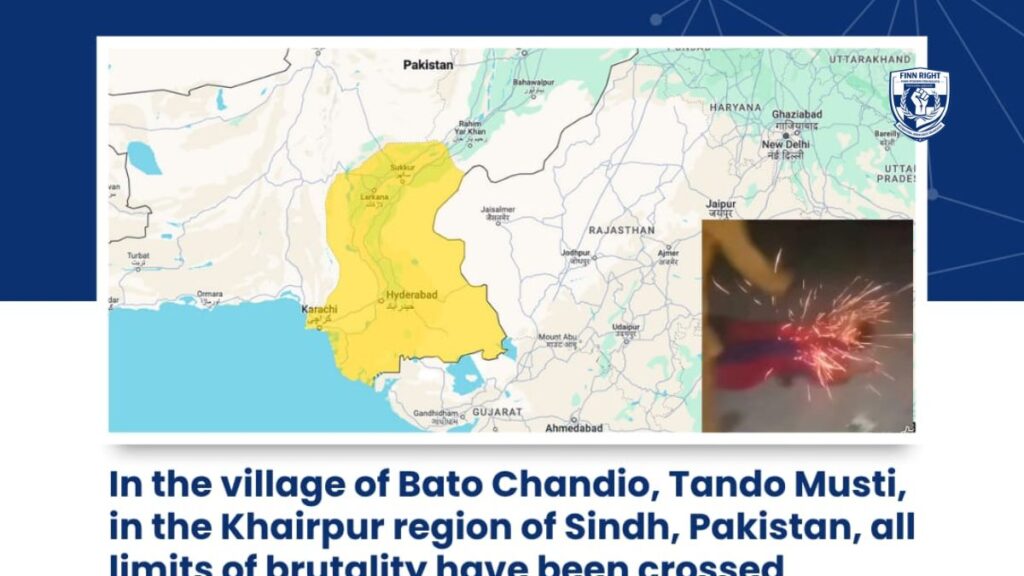
Killing In the village of Bato Chandio, Tando Busti, in the Khairpur region of Sindh, Pakistan, a young woman named Robeena Chandio was reportedly murdered in public in the name of “Karo-Kari,” a practice widely associated with so-called honor killings.
According to the provided account, the killing took place in front of hundreds of spectators, raising urgent questions about impunity, state failure, and the normalization of gender-based violence.
The reported murder is not an isolated act of brutality. It reflects a deeper human rights crisis in which women and girls are punished, controlled, and sometimes killed under the language of family “honor Killing.”
Such crimes are often rooted in patriarchal power structures, weak law enforcement, community silence, and social acceptance of violence.
Robeena Chandio’s death, if fully verified and investigated as described, demands more than condemnation. It requires accountability, legal enforcement, and sustained action to dismantle customs that place women’s lives at risk.
The case also highlights the urgent need for the Sindh government and the Government of Pakistan to confront Karo-Kari and protect those vulnerable to such abuse.
Tausta ja historiallinen konteksti
“Karo-Kari” is a term historically used in parts of Sindh and other areas of Pakistan to describe accusations of illicit relationships or perceived violations of family honor Killing.
In many cases, the accusation alone can trigger deadly violence. Men and women may both be accused, but women disproportionately bear the consequences, facing public shaming, forced marriage, assault, or Killing.
The practice is rooted not in religion, but in patriarchal social systems that link a family’s reputation to women’s behavior, autonomy, and sexuality. Across generations, these ideas have been reinforced through tribal customs, feudal power dynamics, and unequal access to justice.
Pakistan has laws criminalizing murder and has introduced reforms intended to curb honor killings. However, implementation remains uneven.
In some communities, local influence, fear of retaliation, corruption, or social pressure weakens enforcement. Families may avoid reporting crimes, witnesses may remain silent, and police may fail to intervene early despite warning signs.
Sindh, like many regions, contains communities where modern legal protections coexist uneasily with older customary systems. Where the state is absent or ineffective, violent traditions can continue under the cover of culture.
Konfliktin kulku ja nykytilanne
The reported killing of Robeena Chandio exposes a dangerous conflict between constitutional rights and informal power structures. On paper, Pakistan’s legal framework protects life, dignity, and equality before the law. In practice, some women remain vulnerable to parallel systems of control where family elders, local actors, or mob pressure can determine fate faster than courts or police.
The allegation that the killing occurred in front of hundreds of spectators is especially alarming. Public violence of this nature suggests not only an individual crime but a collective breakdown of deterrence. When perpetrators believe they can kill openly, it signals confidence in impunity. When bystanders do not intervene, it suggests fear, coercion, normalization, or lack of trust in state protection.
This is how gender violence sustains itself: not only through those who commit it, but through institutions that fail to prevent it and communities conditioned to tolerate it.
Kohdennetut ihmisoikeusrikkomukset

The reported murder of Robeena Chandio represents multiple human rights violations that extend beyond homicide.
Right to Life
The most fundamental human right is the right to life. Any killing carried out in the name of “honor” is a direct violation of that principle. No social custom can justify murder.
Gender-Based Violence
Honor killings are a form of gender-based violence. They are rooted in discrimination and control over women’s choices, movement, marriage, and identity.
Cruel, Inhuman, and Degrading Treatment
Public killings, threats, humiliation, and collective punishment create terror not only for the victim but for all women in the community.
Equality Before the Law
When certain crimes are socially excused or weakly prosecuted, women are denied equal protection under the law.
Freedom and Personal Autonomy
Women targeted under Karo-Kari are often denied the right to choose relationships, marriage, or independent lives.
Vaikutukset yksilöihin ja yhteisöihin

The killing of one woman sends fear through an entire community. Crimes committed in the name of honor are designed not only to punish an individual but to warn others.
Fear Among Women and Girls
When a woman is killed publicly, girls learn a devastating lesson: disobedience, suspicion, or rumor can become fatal. This fear can shape education choices, mobility, and mental health.
Family Trauma
Even when families are implicated, relatives—including siblings, children, and mothers—may experience severe trauma, grief, and long-term psychological harm.
Community Silence
Witnessing public brutality can normalize violence or create fear of speaking out. Over time, silence becomes survival.
Intergenerational Harm
Children raised in environments where violence is accepted may internalize harmful gender roles and distrust legal institutions.
Oikeudellinen, poliittinen ja institutionaalinen analyysi
Pakistan has enacted legal reforms intended to reduce honor killings and close loopholes that once enabled compromise settlements. Yet laws alone are not enough.
Weak Enforcement
In many cases, the core problem is not absence of law but failure to apply it consistently. Delayed investigations, poor evidence collection, political pressure, and witness intimidation can undermine justice.
Influence of Local Power Structures
In rural and semi-rural settings, local elites or influential families may discourage reporting or pressure authorities.
Police Protection Gaps
Women at risk often lack access to safe shelters, emergency hotlines, or rapid police intervention.
Misuse of Customary Language
When murder is framed as tradition, perpetrators attempt to cloak violence in legitimacy. States must reject such framing clearly and consistently.
Human Rights Standards
International human rights principles require states to exercise due diligence: prevent foreseeable violence, investigate crimes promptly, prosecute offenders, and protect those at risk.
Humanitarian Crisis and Protection Needs
While this case centers on one reported killing, the broader environment of honor-based violence creates a protection crisis.
Safe Housing and Shelters
Women facing threats may need confidential shelters, relocation support, and legal assistance.
Access to Justice
Victims and witnesses need affordable legal pathways, secure reporting systems, and trauma-informed handling.
Healthcare and Trauma Support
Survivors of attempted killings or abuse require emergency medical care and psychological services.
Civil Society Support
Human rights groups, women’s rights defenders, lawyers, and journalists often fill gaps left by state systems.
Identity, Gender, and Structural Vulnerability
Karo-Kari is not random violence. It reflects structural inequality.
Women become vulnerable when societies tie male status to female obedience. A rumor, allegation, refusal of marriage, or desire for autonomy may be treated as a challenge to male authority. In such systems, violence is used to restore control.
Poorer women, rural women, and those with limited education or mobility may face even greater risk because they have fewer escape options and less access to state protection.
The case of Robeena Chandio therefore reflects not only one alleged act, but the broader condition of women whose rights remain contingent on family approval rather than guaranteed by law.
Reaktiot, selviytymiskeinot ja resilienssi
Despite serious risks, women and communities across Pakistan continue to resist honor-based violence.
Women’s Rights Advocacy
Activists, lawyers, and civil society groups have campaigned for stronger laws, better enforcement, and survivor protection.
Community Education
Some local initiatives challenge harmful norms through schools, religious leaders, youth programs, and public dialogue.
Digital Awareness
Social media increasingly brings attention to cases that might once have remained hidden, creating pressure for investigations.
Survivor Courage
Many women continue to seek education, employment, and autonomy despite threats. Their resilience is a powerful challenge to systems of fear.
Human Rights Appeals
Organizations such as Finn Stands For Rights calling for investigation and abolition of Karo-Kari contribute to international visibility and accountability pressure.
Kansainvälinen reaktio ja maailmanlaajuiset vaikutukset
Honor-based killings are recognized globally as serious human rights abuses. Cases in Pakistan attract international concern because they reflect a wider struggle between legal rights and patriarchal violence.
The international community can support change through:
- Support for women’s protection programs
- Capacity-building for investigators and prosecutors
- Backing local human rights defenders
- Encouraging data collection and transparency
- Promoting gender equality initiatives
- Killing
However, sustainable change must be locally led and rooted in communities, institutions, and political will.
Tulevaisuuden riskit ja näkymät
Without decisive action, several risks remain:
Continued Impunity
If perpetrators are not swiftly prosecuted, future crimes become more likely.
Copycat Violence
Public killings can embolden others if seen as consequence-free.
Deepening Fear
Women may withdraw further from education, work, and public life.
Distrust in Institutions
Failure to act damages confidence in police, courts, and government.
Yet there is also opportunity. Public outrage, media attention, and advocacy can drive reform when authorities respond seriously.
Johtopäätös ja kehotus toimia
The reported killing of Robeena Chandio in Khairpur is a profound test of justice, governance, and human dignity. If a young woman can be murdered publicly in the name of so-called honor, then the issue is not only one crime—it is a system that still permits women’s lives to be treated as expendable.
The Sindh government and the Government of Pakistan should ensure an immediate, independent, and transparent investigation into Robeena Chandio’s killing.
All those responsible—including direct perpetrators, accomplices, and any officials who failed in their duty—must face justice under the law.
Beyond one case, authorities must move decisively to eliminate Karo-Kari and all forms of honor-based violence through enforcement, protection services, education, and accountability.
No tradition can justify murder. No custom can outweigh a woman’s right to live. Justice for Killing Robeena Chandio must become part of a larger commitment: that no woman in Pakistan should ever again face death in the name of honor.
Read more reports on killing cases, women’s rights, and justice issues on our site.