The humanitarian situation in Gaza Civilian has reached a level of devastation that human rights organizations describe as one of the gravest crises of recent years.
According to figures highlighted by Finn Right International, the reported death toll has surpassed 72,938 people, including more than 21,283 children.
The scale of civilian suffering has intensified international concern over the protection of noncombatants, the destruction of civilian infrastructure, and the long-term consequences of prolonged conflict.
Human rights advocates warn that the impact of the violence extends far beyond casualty figures.
Entire communities have been displaced, families have been separated, healthcare systems have collapsed under pressure, and children have become among the most affected victims of the conflict.
As the crisis continues, growing calls are being made for accountability, immediate civilian protection, and urgent international intervention.
The situation in Gaza has also become a major test for international human rights institutions, humanitarian organizations, and global political leadership.
Questions surrounding international law, civilian protection, and state responsibility remain central to ongoing debates about the conflict and its consequences.
Background and Historical Context
The Gaza Strip has experienced decades of political instability, armed conflict, economic restrictions, and humanitarian challenges.
Home to a densely populated civilian population, Gaza has repeatedly been the center of military confrontations that have caused widespread destruction and civilian suffering.
Years of conflict have weakened essential infrastructure, including hospitals, schools, water systems, and electricity networks.
Humanitarian organizations have long warned that repeated cycles of violence create conditions that make recovery increasingly difficult.
Each new escalation compounds existing vulnerabilities, leaving civilians with fewer resources and protections.
The current crisis has emerged within this broader context of instability. Human rights groups argue that understanding the scale of today’s suffering requires acknowledging years of political deadlock, recurring hostilities, and inadequate protection for civilian populations.
For many residents, life before the current escalation was already marked by economic hardship, restricted movement, limited employment opportunities, and dependence on humanitarian assistance.
The latest violence has significantly worsened these conditions, pushing many communities into deeper insecurity.
Conflict Dynamics and Current Situation
The current conflict has produced destruction on a massive scale. Residential neighborhoods, public infrastructure, healthcare facilities, and civilian gathering areas have reportedly suffered extensive damage.
Human rights organizations continue to raise concerns about the intensity of military operations and their impact on civilians.
Reports indicate that densely populated areas have experienced repeated attacks, increasing the likelihood of civilian casualties and displacement.
Finn Right International has described the situation as a humanitarian catastrophe, highlighting the reported deaths of more than 72,000 people and emphasizing the exceptionally high number of child fatalities.
According to the organization’s findings, children account for approximately 29 percent of the reported deaths.
The scale of destruction has transformed daily life across Gaza. Many civilians face constant uncertainty regarding access to shelter, food, medical care, and basic safety.
Families frequently move between locations in search of protection, often without clear information about where safety can be found.
Human rights observers note that modern conflicts increasingly affect civilians directly, particularly in densely populated urban environments.
In Gaza, the overlap between civilian life and military activity has contributed to severe humanitarian consequences.
Civilian Casualties and Human Rights Concerns
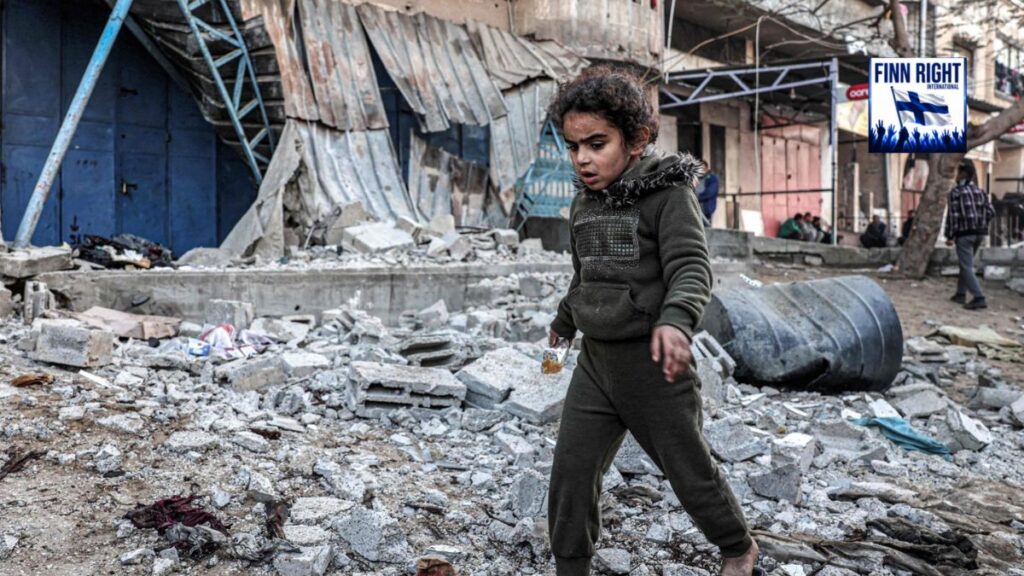
One of the most alarming aspects of the crisis is the reported scale of civilian deaths. Human rights organizations have repeatedly stressed that civilian protection must remain a central obligation under international humanitarian law.
The reported death of more than 21,000 children has become a particularly urgent concern for advocacy groups and humanitarian agencies.
Children represent one of the most vulnerable populations during armed conflict, facing risks that extend beyond immediate physical harm.
The loss of children affects entire communities. Schools lose students, families lose sons and daughters, and communities lose future generations. Human rights advocates argue that the long-term social consequences of such losses may continue for decades.
Reports from humanitarian organizations also point to concerns regarding injuries, psychological trauma, and long-term disabilities among survivors.
Many children who survive conflict experience lasting emotional and mental health impacts that can affect education, development, and social stability.
The protection of civilians remains one of the most important principles of international humanitarian law.
Human rights groups continue to call for measures that reduce civilian harm and prioritize the safety of vulnerable populations.
Destruction of Civilian Infrastructure
Beyond the loss of life, Gaza has experienced extensive destruction of critical civilian infrastructure.
Hospitals face overwhelming pressure due to large numbers of casualties, shortages of medical supplies, and damaged facilities.
Healthcare workers often operate under extremely difficult conditions while attempting to provide treatment to injured civilians.
Educational institutions have also been affected. Damage to schools disrupts learning and deprives children of spaces that often provide stability during crises.
The destruction of educational infrastructure can have consequences that continue long after active conflict ends.
Housing destruction has forced large numbers of civilians from their homes. Families who lose their residences frequently face prolonged displacement and uncertainty regarding their future.
Water, sanitation, and electricity systems have also faced severe challenges. Humanitarian organizations warn that disruptions to these services increase risks related to disease, public health emergencies, and further humanitarian deterioration.
The cumulative effect of infrastructure destruction extends beyond immediate damage. It weakens the foundations necessary for recovery, stability, and long-term development.
Humanitarian Crisis and Mass Displacement
The humanitarian consequences of the conflict continue to deepen as displacement increases and essential resources become more limited.
Many civilians have been forced to leave their homes multiple times. Repeated displacement creates additional hardships, including loss of property, separation from support networks, and reduced access to basic necessities.
Displaced families often struggle to obtain:
- Safe shelter
- Clean drinking water
- Food supplies
- Medical treatment
- Sanitation services
- Educational opportunities for children
- Civilian
Humanitarian agencies face significant challenges in delivering aid to affected populations. Access restrictions, damaged infrastructure, and security concerns can complicate relief efforts.
Children, elderly individuals, people with disabilities, and those with chronic illnesses are particularly vulnerable during displacement. Their needs often require specialized assistance that may be difficult to provide in emergency conditions.
Human rights organizations emphasize that humanitarian assistance should reach civilians without obstruction and that vulnerable populations must receive special protection during conflict.
Impact on Families and Communities
The human impact of the conflict extends far beyond statistics.
Families face the constant fear of losing loved ones. Parents struggle to protect children amid insecurity, displacement, and uncertainty. Children experience interrupted education, psychological distress, and the loss of normal childhood experiences.
Communities that once functioned through social connections, local institutions, and neighborhood networks face fragmentation as displacement separates residents from one another.
The death of family members creates long-term emotional and economic consequences. In many households, the loss of a parent, caregiver, or breadwinner can fundamentally alter a family’s future.
Women often carry additional burdens during humanitarian crises, including caregiving responsibilities, displacement challenges, and increased vulnerability to exploitation.
The cumulative trauma experienced by communities can persist long after active hostilities end. Recovery involves not only rebuilding physical infrastructure but also addressing psychological and social wounds.
Legal and International Human Rights Concerns
The Gaza crisis has generated significant debate regarding international humanitarian law and accountability.
International legal frameworks emphasize several key principles:
- Protection of civilians during armed conflict
- Prohibition of indiscriminate attacks
- Protection of medical facilities and humanitarian operations
- Access to humanitarian assistance
- Accountability for violations of international law
- Civilian
Human rights organizations continue to call for independent investigations into alleged violations and for mechanisms that ensure accountability where abuses occur.
Finn Right International has urged international institutions, including the United Nations and the International Criminal Court, to increase efforts aimed at protecting civilians and examining allegations related to the conflict.
Legal experts note that accountability mechanisms are essential not only for justice but also for preventing future violations. Without accountability, cycles of violence may continue with limited deterrence.
The international community faces growing pressure to ensure that humanitarian principles remain central to responses to the crisis.
International Response and Global Implications
The conflict has drawn widespread international attention from governments, humanitarian organizations, human rights groups, and international institutions.
Humanitarian agencies continue to advocate for increased aid access and civilian protection. Rights organizations have documented casualties, displacement patterns, and humanitarian conditions while calling for stronger international action.
The crisis also has broader regional and global implications. Continued instability can contribute to regional insecurity, increase humanitarian burdens on neighboring areas, and deepen political tensions.
For many observers, Gaza has become a symbol of broader debates surrounding human rights, civilian protection, international law, and global accountability mechanisms.
The response of international institutions may influence how future conflicts are addressed and how civilian protection standards are enforced worldwide.
Future Risks and Outlook
Human rights experts warn that without meaningful intervention, the humanitarian situation could continue to deteriorate.
Several risks remain significant:
- Further civilian casualties
- Expanded displacement
- Increased food insecurity
- Healthcare system collapse
- Long-term psychological trauma
- Generational impacts on children
- Continued destruction of infrastructure
- Civilian
Recovery will require substantial humanitarian assistance, reconstruction efforts, and long-term support for affected communities.
The future of Gaza’s civilian population depends not only on ending active violence but also on creating conditions that allow communities to rebuild their lives with dignity and security.
Conclusion and Call for Accountability
The Gaza humanitarian crisis represents one of the most serious civilian protection challenges in the world today.
According to figures highlighted by Finn Right International, more than 72,938 people have reportedly been killed, including over 21,283 children.
These numbers reflect a level of suffering that has generated profound concern among human rights advocates and humanitarian organizations.
Beyond the statistics are individual lives, families, and communities whose futures have been permanently altered.
Children have lost parents, parents have lost children, and entire neighborhoods have been transformed by destruction and displacement.
Human rights organizations continue to call for the protection of civilians, expanded humanitarian access, independent investigations into alleged violations, and meaningful accountability mechanisms.
The urgency of these demands grows as civilian suffering continues.
The international community faces a critical responsibility: ensuring that the principles of human dignity, civilian protection, and human rights remain at the center of all efforts to address the crisis.
Without sustained action, accountability, and humanitarian support, the consequences of this conflict may endure for generations.
Read more human rights reports and humanitarian crisis updates from conflict-affected regions worldwide.