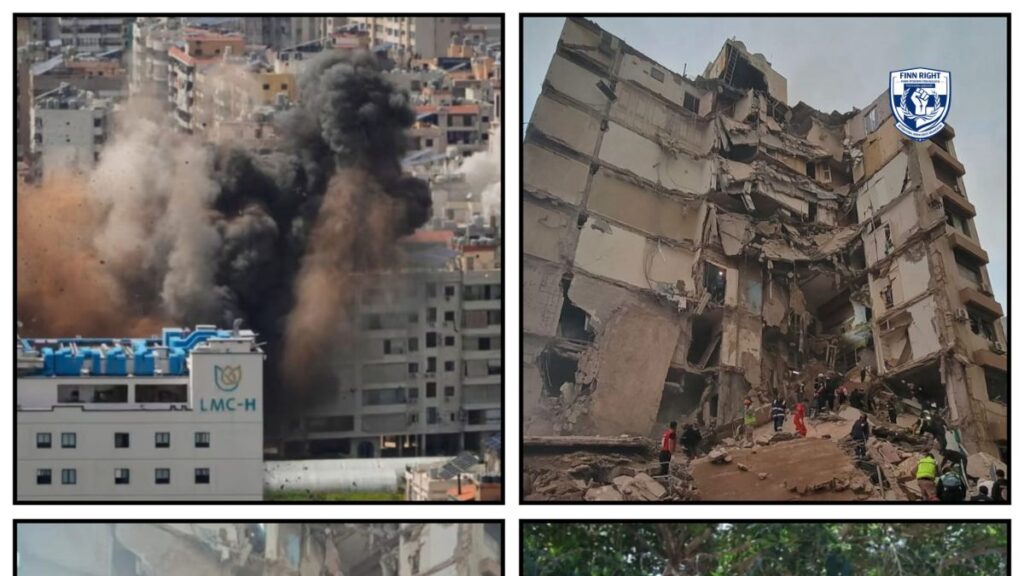
Lebanon is once again facing widespread fear, destruction, and mass displacement as renewed Israeli military attacks hit Beirut and other parts of the country.
Homes have collapsed, streets have filled with smoke and debris, and families have been forced to flee in search of safety. Children, elderly people, and ordinary civilians are among those most affected by the violence.
The latest escalation has raised urgent human rights concerns. Reports of high civilian casualties, damage to residential areas, and attacks during a fragile diplomatic moment have intensified fears that the conflict could expand further.
Communities already weakened by years of economic crisis and political instability are now carrying the burden of war.
Human rights organizations, including Finland-based Finn Rights International, have called for immediate protection of civilians and an end to attacks that place innocent lives at risk.
As international talks continue, the suffering inside Lebanon highlights the human cost of unresolved regional conflict.
Background and Historical Context
Lebanon has long been affected by regional wars, internal political tensions, and economic collapse. Its location, political system, and the presence of armed groups have repeatedly placed the country at the center of wider geopolitical struggles.
For many years, conflict involving Israel and Hezbollah has created cycles of violence across the Lebanon-Israel border.
Previous wars caused large-scale destruction, civilian deaths, and long-term trauma. Border villages were damaged, infrastructure was destroyed, and many families were displaced more than once.
In recent years, Lebanon has also faced one of the worst economic crises in its history. Currency collapse, unemployment, shortages of medicine, and failing public services have left millions vulnerable. This means any new war does not begin in a stable country—it begins in a society already under severe pressure.
The latest attacks come during a sensitive diplomatic period following a reported ceasefire understanding involving the United States and Iran. Disagreement over whether Lebanon was included in that arrangement has added further uncertainty and tension.
Conflict Dynamics and Current Situation
The current escalation includes large-scale Israeli strikes on Beirut and multiple other areas of Lebanon. According to the provided information, hundreds of people were killed in a short period, with many more injured.
The attacks have placed the country in a state of emergency. Rescue teams, firefighters, and medical workers have struggled to respond as buildings collapsed and roads became blocked by rubble and damaged vehicles.
Israel has stated that its military campaign against Hezbollah continues and is separate from any ceasefire arrangement linked to Iran.
Lebanese officials and some mediating voices dispute this interpretation, saying the violence undermines efforts toward regional calm.
This disagreement matters because it shows how unclear political arrangements can quickly collapse into renewed violence—while civilians pay the price.
Targeted Human Rights Violations
Civilian Harm and Loss of Life
One of the gravest concerns is the scale of civilian suffering. Reports indicate that many of those killed or wounded were ordinary residents living in apartment buildings and neighborhoods hit during strikes.
When civilians are killed in large numbers, serious questions arise about distinction, proportionality, and precautions under international humanitarian law.
Destruction of Homes and Infrastructure
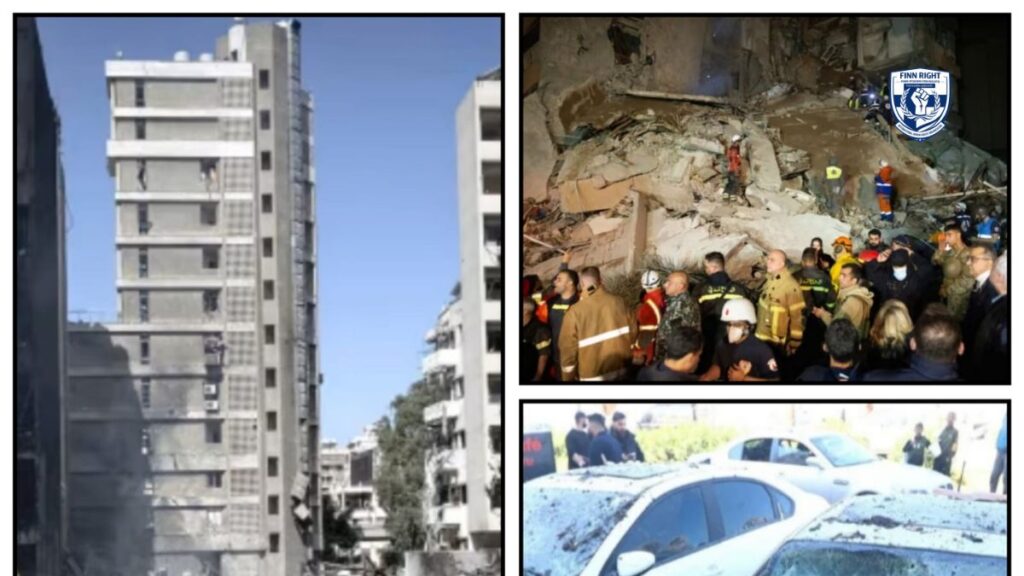
Entire residential buildings were reportedly leveled. Roads were blocked, cars were crushed, and emergency movement became difficult. Schools opened their doors to shelter fleeing families.
Damage to civilian infrastructure affects far more than immediate survival. It disrupts education, healthcare, transport, and community life.
Forced Displacement
More than 1.2 million people have reportedly been displaced. This is an enormous number in a country of Lebanon’s size. Families forced to flee often leave with little more than what they can carry.
Displacement creates long-term suffering: overcrowded shelters, financial hardship, interrupted schooling, and mental trauma.
Fear and Psychological Trauma
Witness accounts describe people searching through rubble, calling relatives, and waiting for news of loved ones. Communities living under repeated bombardment often experience long-term anxiety, grief, and emotional distress.
Impact on Individuals and Communities
War is often discussed through numbers, but its deepest impact is personal.
A father reportedly used a video call to show a crushed car to his son, trying to identify what remained. Others stood helplessly near destroyed homes, hoping someone might still be alive under the debris.
Rescue workers searching damaged buildings reportedly found body parts instead of survivors. Such scenes leave lasting psychological wounds not only for families but also for emergency responders.
One resident said they never expected such destruction in that area because it had previously been seen as safer than other places. This reflects a common reality in war: civilians move seeking safety, only to find that no place is truly secure.
Communities are also strained by sudden population movement. Schools become shelters, neighborhoods absorb displaced families, and already-limited resources are stretched further.
Legal, Political, and Institutional Analysis
International humanitarian law requires all parties to conflict to protect civilians and civilian objects.
Even during military operations, armed forces must distinguish between military targets and civilian areas.
They must also avoid attacks expected to cause excessive civilian harm compared to the anticipated military advantage.
Where apartment blocks, rescue routes, or densely populated neighborhoods are struck, questions of compliance become urgent.
Politically, the crisis also reveals the dangers of unclear ceasefire frameworks. If parties interpret agreements differently, civilians become trapped between diplomatic language and military reality.
Lebanon’s state institutions, already weakened by economic collapse and political division, have limited capacity to protect citizens or respond effectively to large-scale emergencies. This institutional weakness deepens the humanitarian consequences of every new strike.
Humanitarian Crisis and Displacement
Lebanon was already struggling before the current escalation. Many households faced poverty, unemployment, and limited access to electricity, healthcare, and fuel.
Now, large-scale displacement adds new pressure:
- Families need immediate shelter
- Hospitals must treat mass casualties
- Children lose access to schooling
- Food insecurity increases
- Mental health needs rise sharply
- Lebanon
Humanitarian organizations play a critical role in delivering emergency aid, blankets, medical care, food, and psychosocial support. However, ongoing insecurity can make access difficult.
Displacement on this scale also risks creating prolonged instability if families cannot safely return home.
Identity, Geography, and Vulnerability
Many displaced communities are reportedly from Shia Muslim areas linked geographically or politically to conflict zones. In war, identity and location often shape vulnerability.
People living near border areas or in neighborhoods associated with armed groups may face heightened danger regardless of their personal involvement. This creates collective punishment dynamics, where ordinary civilians bear risks tied to politics and geography beyond their control.
Children, older persons, migrants, refugees, and low-income households are usually the least able to escape quickly or rebuild afterward.
Responses, Coping Mechanisms, and Resilience
Despite the destruction, communities continue to respond with resilience.
Schools opened as shelters for displaced families. Neighbors helped one another search through rubble. First responders worked under dangerous conditions to save lives. Civil defense teams, firefighters, and medical staff continued operations despite overwhelming pressure.
Civil society organizations and human rights groups, including FinnRights International, have publicly called for civilian protection and accountability.
Families themselves often become first responders in war—carrying injured relatives, sharing food, offering shelter, and supporting traumatized children.
This resilience should be recognized, but it should never be used to normalize suffering. Civilians should not be expected to endlessly survive preventable war.
International Response and Global Implications
The latest violence has implications beyond Lebanon.
First, it threatens fragile regional diplomacy involving multiple states. Second, it increases the risk of wider confrontation involving non-state armed groups and neighboring countries. Third, it adds pressure to already strained humanitarian systems.
Statements of condemnation alone are insufficient if not matched by practical action. International actors should prioritize:
- Immediate de-escalation
- Civilian protection guarantees
- Humanitarian access
- Support for emergency medical response
- Credible investigations into alleged unlawful attacks
- Lebanon
Global silence or selective concern can weaken trust in international law.
Future Risks and Outlook
If the conflict continues, Lebanon may face:
- Further civilian casualties
- Expanded displacement
- Deepening economic collapse
- Long-term housing destruction
- Trauma across a generation of children
- Increased regional instability
- Lebanon
There is also concern that damaged border villages and security zones could prevent some residents from returning home, creating lasting demographic and social changes.
Without a durable political framework and respect for civilian life, temporary pauses in fighting may only delay the next round of violence.
Conclusion and Call to Action
The scenes emerging from Lebanon—collapsed buildings, families fleeing, rescuers searching rubble, children uprooted from their homes—are not unavoidable tragedies.
They are the human consequences of political failure and armed conflict conducted without sufficient protection for civilians.
Every person in Lebanon has the right to life, safety, shelter, and dignity. No child should grow up under bombardment. No family should lose everything overnight. No community should be repeatedly forced to rebuild from ruins.
Urgent action is needed now:
- End attacks that place civilians at risk
- Respect international humanitarian law
- Ensure full humanitarian access
- Support displaced families and wounded civilians
- Pursue meaningful diplomacy over escalation
- Establish accountability for serious abuses
Lebanon does not need another cycle of destruction. Its people need safety, justice, and the chance to live without fear.
Read more about Lebanon, regional conflict, and global human rights updates on our site.