
India, the world’s largest democracy, was founded on principles of secularism and equality following its independence from British colonial rule in 1947.
Its Constitution guarantees every citizen the right to practice, profess, and propagate their religion freely.
Yet, nearly eight decades later, these principles are under severe threat. A growing tide of Hindu nationalist ideology, centered on the Hindutva movement, has increasingly targeted religious minorities, particularly Muslims, but also Christians and Sikhs.
This campaign has fostered a climate of fear, systemic discrimination, and violent persecution across multiple regions of India.
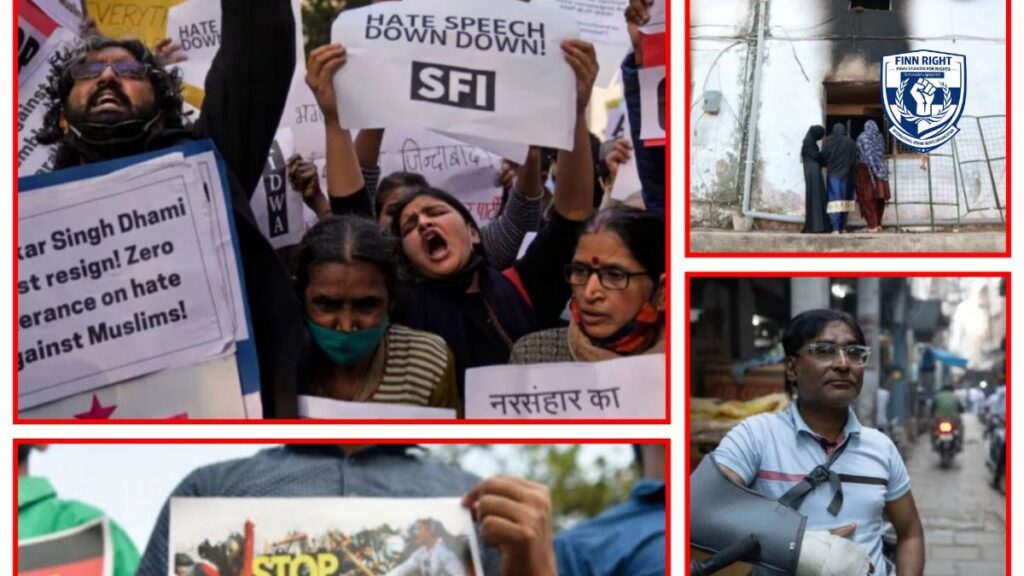
Reports from affected communities reveal a society increasingly divided along religious lines, where ordinary citizens face harassment, discrimination, and outright attacks in public spaces.
Violence, property destruction, forced conversions, and social ostracization have become distressingly common.
For many, daily life now involves navigating a labyrinth of threats and insecurities that were unimaginable in India’s earlier decades of secular governance.
Historical Background and the Rise of Hindutva
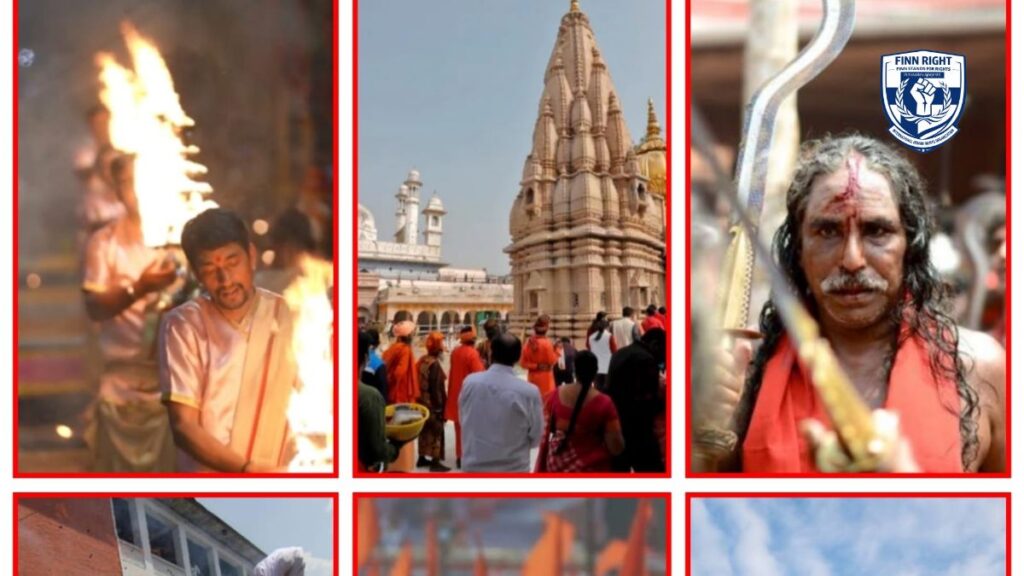
Hindu nationalism, commonly known as Hindutva, is an ideological movement that intertwines religion and political power.
Its origins trace back to 1925 with the founding of the Rashtriya Swayamsevak Sangh (RSS), a volunteer organization promoting the idea of Akhand Bharat—a “United Hindu India” governed by Hindu principles.
Hindutva advocates have historically opposed the secular framework of India, viewing religious pluralism and equality as obstacles to achieving cultural and political dominance.
Hindutva ideology emphasizes the supremacy of Hinduism and seeks to unify the majority Hindu population against perceived threats from religious minorities, particularly Muslims.
By blending religious sentiment with nationalist rhetoric, proponents have created a potent political force capable of mobilizing mass support while simultaneously marginalizing minority communities.
Early proponents of the movement exhibited a deep insecurity toward modernity and pluralism, often perceiving other communities as rivals in a competitive social hierarchy.
Over decades, Hindu nationalist organizations have systematically promoted anti-minority narratives through education, media, and public rhetoric.
They have used religion not only as a cultural marker but also as a tool for social control, shaping policy and public opinion to favor Hindu dominance.
Critics argue that these tactics have eroded the secular foundations of India, weakening institutional protections meant to uphold equality and justice.
The Conflict Dynamics Under Narendra Modi
The political ascent of Prime Minister Narendra Modi has further intensified the conflict between Hindu nationalism and secular democracy.
Modi, a prominent figure within the Hindu nationalist Bharatiya Janata Party (BJP), has leveraged religious identity to consolidate political power.
His tenure has been marked by policies and rhetoric that have exacerbated communal divisions, particularly between Hindu and Muslim populations.
High-profile events, such as the inauguration of a Hindu shrine in Ayodhya, illustrate the symbolic assertion of Hindutva ideology in the public sphere.
The Ayodhya site itself has long been a flashpoint: a mosque was built there during the Mughal era on the site of a demolished temple, and it has remained a focal point of communal tensions.
These actions serve both to galvanize Hindu nationalist support and to send a clear message to minority communities about their subordinate social position.
Under Modi’s leadership, reports indicate an increase in hate crimes, mob violence, and institutional discrimination against minorities.
This includes selective enforcement of laws, complicity of local authorities in communal attacks, and the spread of propaganda that stigmatizes minority identities.
Observers argue that this climate emboldens extremists and undermines the rule of law, leaving vulnerable communities with little recourse.
Targeted Human Rights Violations
Hindutva-driven actions have manifested in numerous human rights violations, including:
- Physical Violence and Mob Attacks: Extremist groups affiliated with Hindutva ideology have perpetrated killings, assaults, and other forms of physical violence. Cases include burning people alive, sexual violence, and torture.
- Destruction of Religious Sites: Mosques, churches, and gurdwaras have been vandalized, demolished, or forcibly converted into Hindu temples. These actions disrupt worship and cultural practices, signaling a broader campaign to erase minority religious identities.
- Forced Conversions and Intimidation: Individuals who resist converting to Hinduism face threats, physical harm, and social ostracization. Families of converts often encounter harassment, adding another layer of vulnerability.
- Legal and Institutional Discrimination: Secular laws are selectively applied, with minority communities frequently denied building permits, access to justice, or protection from violence. Government policies sometimes tacitly endorse discriminatory practices under the guise of national security or cultural preservation.
These abuses are not isolated incidents but part of a systemic effort to marginalize religious minorities and consolidate Hindu nationalist influence.
Personal Accounts and Community Impact
The human consequences of Hindutva-driven persecution are profound. Daily life for affected individuals is marked by fear, uncertainty, and social fragmentation.
- Naseer Ali’s Story: Weeks after a new law was enacted, a right-wing Hindu mob in New Delhi attacked residents in his neighborhood. Returning home from a hospital with his sister, Ali encountered the mob chanting anti-Muslim slogans. One assailant fired a pistol at him while shouting “Jai Shri Ram,” leaving Ali traumatized.
- Usman’s Experience in Jaipur: Seeking work in Rajasthan, Usman struggled to find housing. Landlords routinely rejected him upon seeing his Muslim name. He told Finns Rights International, “It’s a given that a Muslim will face difficulties finding an apartment. Things were bad before; now they’re worse.”
- Shamshir Ali in Varanasi: A shopkeeper raising two daughters, Shamshir expressed deep concern over their future. He recalled communal harmony during his childhood and lamented, “So much hatred has been sown that people now look at each other with suspicion. A Hindu and a Muslim cannot even look each other in the eye today.”
These narratives reveal the erosion of social trust and the psychological toll of living under constant threat. Families experience forced separations, children grow up in fear, and communities are socially fragmented.
Legal, Political, and Institutional Analysis
India’s secular framework theoretically guarantees equality and protection for all religious communities. In practice, however, Hindutva ideology has leveraged political power to weaken these safeguards:
- Selective Enforcement of Laws: Minority communities often face arbitrary arrests, denial of property rights, or obstacles in accessing government services.
- Complicity of Authorities: Local police and administrative officials sometimes fail to intervene during communal violence or actively side with perpetrators.
- Judicial Challenges: Legal recourse is often slow, biased, or inaccessible, leaving victims without meaningful protection.
These institutional gaps exacerbate the vulnerability of minority communities, perpetuating cycles of discrimination and violence.
Humanitarian Crisis and Social Fragmentation
The systemic oppression of minorities has contributed to a broader humanitarian concern:
- Displacement: Many Muslims, Christians, and Sikhs have been forced to relocate due to safety concerns or property destruction.
- Access to Resources: Economic marginalization and social exclusion limit access to housing, healthcare, and education.
- Psychosocial Impact: Persistent fear and trauma affect mental health, communal relations, and community cohesion.
Humanitarian organizations, including Finns Rights International, play a vital role in documenting abuses, providing relief, and advocating for protective measures. Their interventions highlight the human cost of political and religious extremism.
Religious Freedom and Identity-Based Persecution
The rise of Hindutva has led to increasing restrictions on religious freedom:
- Targeting Minorities: Muslim communities face disproportionate surveillance, harassment, and public stigmatization.
- Cultural Erasure: Destruction of places of worship undermines the ability to practice religion freely and erodes cultural heritage.
- Forced Assimilation: Coercive conversions to Hinduism violate individual autonomy and human rights principles.
- India
International human rights law, including the Universal Declaration of Human Rights and the International Covenant on Civil and Political Rights, guarantees freedom of religion and belief, emphasizing the obligation of states to protect religious minorities. India’s current trajectory conflicts with these international commitments.
Responses, Coping Mechanisms, and Resilience
Despite pervasive threats, affected communities have developed coping strategies:
- Community Networks: Informal networks provide mutual aid, security updates, and relocation assistance.
- Digital Advocacy: Social media and encrypted platforms allow communities to document violations, share experiences, and seek support internationally.
- International Partnerships: NGOs and human rights organizations provide legal support, humanitarian aid, and advocacy to amplify marginalized voices.
- India
These mechanisms, while critical, remain insufficient to fully protect communities facing systematic oppression.
International Response and Global Implications
The global community has expressed concern over India’s rising religious nationalism, though responses remain cautious:
- Diplomatic Pressure: Some countries have criticized hate crimes and discriminatory policies, urging India to uphold secular principles.
- Human Rights Advocacy: International organizations highlight abuses, report on violations, and call for accountability.
- Geopolitical Implications: Widespread persecution may affect India’s international relations, trade, and global image as a democratic nation.
- India
Sustained global attention is essential to prevent further escalation and ensure the protection of human rights.
Future Risks and Outlook
India’s trajectory suggests several potential risks:
- Escalation of Violence: Without robust legal safeguards, communal violence may increase.
- Marginalization of Minorities: Social, economic, and political exclusion could become more entrenched.
- Erosion of Secularism: The weakening of constitutional protections threatens democratic norms and pluralism.
Proactive measures, including legal reforms, protection programs, and community reconciliation initiatives, are critical to prevent a humanitarian and social crisis.
Conclusion and Call to Action
The persecution of religious minorities in India under the Hindutva ideology represents a profound human rights crisis.
Muslims, Christians, Sikhs, and other communities face violence, social exclusion, and systemic discrimination, undermining India’s secular foundations.
Personal testimonies reveal a society under siege, where fear, trauma, and mistrust have replaced harmony and mutual respect.
The international community, human rights organizations, and Indian civil society must act decisively to protect vulnerable populations.
Immediate steps include enforcing constitutional protections, ensuring accountability for perpetrators, and safeguarding the freedom to practice one’s religion without fear.
Standing in solidarity with India’s persecuted minorities is not only a moral imperative—it is essential for the preservation of democracy, justice, and human dignity.
The world must continue to amplify these voices until fundamental rights are upheld, and all citizens can live free from oppression.
Explore more on religious freedom challenges in South Asia at Finn Stands For Rights.
One Response