
Few people realize that when 7 men decide on women’s rights, they hold the power to reshape the future for generations to come.
It’s a strange thing to think about. The fight for women’s rights one of the most important social movements in human history often depended on men who had the power to say “yes” or “no.” Kings, congressmen, judges, fathers, and husbands.
Behind closed doors, 7 men decide on women’s rights and those quiet decisions echo loudly across centuries. And in those rooms, the fate of millions of women hung in the balance.
But here’s the thing that doesn’t get said enough: some of those men chose right.
They listened. They stood up. They voted in favor. And because of them, the world shifted even just a little toward fairness.
This article is about 7 men who played a defining role in decisions around women’s rights from the suffrage era to today’s political stage. More importantly, it’s about what their choices can teach us, whether you’re a man who wants to be a better gender equality ally, a woman navigating a male-dominated workplace, or someone who truly understands that equality is not a gift it is a choice that 7 men decide on women’s rights must make deliberately every single day.
Let’s go through them one by one.
Frederick Douglass The Abolitionist Who Stood Alone
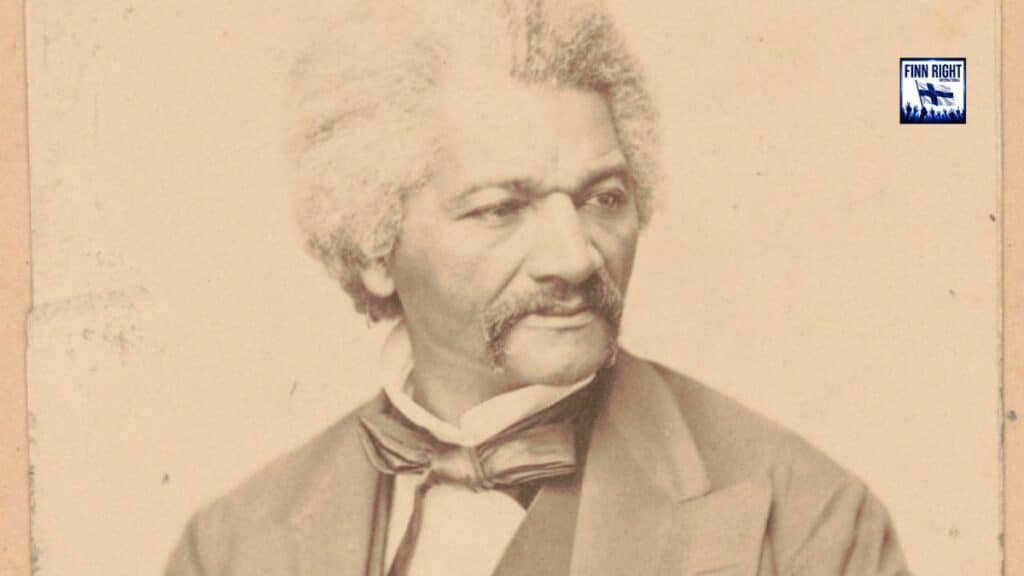
It was 1848. The Seneca Falls Women’s Rights Convention was about to make history and Elizabeth Cady Stanton was preparing to read the Declaration of Sentiments, a bold document demanding equal rights for women. Everyone expected backlash. What they didn’t expect was near-total silence from her supposed allies.
When critics attacked Stanton’s plan, only Frederick Douglass supported her. Every other man in the room either backed away or stayed quiet.
Douglass wasn’t just being polite. He genuinely believed in equal political participation for women. He wrote afterward:
“Right is of no sex.”
That four-word statement should have ended the debate right there.
What we can learn: This is what it looks like when 7 men decide
on women’s rights one voice can change
everything. Being a male ally for gender equality is not always comfortable. It often means being the only voice in the room speaking up. Douglass had nothing to gain politically by supporting women’s suffrage in fact, he risked his reputation. He stepped forward without hesitation driven by a deep conviction that justice for women was never optional, but absolutely necessary.
Step-by-step guide How to speak up like Douglass:
- Identify the moment when a woman’s idea, contribution, or right is being ignored.
- Say something clearly — don’t hint or whisper. Use direct language.
- Follow up in writing if needed, just as Douglass did.
- Don’t wait for consensus — being alone in your support is often what makes the difference.
- What Happens When 7 Men Decide on Women’s Rights
George Francis Train The Man Who Funded the Voice
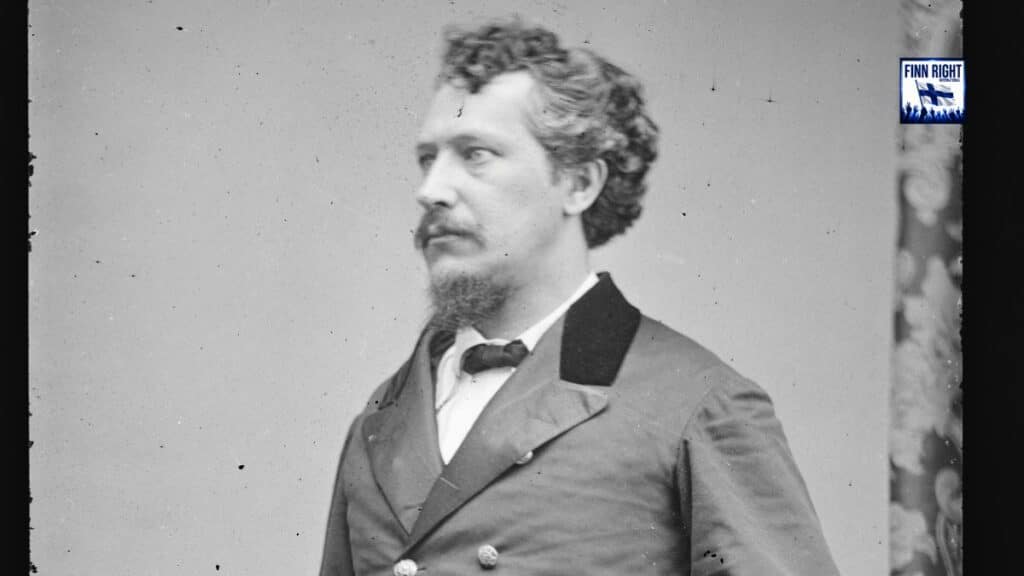
Elizabeth Cady Stanton and Susan B. Anthony had the words. George Francis Train gave them the platform.
Train was a controversial figure loud, eccentric, and often criticized. But when Stanton and Anthony needed financial backing to help launch The Revolution, their women’s rights newspaper, Train stepped up. He funded the project, contributed articles, and helped the publication reach a wider audience.
The Revolution became a critical tool in spreading the message of women’s suffrage across America. Without Train’s support, it might never have existed.
What we can learn: Supporting women’s empowerment doesn’t always mean making speeches. Sometimes it means opening your wallet, using your platform, or lending your voice to causes that aren’t directly about you. This is what modern gender equality advocates call being a micro-sponsor someone who actively promotes and resources others’ work behind the scenes.
Thetus W. Sims The Congressman Who Voted Through the Pain
Here’s a story that deserves to be told more often.
In 1918, the U.S. Congress was voting on women’s suffrage. Every single vote carried the weight of millions of women’s futures because when 7 men decide on women’s rights, even one voice can tip the scales of history forever. Every vote mattered. Tennessee Congressman Thetus W. Sims showed up to cast his vote with an unset broken arm and shoulder.
He hadn’t recovered from his injury. He was in real, serious pain. But he came anyway not just to vote, but to stay for the entire session and personally persuade hesitant colleagues to vote in favor of suffrage.
Think about that for a moment. A man, sitting in physical pain, working the room to make sure women got the vote. He didn’t have to be there. But he chose to be.
What we can learn: Allyship requires real commitment, not just good intentions. The Promundo research study found that while 77% of men say they’re doing everything they can to advance gender equality in the workplace, only 41% of women agree. That gap between intention and action is exactly what Sims refused to let exist. He showed up. Fully. Even when it hurt.
James Mott The Husband Who Showed Up as a Partner
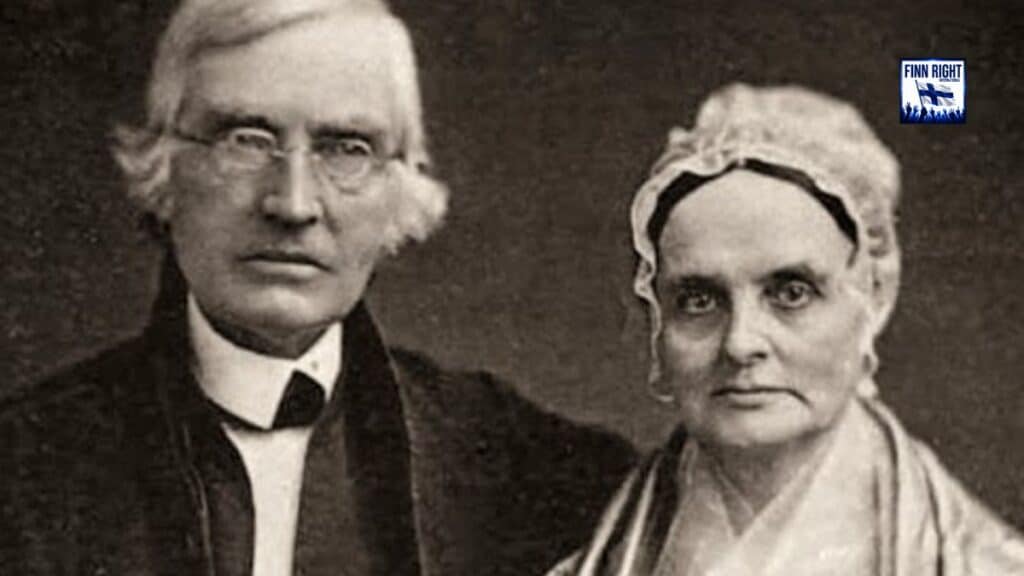
Not every act of allyship is dramatic. Some of the most powerful ones happen quietly, in the background, through consistent partnership.
James Mott, husband of suffragist Lucretia Mott, is a perfect example. He worked side by side with his wife as a women’s rights activist, served as chairman of the Seneca Falls Convention, and was one of the men who signed the Declaration of Sentiments.
He didn’t try to lead the movement. He didn’t try to take credit. He showed up as a partner equal, respectful, and fully committed.
What we can learn: One of the most important things men can do for gender equality is share the load at home. According to UN Women’s latest data, women still carry a disproportionate share of household labour and childcare what researchers call the “second shift.” This imbalance directly holds women back in their careers.
Step-by-step guide Being a James Mott at home:
- List all household tasks visible and invisible (scheduling, emotional labour, planning).
- Divide them equally, not based on gender norms.
- Take parental leave when it’s available. Normalize it.
- Show up at school events, doctor appointments, parent meetings not as a backup, but as an equal parent.
- Talk about it openly with friends and colleagues. Normalize shared parenting.
Daniel Anthony The Father Who Changed the Rules
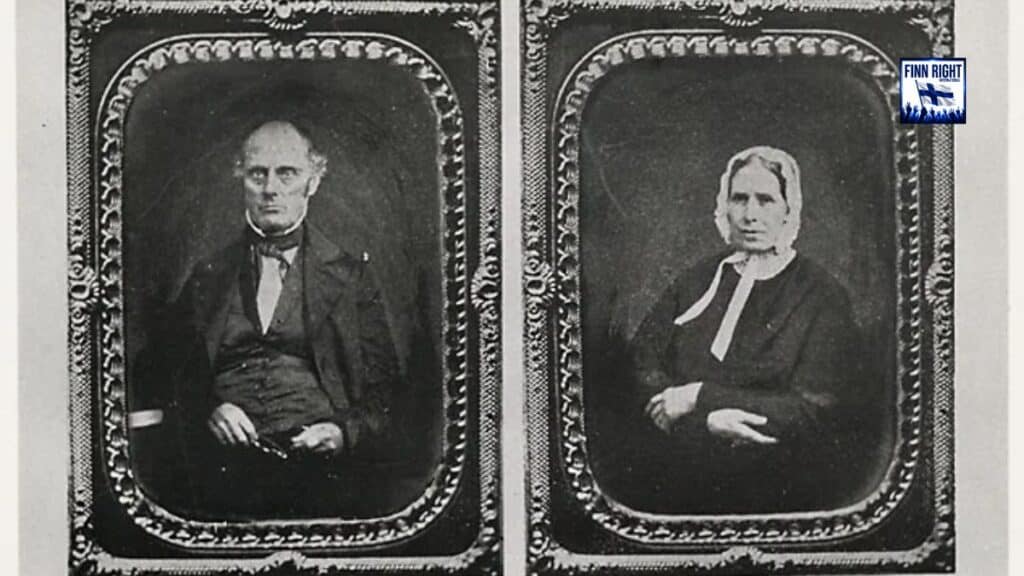
Here’s an anecdote that might be the most quietly powerful in this entire article.
Susan B. Anthony’s school refused to teach girls mathematics. That was just the rule. Girls didn’t need math — or so the thinking went. Most parents shrugged and moved on. Daniel Anthony didn’t.
He opened his own school a school where girls and boys were taught as equals. He didn’t wait for the system to change. He created a better one.
Daniel Anthony also refused to sell alcohol at his store, partly because he believed that eliminating alcohol would reduce domestic violence against women. And he signed the Declaration of Sentiments when it was adopted in Rochester.
Susan B. Anthony grew up knowing what equality looked like, because her father showed her every day.
What we can learn: The most lasting form of gender equality advocacy starts at home. When fathers treat their daughters as fully capable, intelligent, and deserving of opportunity, those daughters grow up to demand and create a fairer world. Daniel Anthony shaped one of the most important women in American history simply by refusing to accept the limits others placed on her.
Henry Blackwell The Partner Who Wrote Equality Into His Vows
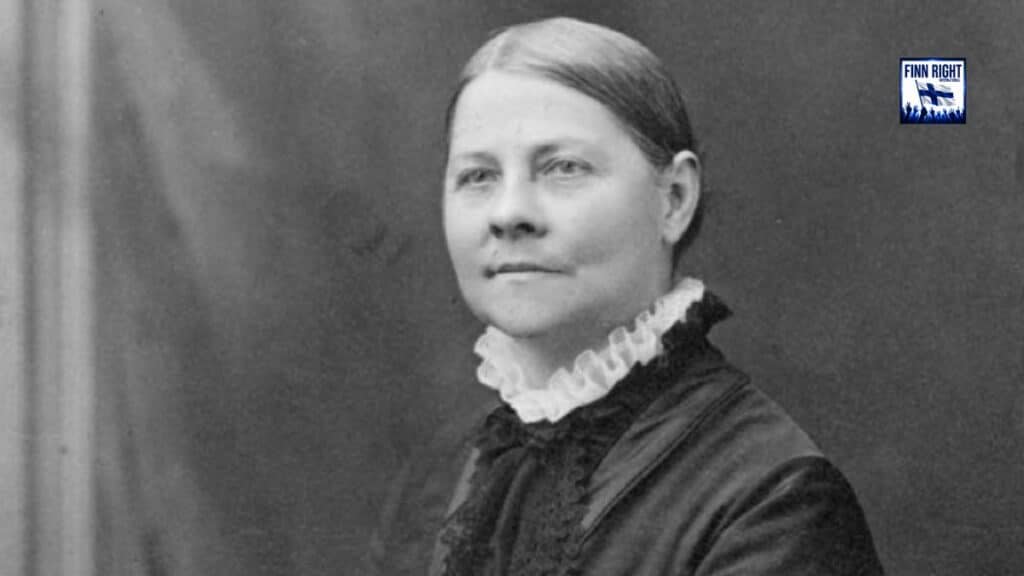
When Henry Blackwell married suffragist Lucy Stone, their wedding vows were unlike anything heard before. They formally declared that their marriage implied no promise of obedience and refused to grant Henry the “injurious and unnatural superiority” that the law gave husbands at the time.
This wasn’t just a symbolic gesture. Blackwell backed it up for decades speaking campaigns across rough frontier conditions, editorial work at the Woman’s Journal (official newspaper of the National American Woman Suffrage Association), and at 65 years old, an extensive campaign through South Dakota in blazing summer heat alongside Susan B. Anthony.
That’s not allyship in theory. That’s allyship in practice, decade after decade.
What we can learn: Challenging sexism is not a one-time act it’s a lifelong commitment. Today, this means speaking up when women are talked over, when credit goes to the wrong person, or when dismissive jokes go unchallenged. Blackwell acted on his beliefs consistently, regardless of age or circumstance.
Francis Minor The Lawyer Who Fought It to the Supreme Court
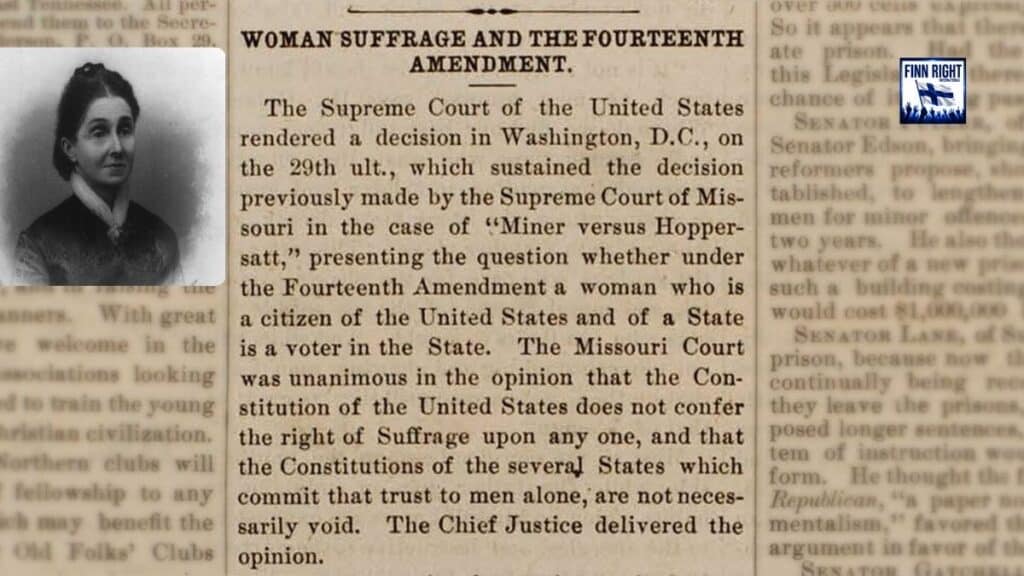
In 1869, Francis Minor a lawyer and husband of suffragist Virginia Minor published a legal argument that would have changed everything, if the courts had listened.
His argument was simple: based on the Fourteenth Amendment, women were already citizens and therefore already had the right to vote. National women’s suffrage was already legal. It just wasn’t being enforced.
When Virginia Minor attempted to vote in 1872 and was refused, Francis took the case all the way to the United States Supreme Court. They lost — unanimously — but the case created legal complications that ultimately helped Susan B. Anthony, who had also attempted to vote that year and faced prosecution as a result.
Sometimes, fighting for justice means fighting a case you know you might lose because it still moves things forward.
What we can learn: Institutional change — changing laws, policies, and formal structures is just as important as cultural change. The IPU–UN Women 2026 data reveals that women hold only 22.4% of cabinet posts and 27.5% of parliamentary seats worldwide, and 101 countries have never had a woman head of state. These are institutional outcomes — and they require institutional solutions.
What These 7 Men Have in Common And What It Means Today
Looking across all seven, a clear pattern emerges. None of them were perfect. Some were controversial. But they all did one or more of the following:
- They gave credit where it was due, and amplified women’s voices instead of talking over them.
- They listened to women’s experiences without dismissing or minimizing them.
- They called out inequality — publicly, at personal cost.
- They respected women’s autonomy — in their homes, marriages, and professional lives.
- They shared the load — at home, in activism, in daily life.
- They used their privilege — legal, financial, political — to fight for those who didn’t have it.
- They advocated at the institutional level, not just in personal relationships.
These are not radical ideas. They are the basics of being a good human being in a world that wasn’t built equally.
List of Women’s Rights: What Are They and Why Do They Matter?
Before we talk about how men can protect these rights, it helps to know exactly what we’re protecting. A list of women’s rights in the modern sense covers far more than just the right to vote. Here are the core rights that every woman is entitled to under international human rights law:
- The right to vote and participate in government — still not fully realized in many countries.
- The right to education — including equal access to STEM, higher education, and professional training.
- The right to equal pay — the gender pay gap remains a global crisis.
- The right to bodily autonomy — including reproductive rights and freedom from forced marriage.
- The right to live free from violence — domestic violence, sexual assault, and harassment.
- The right to work without discrimination — including protection from sexual harassment in the workplace.
- The right to own property and enter into legal contracts.
- The right to healthcare — including maternal health and mental health services.
- The right to freedom of movement — without requiring a male guardian’s permission.
- The right to equal representation in law, politics, and public life.
Understanding this list is the first step toward defending it. Because you can’t protect what you can’t name.
Women’s Rights History: How We Got Here
The history of women’s rights is not a straight line. It’s a long, uneven, often painful march with moments of breathtaking courage and heartbreaking setbacks.
Here’s a brief timeline of major milestones in women’s rights history:
- 1848 — The Seneca Falls Convention produces the Declaration of Sentiments, the first formal demand for women’s equality in the United States.
- 1869 — Wyoming becomes the first U.S. territory to grant women the right to vote.
- 1920 — The 19th Amendment is ratified, giving American women the constitutional right to vote.
- 1948 — The Universal Declaration of Human Rights affirms that all human beings are born free and equal in dignity — regardless of sex.
- 1979 — The Convention on the Elimination of All Forms of Discrimination Against Women (CEDAW) is adopted by the UN — often called the international bill of rights for women.
- 1995 — The Beijing Platform for Action sets a global agenda for women’s equality, covering education, health, violence, and political power.
- 2006 — The Global Gender Gap Report is published for the first time, creating a benchmark for tracking progress.
- 2017 — The #MeToo movement goes global, exposing the scale of sexual harassment and assault against women in the workplace and beyond.
- 2026 — According to IPU–UN Women data, women hold only 22.4% of cabinet seats worldwide — a decline from 2024, signaling worrying regression.
History shows us that progress is real but it is never permanent. Every generation must fight for what the last generation won.
Women’s Rights Year by Year: Key Moments That Changed Everything
Every significant year in women’s rights history was shaped by someone deciding to act. Here’s a look at the women’s rights year milestones that defined the modern movement:
| Year | Milestone | Key Figure(s) |
|---|---|---|
| 1848 | Seneca Falls Convention | Elizabeth Cady Stanton, Frederick Douglass |
| 1869 | Wyoming grants women the vote | Wyoming Legislature |
| 1920 | 19th Amendment ratified | Susan B. Anthony, Carrie Chapman Catt |
| 1963 | Equal Pay Act signed into law | President John F. Kennedy |
| 1972 | Title IX prohibits sex discrimination in education | Congress |
| 1979 | CEDAW adopted by UN | United Nations |
| 1993 | Violence Against Women Act (VAWA) signed into law | President Bill Clinton |
| 2014 | HeForShe campaign launched by UN Women | Emma Watson, UN Women |
| 2017 | #MeToo goes global | Tarana Burke |
| 2026 | Women hold 22.4% of cabinet posts globally | IPU–UN Women |
Each of these milestones had men and women working together. That’s not a coincidence it’s a lesson.
What Are 10 Examples of Women’s Rights in Practice?
It’s one thing to list rights in theory. It’s another to see what 10 examples of women’s rights look like in real life. Here are ten examples — both historical and modern of women’s rights being exercised, defended, or expanded:
- Voting — When women in New Zealand became the first in the world to vote nationally in 1893.
- Running for office — When Shirley Chisholm became the first Black woman elected to the U.S. Congress in 1968.
- Equal education access — When Title IX opened doors for women in U.S. schools and universities in 1972.
- Equal pay claims — When women use EEOC protections to challenge wage discrimination in their workplaces.
- Workplace protections — When sexual harassment laws hold employers accountable for hostile work environments.
- Reproductive rights — When women have legal access to reproductive healthcare without stigma or barriers.
- Property ownership — When women in formerly restrictive legal systems gain the right to own land and assets in their own name.
- Maternal healthcare — When policies ensure safe motherhood and access to prenatal and postnatal care.
- Protection from violence — When the Violence Against Women Act (VAWA) funds shelters, legal aid, and support services.
- Political leadership — When countries like Rwanda achieve near-parity in parliament through quota systems and political will.
Each of these examples is something men in power made possible — or impossible. The choice was always theirs. And today, it’s still yours.
Women’s Rights Issues Today: The Battles That Aren’t Over
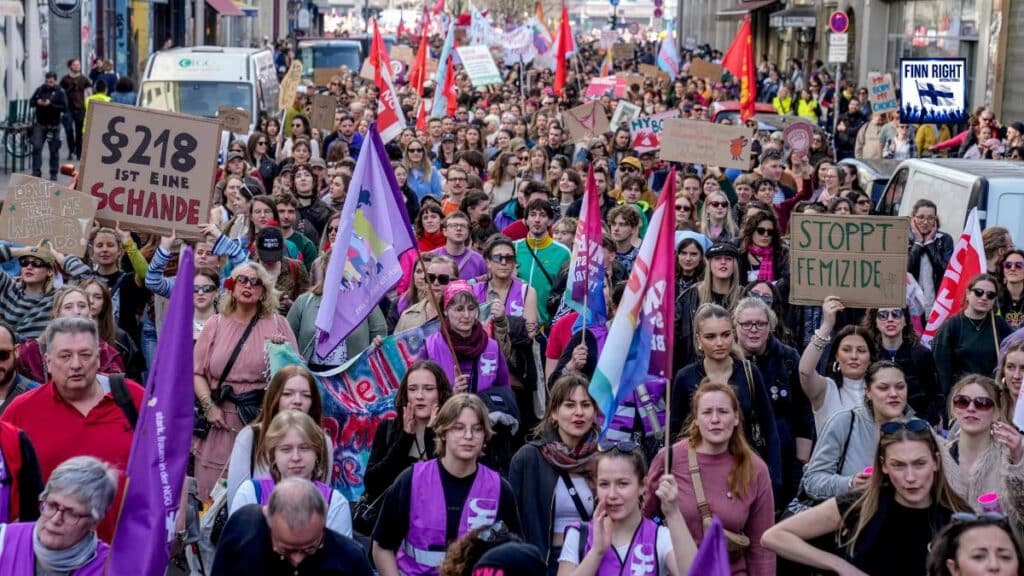
Despite enormous progress, women’s rights issues today remain urgent, widespread, and in some cases worsening. Here are the most pressing challenges women face in 2026:
1. Political underrepresentation. As the IPU–UN Women 2026 report shows, women hold just 22.4% of cabinet seats globally — a number that dropped since 2024. In many countries, women in politics face rising online harassment and intimidation, deterring them from running for office.
2. The gender pay gap. Women globally earn approximately 77 cents for every dollar earned by men a gap that widens for women of colour, women with disabilities, and women in the Global South.
3. Gender-based violence. 1 in 3 women worldwide has experienced physical or sexual violence. This is not a statistic from a distant era — it is happening today, in every country.
4. Reproductive rights rollbacks. Access to reproductive healthcare including contraception and safe abortion is being restricted in several countries, removing women’s ability to make decisions about their own bodies.
5. Unpaid care work. Women globally perform three times more unpaid care work than men cooking, cleaning, caregiving — limiting their time for education, employment, and political participation.
6. Workplace discrimination. Despite legal protections, gender bias in hiring, promotion, and pay remains entrenched in organizations worldwide.
7. Child marriage. 650 million girls and women alive today were married before age 18. Child marriage cuts short education, increases health risks, and traps girls in cycles of poverty.
These issues don’t belong to women alone. They belong to every society that claims to value fairness.
Human Rights of Women: The Global Legal Framework
The human rights of women are not optional extras. They are enshrined in binding international law. Here are the core documents that form the global legal framework for women’s rights:
- The Universal Declaration of Human Rights (1948) — Declares all people equal in dignity and rights, regardless of sex.
- CEDAW (1979) — The most comprehensive international treaty on women’s rights, ratified by 189 countries.
- The Beijing Platform for Action (1995) — Sets goals across 12 critical areas including education, health, violence, and political power.
- UN Sustainable Development Goal 5 — Commits the world to achieving gender equality and empowering all women and girls by 2030.
- The Istanbul Convention — Europe’s binding treaty on preventing and combating violence against women.
Despite this framework, implementation remains inconsistent and in some regions, actively backsliding. That’s why the role of male allies is not just cultural it’s political and legal too.
Women’s Rights Today: How to Download and Share This Knowledge
If you want to go deeper, there are outstanding women’s rights PDF resources available for free download from the world’s leading organizations. Here are some of the most important:
- CEDAW Full Text (PDF) — The complete Convention on the Elimination of All Forms of Discrimination Against Women.
- UN Women Annual Report (PDF) — Latest data on gender equality progress worldwide.
- IPU Women in Parliament 2026 Report (PDF) — Global rankings and statistics on women in political leadership.
- Global Gender Gap Report (PDF) — World Economic Forum’s annual index measuring gender parity across 146 countries.
- McKinsey Women in the Workplace (PDF) — In-depth corporate data on women’s advancement in the workplace.
- HeForShe Impact Report (PDF) How men around the world are committing to gender equality.
Sharing these resources — with colleagues, managers, students, and community leaders is one of the most practical things you can do to advance women’s rights today.
The Numbers That Tell Us Why This Still Matters
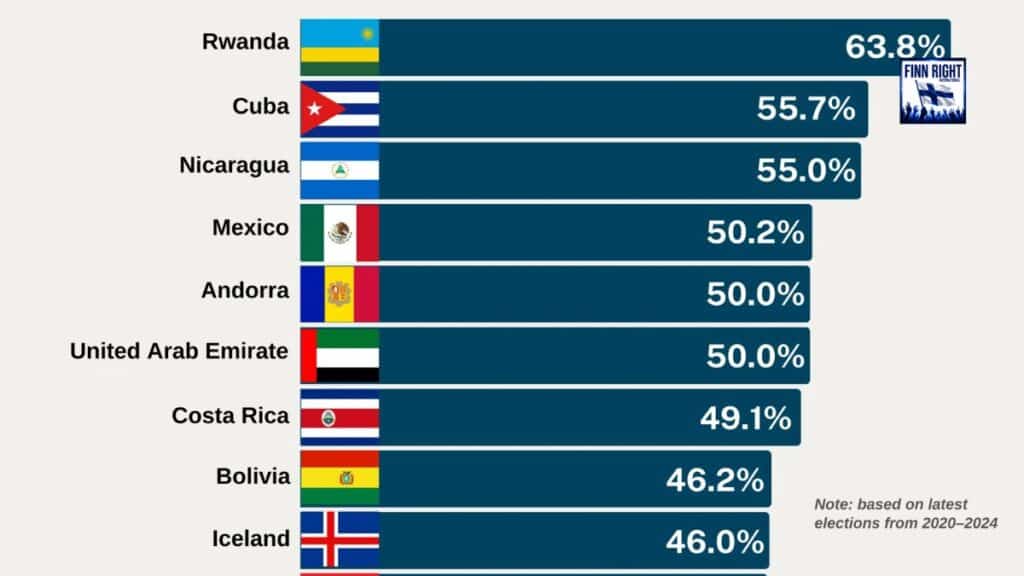
In 2026, according to UN Women and the IPU, only 28 countries are led by a woman head of state or government. Women hold just 22.4% of cabinet positions globally a number that has actually declined since 2024. And 76% of women parliamentarians have reported experiencing intimidation from the public, compared to 68% of men.
The fight is far from over.
Frequently Asked Questions
What are the 7 principles of women’s empowerment?
The 7 Women’s Empowerment Principles are: establishing high-level corporate leadership for gender equality, treating all women and men fairly at work, ensuring health, safety and wellbeing, promoting education and professional development, implementing enterprise development and supply chain practices, promoting equality through community initiatives, and measuring and reporting on gender equality progress.
What are the 7 types of gender inequality?
The 7 types of gender inequality are: unequal pay, limited access to education, gender-based violence, political underrepresentation, unequal healthcare access, unpaid care work burden, and workplace discrimination — all of which disproportionately affect women worldwide.
Did any men fight for women’s rights?
Yes Frederick Douglass, Henry Blackwell, James Mott, Daniel Anthony, Francis Minor, George Francis Train, and Thetus W. Sims all actively fought for women’s rights, proving that 7 men decide on women’s rights can mean the difference between progress and stagnation.
What is 40-40-20 gender balance?
The 40-40-20 gender balance rule means that in any workplace or leadership body, at least 40% should be women, at least 40% should be men, and the remaining 20% can be any gender ensuring fair representation for all.
Who are the famous 5 women’s rights?
The five most famous women’s rights advocates in history are Susan B. Anthony, Elizabeth Cady Stanton, Lucretia Mott, Sojourner Truth, and Emmeline Pankhurst each of whom transformed the fight for gender equality across different countries and eras.
How many men voted for women’s rights?
In 1919, the 19th Amendment passed the U.S. Senate with 56 men voting yes and 25 voting no, and passed the House with 304 yes votes proving that when 7 men decide on women’s rights, collective male support can permanently change history.
Take Action With Finn Stands For Rights
At Finn Stands For Rights registered
in Finland and committed to gender equality
worldwide we believe every voice matters.
When 7 men decide on women’s rights, the
world changes. Join us in making that
change happen.
Visit Finn Stands For Rights
today and become part of the movement.
Explore HeForShe,
UN Women’s global
solidarity movement for gender equality.
Because this is not a women’s issue.
It’s a human one.
These 7 men fought in silence but women fought with words. Discover the most
powerful Women’s Rights Slogans that shook
the world.
2 Responses