
The recruitment of children into military and security roles represents one of the gravest violations of human rights.
Recent developments in Iran have raised serious global concern, as officials linked to the Islamic Revolutionary Guard Corps (IRGC) have acknowledged lowering the minimum age for participation in certain security-related roles to just 12 years old.
Under a program described as supporting “defenders of the homeland,” children are reportedly being encouraged to assist in activities such as patrols, checkpoint duties, and logistical operations.
This policy shift comes amid rising tensions and security concerns within the country, but its implications go far beyond national defense.
It raises urgent questions about the protection of children, the misuse of legal frameworks, and the erosion of international humanitarian standards.
The involvement of minors in any form of military structure not only exposes them to physical danger but also deprives them of their fundamental rights to safety, education, and childhood.
This report examines the broader context, underlying systems, and human consequences of child recruitment in Iran, while highlighting the urgent need for accountability and global attention.
Background and Historical Context
Iran’s political and security structure has long included paramilitary organizations that operate alongside formal armed forces.
The IRGC, established after the 1979 revolution, plays a central role in both military and internal security affairs. Within its framework operates the Basij, a paramilitary volunteer force often described as a “people’s force.”
Historically, the Basij has been mobilized during times of national crisis, including during the Iran-Iraq War, when young volunteers were encouraged to participate in support and combat roles.
Over time, the Basij evolved into a multi-layered organization involved in security, social control, and ideological enforcement.
While authorities often portray participation as voluntary, economic realities complicate this narrative. Incentives such as access to education, employment opportunities, housing benefits, and financial support make membership attractive—particularly for families facing economic hardship.
This structural dynamic creates conditions where children and teenagers may be indirectly pressured into joining.
The recent announcement lowering the participation age to 12 represents a significant escalation. It reflects not only a shift in recruitment policy but also a deeper reliance on youth participation in state security structures.
Conflict Dynamics and Current Situation
The current recruitment initiative is taking place in a climate of heightened security concerns and internal tensions.
According to official statements broadcast on state media, authorities have observed what they describe as “enthusiasm” among teenagers seeking to participate in national defense efforts.
Under a program referred to as “Far Iran,” recruitment is reportedly taking place through public channels, including mosques and central public spaces.
Registration booths have been set up to facilitate enrollment, and children have been seen participating in rallies wearing military-style uniforms.
These developments suggest a normalization of youth involvement in security activities.
While officials frame participation as supportive rather than combative, the line between logistical assistance and active involvement in security operations can be blurred, especially in volatile environments.
The reported death of an 11-year-old boy at a security checkpoint in Tehran has intensified scrutiny.
Although details remain limited, the incident underscores the risks associated with placing children in proximity to potential conflict zones or military targets.
Targeted Human Rights Violations
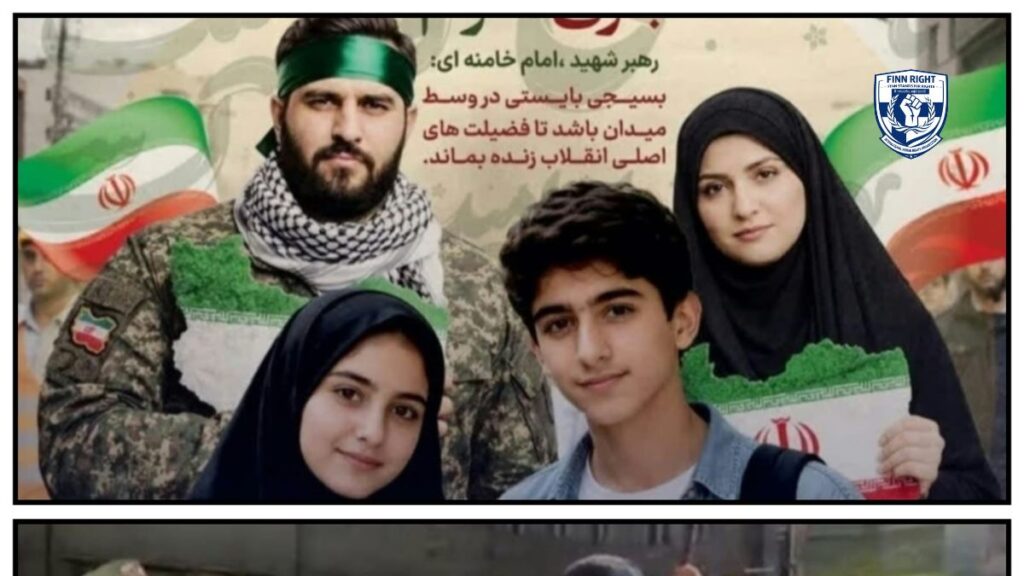
The recruitment of children into military or security structures constitutes a clear violation of international human rights standards. Several key areas of concern emerge from the current situation in Iran:
Recruitment of Minors
Lowering the minimum age for participation to 12 directly contradicts widely accepted international norms.
Children at this age are not capable of fully understanding the risks or implications of involvement in military-related activities.
Exposure to Violence
Even in non-combat roles, children involved in patrols or checkpoints are exposed to potential violence. They may become targets during attacks or be caught in dangerous situations beyond their control.
Coercion and Indirect Pressure
While authorities describe participation as voluntary, the combination of economic incentives and social pressure raises concerns about genuine consent. Families facing hardship may feel compelled to encourage their children to join.
Psychological Harm
Involvement in military environments can have long-term psychological effects on children, including trauma, anxiety, and desensitization to violence.
Impact on Individuals and Communities
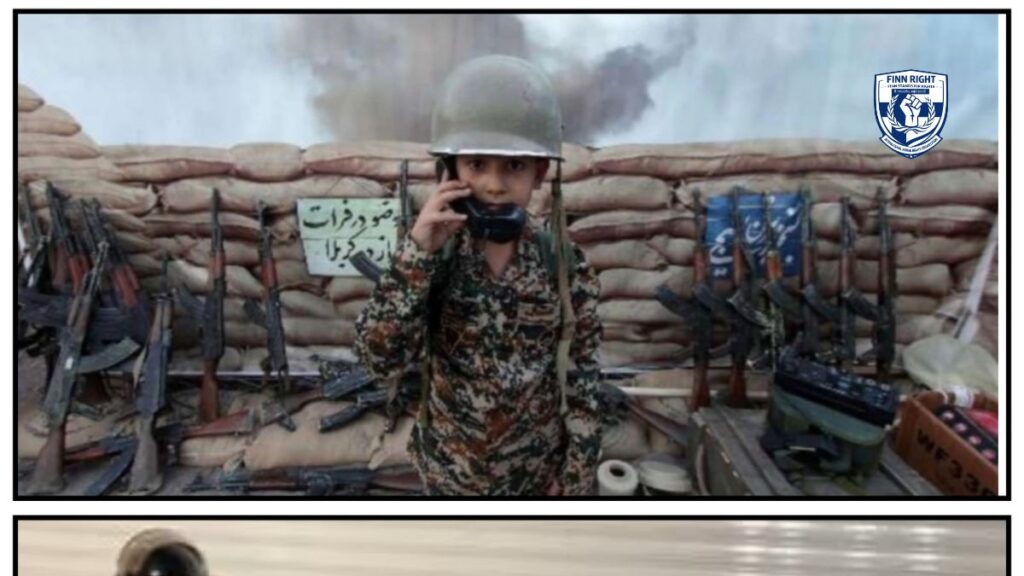
The consequences of child recruitment extend far beyond immediate physical risks. They affect families, communities, and the social fabric of society.
Loss of Childhood
Children recruited into security roles are deprived of normal developmental experiences. Instead of focusing on education and personal growth, they are exposed to environments defined by discipline, control, and potential danger.
Family Strain
Families may experience internal conflict over decisions related to participation. In some cases, economic pressures may push families to support recruitment, even when they are aware of the risks.
Social Fragmentation
The normalization of child involvement in security structures can alter community dynamics. It creates divisions between those who participate and those who resist, potentially leading to mistrust and social tension.
Fear and Insecurity
The presence of children in security roles may also heighten fear within communities, as it signals the extent of militarization and the lack of safe spaces for youth.
Legal, Political, and Institutional Analysis
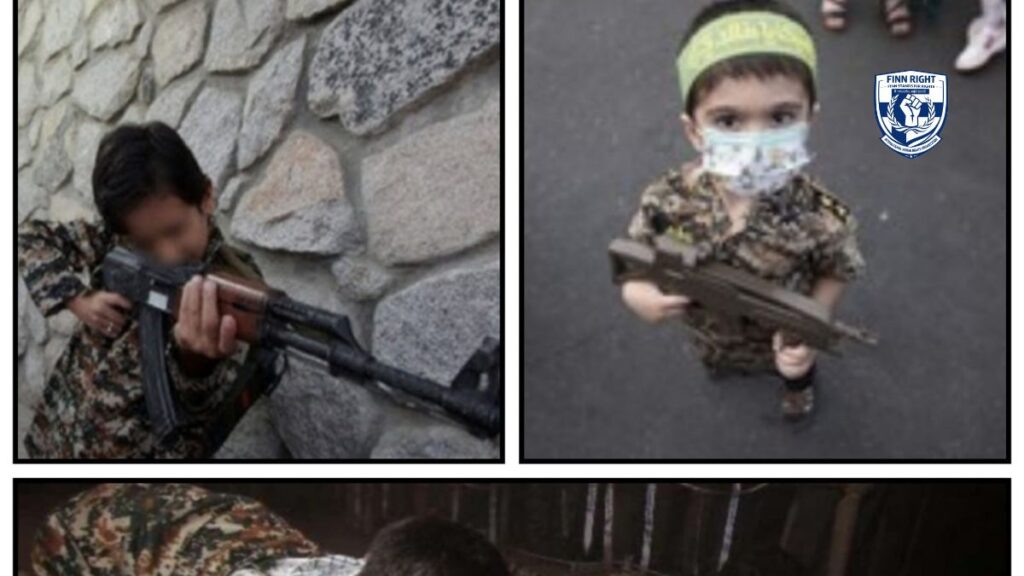
Iran’s legal framework plays a critical role in enabling child recruitment. Laws governing the IRGC and Basij categorize members into different levels, including “ordinary,” “active,” and “special” units.
While official regulations set certain age thresholds, loopholes and flexible interpretations allow for younger participation in support roles.
The classification of Basij members as “volunteers” further complicates accountability, as it blurs the distinction between civilian and military status.
Internationally, Iran is a signatory to the Convention on the Rights of the Child (CRC), which prohibits the recruitment of children under the age of 15 into armed forces.
Additionally, customary international humanitarian law considers the recruitment or use of children under 15 in hostilities a war crime.
Although Iran has signed the Optional Protocol on the involvement of children in armed conflict, it has not ratified it. This limits the legal obligations but does not diminish the ethical and humanitarian concerns.
The current practices appear to conflict with both the spirit and, in some cases, the letter of international law. They highlight a gap between formal commitments and actual policies.
Humanitarian Crisis and Displacement
While Iran is not currently experiencing large-scale internal displacement comparable to war zones, the recruitment of children into security roles creates a different kind of humanitarian concern.
Children involved in such programs may face disruptions in education, limited access to healthcare, and reduced opportunities for personal development.
Over time, this can contribute to broader social challenges, including reduced economic mobility and increased vulnerability.
Humanitarian organizations have limited access to monitor these practices, making it difficult to assess the full scale of the issue. However, the available information suggests a need for greater transparency and oversight.
Religious Freedom and Identity-Based Persecution
Although the primary issue in this case is child recruitment, it intersects with broader patterns of identity and ideological control.
The Basij and IRGC are not only security institutions but also vehicles for promoting specific political and religious narratives.
Children recruited into these structures are often exposed to ideological training, which may limit their ability to form independent beliefs. This raises concerns about freedom of thought, conscience, and religion.
In this context, recruitment is not only about security but also about shaping identity and loyalty, often at the expense of personal autonomy.
Responses, Coping Mechanisms, and Resilience
Despite the challenges, individuals and communities continue to seek ways to protect children and preserve their rights.
- Family Resistance: Some families actively discourage participation, prioritizing education and safety.
- Community Awareness: Informal networks share information about risks and encourage alternatives.
- International Advocacy: Human rights organizations are raising awareness and calling for policy changes.
These efforts, while limited in scope, reflect a broader desire to protect children and uphold fundamental rights.
International Response and Global Implications
The international community has consistently condemned the use of child soldiers and the involvement of minors in military activities. Organizations and advocacy groups have called on Iran to align its practices with international standards.
The issue also has broader implications:
- Erosion of Global Norms: Allowing child recruitment undermines international efforts to protect children in conflict situations.
- Regional Stability: The militarization of youth can contribute to long-term instability and cycles of violence.
- Human Rights Credibility: Failure to address such practices weakens global commitments to human rights.
Future Risks and Outlook
If current trends continue, several risks may emerge:
- Normalization of Child Recruitment: Lowering age thresholds may lead to further erosion of protections.
- Increased Exposure to Conflict: As tensions rise, children may be placed in increasingly dangerous roles.
- Long-term Social Impact: A generation exposed to militarization may face lasting psychological and social challenges.
Addressing these risks requires immediate action, including policy reforms, increased oversight, and international engagement.
Conclusion and Call to Action
The recruitment of children into military and security roles in Iran represents a serious violation of human rights.
It deprives children of their right to safety, education, and a normal childhood, while exposing them to unnecessary risks and long-term harm.
Immediate steps are needed:
- Authorities must prohibit the recruitment of individuals under 18 into any military or security-related roles.
- Existing underage members must be released and provided with support for reintegration.
- Independent investigations should be conducted to assess the scale and impact of these practices.
- The international community must continue to advocate for the protection of children’s rights.
Children should never be placed on the front lines of conflict, whether directly or indirectly. Protecting them is not only a legal obligation but a moral responsibility.
Ensuring that every child can grow up in safety and dignity must remain a global priority.
2 Responses