
By the Secretary-General
Finn Stands For Rights
The proposed expansion of the death penalty in Israel marks a critical moment in the intersection of law, conflict, and human rights.
What is being presented as a legal response to acts classified as terrorism carries far-reaching consequences that extend beyond criminal justice.
At its core, the legislation raises urgent questions about the right to life, equality before the law, and the integrity of judicial systems operating under conditions of occupation.
For Palestinians living under Israeli control, the proposed law is not an abstract legal reform.
It represents a potential shift toward irreversible punishment within a system already marked by deep structural inequalities.
The introduction of mandatory death sentences, particularly within military courts, risks embedding discrimination into law while limiting the procedural safeguards essential for fair trials.
This report examines the historical trajectory, legal structure, and human impact of the proposed legislation, situating it within the broader context of occupation, conflict, and international human rights law.
Background and Historical Context

Since its establishment in 1948, Israel has maintained the legal possibility of capital punishment, largely inherited from British Mandate emergency regulations.
However, its practical use has been extremely limited. The country has not carried out a judicial execution since 1962, and over time, it developed a de facto moratorium on the death penalty.
This restraint reflected both legal caution and international human rights trends.
Many states have moved away from capital punishment, recognizing its irreversible nature and the risks of judicial error.
Israel, too, supported international moratorium initiatives at the United Nations, signaling alignment with these global norms.
At the same time, a parallel legal system developed in the occupied Palestinian territories.
Palestinians in the West Bank are subject to military courts, while Israeli citizens are tried in civilian courts.
This dual system has long been criticized by legal scholars and human rights organizations for creating unequal standards of justice.
Efforts to expand the death penalty have periodically emerged within Israel’s political landscape.
Legislative proposals in 2018, 2022, and 2023 sought to introduce capital punishment for certain offenses.
While these initiatives did not result in immediate legal change, they signaled a growing willingness to reconsider long-standing restraint.
The current proposal, advancing after the escalation of violence in October 2023, reflects a shift in both political climate and legal direction.
It represents not only a response to conflict but also a continuation of a broader trajectory in which exceptional measures risk becoming normalized.
Conflict Dynamics and Current Situation
The context in which this legislation is being considered is one of prolonged conflict and instability.
The escalation of violence since October 2023 has intensified security concerns and hardened political positions.
Within this environment, legal frameworks are increasingly shaped by security priorities. Governments often adopt more restrictive measures during periods of conflict, but such measures can also erode protections for fundamental Human Rights.
In Israel and the occupied Palestinian territories, the legal landscape is already complex. Military courts exercise jurisdiction over Palestinians, while Israeli citizens are subject to civilian courts.
This dual system creates significant disparities in legal procedures, evidentiary standards, and sentencing outcomes.
The proposed death penalty law would operate within this divided system.
While it introduces capital punishment for certain acts classified as terrorism, its practical application is likely to fall disproportionately on Palestinians. This is due to both jurisdictional realities and the framing of the law itself.
The result is a legal environment in which the most severe punishment—execution—could be imposed within a system that lacks full equality and uniform safeguards.
Targeted Human Rights Violations
Mandatory Death Sentences
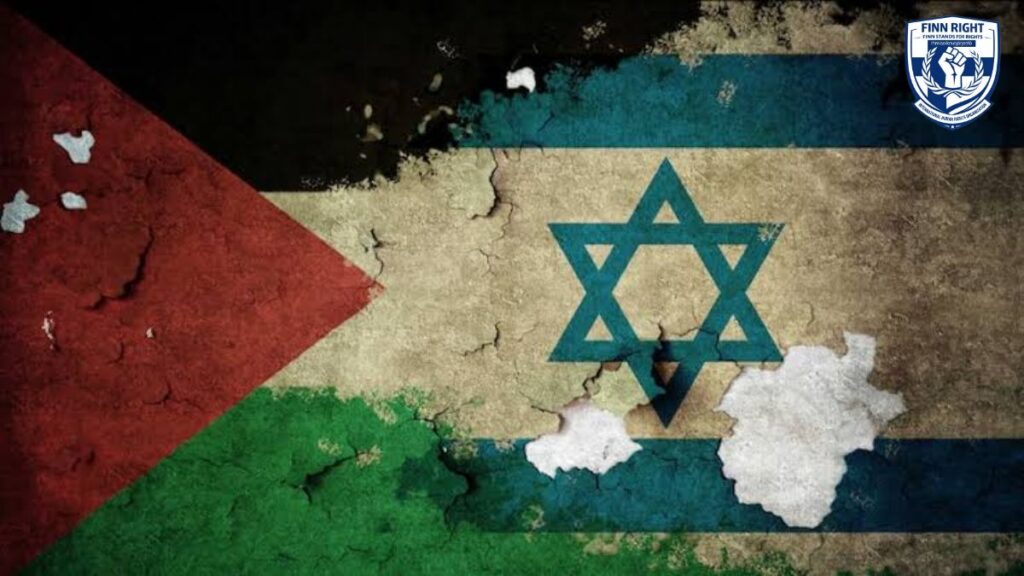
One of the most significant aspects of the proposed law is the introduction of mandatory death sentences. Unlike discretionary sentencing, where judges consider individual circumstances, mandatory sentencing removes judicial flexibility.
This means that once a conviction is secured under the relevant classification, judges would be required to impose the death penalty.
The absence of discretion increases the risk of disproportionate punishment and limits the ability of courts to consider mitigating factors.
Dual Legal Systems
The law would operate differently in civilian and military courts. In civilian courts, capital punishment could be applied under specific conditions.
In military courts, which primarily try Palestinians, the law would require a death sentence based on a simple majority of judges.
This distinction is critical. Military courts have been widely criticized for lacking the full procedural safeguards found in civilian systems.
The application of irreversible punishment within such a framework raises serious concerns about fairness and due process.
Removal of Safeguards
The proposed legislation would eliminate key protections, including:
- The possibility of sentence commutation
- Access to clemency or pardon
- Extended appeal processes
- Human Rights
These safeguards are essential in capital cases, where the consequences of error are irreversible.
Their removal increases the risk of wrongful execution and undermines the principles of justice.
Impact on Individuals and Communities
The Human Rights impact of capital punishment extends far beyond those directly sentenced. For Palestinians, the introduction of mandatory execution would deepen an already profound sense of insecurity.
Fear and Psychological Impact
The possibility of execution creates a climate of fear, not only for individuals accused of crimes but for entire communities. Families live with the constant threat of losing loved ones through a legal process they may perceive as unjust.
Family Separation
Capital punishment results in permanent separation. For families, the loss is not only emotional but also social and economic.
In communities already affected by conflict, such losses can have lasting consequences.
Social Fragmentation
The broader effect is a deepening of social divisions. When legal systems are perceived as unequal, trust in institutions erodes.
This can lead to increased tension and instability within and between communities.
Legal, Political, and Institutional Analysis
From a legal perspective, the proposed law raises significant concerns under international human rights law.
Right to Life
The Human Rights to life is a fundamental principle recognized in international instruments such as the International Covenant on Civil and Political Rights.
While some states retain the death penalty, its use is subject to strict limitations.
Mandatory death sentences are widely considered incompatible with these standards, as they do not allow for individualized sentencing.
Fair Trial Guarantees
International law requires that all individuals receive a fair trial, including:
- The right to legal representation
- The right to appeal
- Protection against arbitrary detention
- Human Rights
Military courts operating under conditions of occupation often face criticism for failing to meet these standards. The use of capital punishment within such courts amplifies these concerns.
Equality Before the Law
A central issue is the unequal application of the law. If the death penalty is effectively applied only to Palestinians, it raises questions about discrimination based on nationality or identity.
Humanitarian Crisis and Displacement
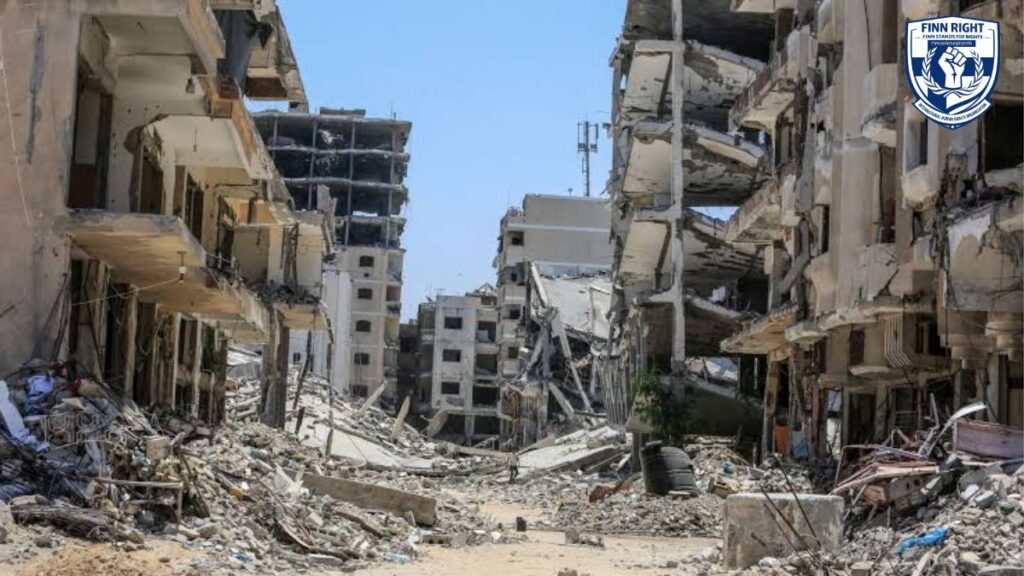
The proposed legislation must also be viewed within the broader humanitarian context. Palestinians in the occupied territories face significant challenges, including restricted movement, limited access to resources, and ongoing conflict.
Detention conditions have been a particular concern. Reports indicate restrictions on legal access, medical care, and family visits. Introducing capital punishment in this environment increases the risk of irreversible harm.
Humanitarian organizations play a crucial role in monitoring conditions and providing support. However, access is often limited, and the scale of need remains high.
Religious Freedom and Identity-Based Persecution
While the proposed law is framed in terms of security and terrorism, its practical impact is closely tied to identity. Palestinians, as a distinct national and often religious group, are disproportionately affected by military jurisdiction.
This creates a situation in which legal outcomes are closely linked to identity. Such patterns raise concerns about discrimination and the erosion of equal protection under the law.
Responses, Coping Mechanisms, and Resilience
Despite these challenges, Palestinian communities continue to demonstrate resilience.
Families, legal advocates, and human rights organizations work to support detainees and challenge legal processes. International networks provide advocacy and raise awareness, highlighting the importance of global engagement.
At the community level, informal support systems play a vital role. These networks help individuals cope with uncertainty and maintain social cohesion in the face of ongoing pressure.
International Response and Global Implications
The international community has expressed concern about the proposed legislation. The Office of the United Nations High Commissioner for Human Rights has warned that mandatory death sentences violate international standards.
Legal experts emphasize that the issue is not only the existence of capital punishment but the manner in which it is applied.
The use of military courts and the removal of safeguards create a framework that may conflict with international humanitarian law.
The implications extend beyond Israel and the Palestinian territories. The normalization of such legal measures could influence broader global standards, particularly in conflict settings.
Future Risks and Outlook
If enacted, the proposed law could mark a significant shift in Israel’s legal system. The transition from a de facto moratorium to active use of capital punishment would have lasting consequences.
Key risks include:
- Increased use of irreversible punishment
- Further erosion of fair trial protections
- Deepening divisions between communities
- Human Rights
Once implemented, reversing such measures becomes more difficult. This underscores the importance of careful scrutiny before legal changes take effect.
Conclusion and Call to Action
The proposed death penalty legislation represents more than a legal reform. It is a development with profound implications for human rights, justice, and the rule of law.
At stake are fundamental principles: the right to life, the guarantee of fair trials, and the commitment to equality before the law.
In situations of conflict and occupation, these principles are already under strain. Introducing mandatory capital punishment risks further weakening them.
The international community has a responsibility to engage proactively. This includes:
- Conducting independent legal reviews
- Monitoring court proceedings
- Advocating for the protection of fundamental rights
- Human Rights
Preventive action is essential. Once a death sentence is carried out, no legal remedy can restore what has been lost.
Ultimately, the question is not only whether the death penalty should be applied, but whether justice can remain just when it is unequal, irreversible, and shaped by conflict.
Protecting human dignity requires vigilance, accountability, and a commitment to the principles that underpin international law.
Read more about Israel, Palestine, and global human rights issues on our site
2 Responses